The buyer intent is clear: find reliable, portable fuel tanks that can safely mount to ATVs or carry fuel for outdoor activities. This guide highlights five top picks, explains who each is best for, and provides practical comparisons to help you decide. Whether you need a compact 1.3-gallon tank for a UTV or a larger 15-gallon caddy for boats, you’ll find options with secure mounting, durable materials, and versatile fueling features.
| Product | Capacity | Best For | Key Benefit |
|---|---|---|---|
| Portable Tank with Locking Mounting Upgraded Bracket | 1.3 gal (5L) | ATV/UTV owners needing secure mounting | Locking security with upgrade bracket |
| Portable Boat Tank 6 Gal | 6 Gal | Deck boats and small yachts | Long hose and vented cap options |
| Scepter 12 Gallon Portable Marine Gas Can | 12 Gal | Extended boating trips | Built-in gauge and 2-way vented cap |
| Scepter Duramax Flo ’N Go 14 Gal Gas Caddy | 14 Gal | Farm, lawn, and marine use | On-wheels mobility and dual fueling modes |
| PAMBEE 15 Gallon Gas Can | 15 Gal | Long-range ground and water use | Two refueling modes with long hose |
Portable Tank with Locking Mounting Upgraded Bracket

This 1.3-gallon fuel tank is designed for small vehicles and tight spaces. It features a locking key mechanism and a dedicated mounting bracket, offering secure installation for ATVs, UTVs, cars, motorcycles, and SUVs. The HDPE construction resists impact and corrosion, helping it hold fuel safely during rough outdoor use. Best for riders who need a compact, secure add-on fuel solution and want a simple lock-and-go setup. A potential limitation is the smaller capacity, which requires more frequent refueling on longer trips.
Portable Boat Tank 6 Gal

Designed for boats and deck craft, this 6-gallon marine tank emphasizes a dual venting system, allowing easy pressure management during fueling. Its long 9.8-foot hose adds reach for deck or moorage fueling, while the HDPE construction resists aging and impact. This option is best for boaters seeking a larger capacity with flexible venting and hose length. It’s less ideal for very tight spaces on small trailers due to its larger footprint.
Scepter 12 Gallon Portable Marine Gas Can

This 12-gallon can provides ample capacity for longer trips. Its built-in fuel gauge and pickup simplify level checks, while the 2-way vented cap helps manage air flow and vapor buildup. It’s compatible with diesel and ethanol-blended fuels for versatility on larger boats. Choose this when you need a reliable, larger-capacity option with onboard fuel monitoring. A consideration is its bulkier size, which may be harder to maneuver in tight spaces.
Scepter Duramax Flo ’N Go 14 Gal Gas Caddy

This on-wheels fuel caddy provides 14 gallons and a choice of fueling modes, making it well-suited for farms, lawns, and marine use. The heavy-duty wheels and top handle improve mobility over uneven terrain, and the HDPE tank resists corrosion. Best for users who prioritize mobility and multiple fueling options. A caution: larger capacity means heavier weight when full, which may impact handling on sloped surfaces.
PAMBEE 15 Gallon Gas Can
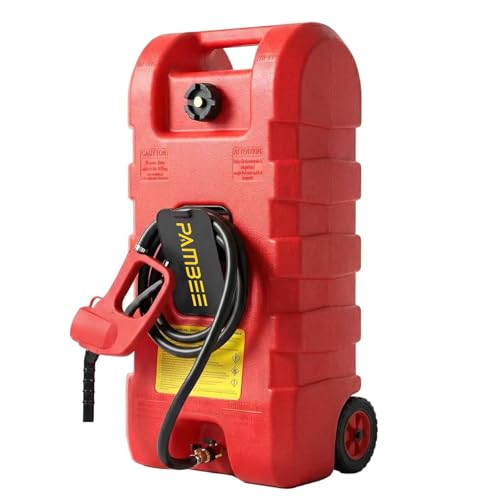
The 15-gallon PAMBEE model provides substantial capacity with a 10-foot hose and a two-mode operation (gravity and siphon). The HDPE construction ensures durability, while the long hose supports fueling from a distance. Best for long-range use across different vehicles and equipment, including ATVs and boats. A limitation is the need to manage siphon speed to control flow accurately during manual operation.
Buying Guide
- Capacity vs. space: Choose capacity based on expected fueling intervals and available storage space on your ATV, boat, or trailer. Smaller tanks are easier to mount and handle; larger tanks reduce refueling stops but require more space and effort to move when full.
- Security and mounting: If you transport fuel on an ATV or UTV, locking mechanisms and robust mounting brackets prevent loss and shifting during rides. Consider models with integrated brackets and locking pins for added security.
- Ventilation and spillage: Tanks with vented caps help manage pressure during fueling and reduce venting hazards. Look for two-way venting or cap designs that prevent vapor buildup and spills.
- Material and durability: HDPE is common for outdoor fuel tanks due to its impact resistance and corrosion protection. Ensure the tank is UV-resistant and designed for the specific fuels you plan to carry (gasoline, diesel, etc.).
- Fuel transfer features: Some models include built-in gauges, pickups, siphon pumps, or gravity-fed options. Decide whether you prefer a gauge for quick level checks or a siphon pump for flexible fueling in remote locations.
- Portability vs. stability: Caddies with wheels improve mobility on rough terrain but add height and weight. Smaller handheld tanks are lighter but require more frequent refills.
FAQ
- What capacity is best for ATV use? A compact 1.3 to 6-gallon tank is typically ideal for ATVs and UTVs, balancing weight, space, and refill frequency.
- Are portable fuel tanks safe for marine use? Yes, when made from durable HDPE with proper caps and vents, and used within the tank’s fuel type compatibility and mounting guidelines.
- Do these tanks require special fittings? Some models use standard fittings or hoses; check compatibility with your equipment and consider optional brackets or seals for a secure fit.
- What maintenance is needed? Regular inspection for cracks, secure mounting, and cap seals; clean spills promptly and store away from heat sources.
- Can I use a siphon pump with these tanks? Several models include or support siphon pumps for controlled transfer; ensure the pump is compatible with the tank’s outlet.
- Which tank is best for long trips? Larger-capacity tanks (12–15 gallons) are better for extended use, especially on boats or farm equipment where frequent refueling isn’t convenient.