Answer: For most American drivers, the best OBDII diagnostic code readers are those that offer quick code reading, clear definitions, live data, and user-friendly interfaces without requiring extra hardware. This guide highlights five reliable options suitable for DIYers and everyday vehicle owners, from basic readers for quick MIL checks to more advanced tools for live data and EVAP tests. Each pick is explained with who it’s best for, why it’s a strong choice, and a practical caveat to consider before buying.
Product Quick Reference
| Product | Best For | Key Benefit |
|---|---|---|
| ANCEL AD310 | First-time users and casual DIYers | Fast readings, compact and durable |
| ANCEL AD410 | All-around diagnostics for multiple systems | Extensive compatibility and built-in DTC library |
| FOXWELL NT301 | Live data and extensive code reading | Graphing live data and VIN retrieval |
| VDIAGTOOL VD10 | Budget-friendly all-purpose scanner | Large DTC database and clear definitions |
| MOTOPOWER MP69033 | Engines-focused diagnostics | Wide protocol support and clear display |
ANCEL AD310 Classic Enhanced Universal OBD II Scanner
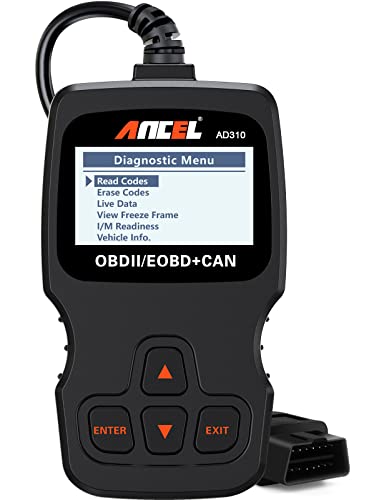
The AD310 is a compact, budget-friendly OBDII scanner that covers basic engine fault codes, live data, freeze frame, and readiness monitors. It draws power directly from the vehicle’s OBDII port, so no extra batteries are required. Best for new or casual users who want quick checks without learning advanced menus. It is noted for its sturdy build and clear, large display, making it easy to read results while under the hood.
Best for: first-time buyers or those who want a simple, reliable tool for quick code reading and clearing. It’s a strong pick for weekend maintenance or teaching basic diagnostics to newcomers.
Caution: It focuses on standard engine and emission-related codes; it may not support advanced system testing beyond the basics. Verify compatibility with your vehicle’s year and model before purchase.
ANCEL AD410 Enhanced OBD2 Scanner

The AD410 is designed for broader system checks and offers support for all OBDII-compatible vehicles (including CAN). It includes a robust DTC library with thousands of definitions and can read and clear codes, reset readiness, and test O2 sensors and EVAP systems. This makes it a solid choice for users who want more insight than basic readers provide and who work with a wider range of vehicles.
Best for: vehicle owners who want a deeper diagnostic capability and a broad compatibility scope across years and regions. Choose this if you regularly service different makes or need more detailed fault code interpretation.
Caution: While it covers many functions, it remains an engine-focused tool and does not turn off all warning lights without repairing the underlying issue. Always resolve root causes before clearing codes.
FOXWELL NT301 OBD2 Scanner

The NT301 focuses on ease of use with live data, graphing capabilities, and VIN retrieval. It supports most 1996+ gasoline vehicles and a broad set of features such as reading and clearing fault codes, monitoring live data, and checking emissions readiness. It’s a dependable choice for users who want a straightforward tool with real-time data visuals.
Best for: DIYers who value clear live data visualization and a simple workflow, plus the ability to log or verify data during vehicle servicing. It’s effective for basic diagnostics and maintaining a healthy engine condition.
Caution: It does not support ABS, SRS, or other non-engine systems on all vehicles. Ensure your vehicle’s capabilities align with NT301’s scope before purchase.
VDIAGTOOL VD10 OBD2 Scanner
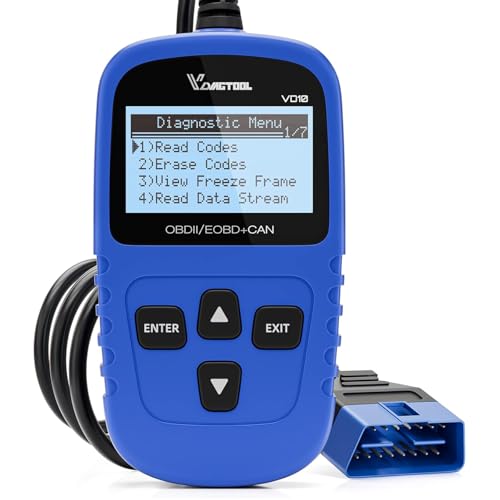
The VD10 is pitched as a must-have for DIYers with its large built-in database and easy code reading, clearing, and DTC lookup. It provides live data, freeze frame, and I/M readiness, along with vehicle information. The user-friendly TFT display helps users quickly interpret codes and definitions, making it practical for quick maintenance decisions.
Best for: budget-conscious buyers who want a practical engine-focused tool with clear DTC definitions and essential live data. It works well for routine maintenance, code clearing after repairs, and smog readiness checks.
Caution: While the VD10 covers many codes, its depth of diagnostics is not as expansive as premium models that include ABS/SRS or advanced service functions. Confirm your vehicle’s needs before buying.
MOTOPOWER MP69033 OBD2 Scanner

The MP69033 combines broad protocol support with a straightforward 2.8″ LCD display. It reads and erases codes, shows freeze frame data, displays I/M readiness, and provides vehicle information. This tool is well-suited for owners with diverse model portfolios or those who want a simple, reliable engine-focused scanner with a readable interface.
Best for: users needing broad compatibility across many markets and a clear, no-frills interface for everyday engine diagnostics and maintenance. It’s a reliable middle-ground option for practical diagnostics without advanced features.
Caution: It focuses on engine-related issues and does not provide in-depth ABS/SRS or transmission diagnostics. Verify that engine diagnostics are the primary need for your vehicle.
Buying Guide: How To Choose The Right OBDII Diagnostic Scanner
- Vehicle compatibility: Confirm the scanner supports your vehicle’s year, make, model, and OBD protocol (CAN, ISO9141, KWP2000, etc.).
- Scope of diagnostics: Decide if you only need fault code reading/clearing or if you require live data, freeze frame, I/M readiness, and engine performance metrics.
- User interface: Consider screen size, readability, and whether you prefer a handheld device or a tool that works with a smartphone for data display.
- Data access and definitions: A larger built-in DTC library helps identify codes quickly without online searches. Look for tools with VIN retrieval for quick car identification.
- Portability and durability: If you work in tight spaces or move between cars, compact size, a durable body, and a reliable connector are important.
- Power source: Most adapters draw power from the vehicle; ensure there is no need for external batteries unless specified.
- Limitations and scope: Some tools are engine-only; others include ABS, SRS, or transmission functions. Align capabilities with your needs.
Frequently Asked Questions
- What is an OBDII scanner used for?
It reads diagnostic trouble codes, provides live data, and helps identify the cause of the check engine light. - Do I need a high-end scanner for basic maintenance?
No. For basic maintenance, a budget-friendly model with code reading, clearing, and I/M readiness is often sufficient. - Can these tools clear codes on all cars?
They can clear codes after repairs in most cases, but some vehicles require the underlying issue to be fixed first. Some models may not allow full reset. - Should I buy a scanner that works with my smartphone?
Smartphone-enabled tools offer convenience and longer-term updates but may require an app and Bluetooth connectivity. - Are there any risks in using an OBDII scanner?
Using a scanner is generally safe, but clearing codes without repairing root causes can mask problems, and certain advanced features may not work on all vehicles.