Finding the right trailing arm bushings improves ride quality, handling, and tire wear for classic Honda and Acura models. This guide highlights five compatible options, focusing on which buyer each product suits best. Whether you’re a DIY enthusiast tackling a clunking noise or a commuter seeking quieter rides, these picks cover common needs from quick replacements to performance-oriented upgrades.
| Product | Brand | Vehicle Fit |
|---|---|---|
| NewYall Pack of 2 Rear Left & Right Trailing Arm Bushing Lower Bushings | NewYall | Acura Integra, Honda Civic, Honda CR-V, CRX, Del Sol |
| MOTOKU Rear Left and Right Trailing Arm Bushing Upper and Lower Assembly | MOTOKU | CRX, Civic Del Sol, Civic |
| A-Premium 2 x Rear Trailing Arm Bushing Kit | A-Premium | CR-V, Civic, CRX, Integra, EL |
| TRQ Rear Lower Trailing Arm Bushing Pair | TRQ | Integra, Civic, CRX, CR-V |
| Truhart Rear Trailing Arm Bushings Civic Compatible | Truhart | Civic, Integra, CRV |
Overview: The top picks span budget-friendly sets to performance-led bushings. Each option is intended to replace worn bushings on rear trailing arms, helping reduce clunking, wandering steering, and uneven tire wear. When comparing, consider whether you need replacement for driver or passenger side, and whether you’re prioritizing comfort or tighter cornering response.
NewYall Pack of 2 Rear Trailing Arm Bushings
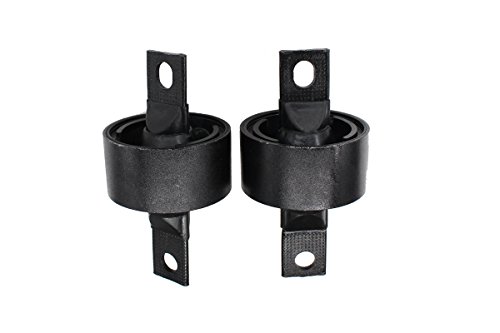
Best for a practical, budget-conscious replacement. The kit includes two bushings for both rear sides, compatible with multiple Honda and Acura models from late 1980s to early 2000s. The included bushings are designed to restore normal axle alignment and reduce play in the rear suspension. This set is suitable for owners who want a straightforward, value-driven fix without adding performance adjustments. A potential limitation is that it may not address extreme alignment issues or higher-performance handling needs.
MOTOKU Rear Bushing Assembly for CRX/Civic

Best for owners seeking a combined upper and lower bushing replacement set. MOTOKU’s kit covers CRX 1988-1991, Civic Del Sol 1993-1997, and Civic 1988-2000. It lists multiple replacement part numbers to match various OEM references, aiding precise fitment. Choose this if you want a comprehensive swap on both sides. Caution: verify your exact year and model because compatibility can vary within the Civic family.
A-Premium 2 x Rear Trailing Arm Bushing Kit

Best for a broad compatibility range and a replacement that targets multiple symptoms. This kit covers Acura EL, Integra, Civic, Civic Del Sol, CR-V, CRX, and more. It is positioned as a professional-style replacement that can reduce clunking, steering wander, uneven tire wear, and excessive vibration. Best for owners who want a single kit capable of replacing both rear bushings and addressing common suspension noises. A limitation is the lack of explicit installer guidance in the product description; installation complexity can vary by vehicle.
TRQ Rear Lower Trailing Arm Bushing Pair

Best for DIYers who value a trusted catalog and detailed reference numbers. The kit includes driver and passenger side lower bushings with cross-references to common OEM part numbers. TRQ emphasizes an extensive DIY video library to support installation, which can help reduce installation time and errors. Choose this if you want a clearly documented process and a straightforward replacement path. Caution: verify that the kit includes the correct side for your specific vehicle before purchase.
Truhart Rear Trailing Arm Bushings

Best for performance-minded drivers needing stiffer suspension feedback. Truhart’s bushings are described as hardened rubber for a more direct feel during high-speed cornering and maneuvering. This makes them a potential pick for enthusiasts who want improved handling rather than a plush ride. Best avoided if comfort is your priority or if your chassis requires a softer suspension response. Ensure compatibility with your specific Civic/Integra/CRV model to avoid fitment issues.
Buying Guide: Key Considerations
- Vehicle compatibility: Confirm the exact year, model, and trim level to ensure the kit fits your rear trailing arms and mounting points.
- Type of bushings: Decide between standard rubber, polyurethane, or hybrid materials. Rubber generally offers quieter rides, while polyurethane can improve handling and reduce flex.
- Installation scope: Some sets replace only lower bushings, while others cover upper and lower or both sides. Check the included components before purchasing.
- Symptom focus: If you hear clunking or feel steering wander, prioritize bushings specified to address those issues. For acceleration feel and cornering response, consider performance-oriented options.
- DIY versus professional: Assess your comfort with suspension work. Some kits include comprehensive reference numbers and supporting videos, which aids installation but may still require alignment after replacement.
- Warranty and return policy: Review the seller’s terms, as suspension components can wear over time depending on driving conditions and vehicle usage.
Frequently Asked Questions
- What is a trailing arm bushing and what does it do? – It connects the trailing arm to the suspension frame, helping control rear axle movement and reducing noise, vibration, and misalignment.
- How do I know if my trailing arm bushings need replacement? – Symptoms include clunking noises, steering wander, uneven tire wear, and excessive vibration during acceleration or braking.
- Are polyurethane bushings better than rubber for CRX and Civic models? – Polyurethane can improve handling and reduce flex but may create more noise and a stiffer ride; rubber cushions vibration and often provides a quieter ride.
- Should I replace both rear bushings at once? – Replacing in pairs on each side (left and right) is common to restore symmetrical suspension feel and alignment.
- Do these kits require professional alignment after installation? – In most cases, an alignment is recommended to ensure proper toe and camber settings following suspension work.
- Are there any compatibility notes I should verify first? – Always confirm year ranges, model variants, and OEM part number references listed by the kit to avoid mismatches.