When selecting a turbo oil pressure restrictor, the goal is precise, reliable oil delivery to turbochargers while protecting bearings. This guide highlights five top options that suit common GT-series turbo kits and Borg Warner platforms. Best for street and enthusiast builds are compact, install-friendly restrictors with clearly stated hole sizes. The following selections help you tailor oil flow for GT25R/GT28R/GT30R family turbos, plus S200/S300/S400/S500 lines from Borg Warner.
This buyer’s guide includes a quick product comparison table to aid in fast decisions. It covers best-fit scenarios, material quality, and practical caveats to watch for during installation.
| Product | Best For | Key Feature | Limitations |
|---|---|---|---|
| Boost Monkey -4AN Turbo Oil Feed Restrictor Fitting | GT25R/GT28R/GT30/GT35R users | 0.9 mm restrictor hole | Fits -4AN lines; verify compatibility with GT-series piping |
| Oil Inlet Restrictor, Premium Metal 4AN Inline | Multiple 4AN turbo lines | 0.035 in restrictor; universal inline design | Ensure correct insertion location in line |
| Boost Monkey -AN3 Turbo Oil Feed Restrictor Fitting | GT25R/GT28R/GT30R/GT35R | 0.9 mm restrictor; -3AN to 7/16-24 | Smaller AN size limits oil volume |
| OPR V2 Turbo Oil Pressure Regulator (Turbosmart) | Broad turbo range; regulated pressure | Integrated 44 μm mesh filter; no restrictor needed | Regulator-based approach may differ from strict restrictors |
| 4AN Turbo Oil Feed Restrictor For Borg Warner S200/S SX family | Borg Warner S200/SX engines | 1.5 mm restrictor; high-quality alloy steel | Specific to S200/SX models |
Boost Monkey -4AN Turbo Oil Feed Restrictor Fitting

This restrictor is designed for GT25R, GT28R, GT28RS, GT30, GT35R and similar turbochargers. It uses a -4AN threaded connection with a 0.9 mm (0.035 inch) hole to limit oil flow in the feed line. Best for users who need a compact, direct inline solution within an oil line assembly. Choose this if your setup uses -4AN fittings and requires a precise 0.9 mm restriction for stable oil pressure.
Who this is best for: enthusiasts with GT-series compacts and a preference for a simple, dedicated restrictor in the oil feed line. Why selected: It provides a clear hole size specification and matching AN-4 thread, aiding repeatable installation. Caution: Verify that your existing lines and fittings are compatible with -4AN male and female connections to avoid misalignment.
Oil Inlet Restrictor, Premium Metal 4AN Inline

This inline restrictor is made for 4AN oil lines and is designed to terminate flow to a fixed 0.035 inch opening. It’s compatible with multiple GT-series turbochargers, including GT25, GT28, GTX28, GEN2 GTX28, GT30, GT35, GT35, and GEN2 GTX35. Practical installation involves placing the restrictor between an existing -4AN male and -4AN female connection in the oil feed line. Best for versatile 4AN installations where a simple, metal restrictor is desired.
Who this is best for: builders needing a universal inline solution that works across a range of GT-series turbos. Why selected: The 0.035 inch opening is a standard compromise between oil pressure stability and flow. Caution: Properly seat fittings to prevent leaks in tight spaces; ensure the inline area has enough clearance for the restrictor body.
Boost Monkey -AN3 Turbo Oil Feed Restrictor Fitting

This restrictor is specifically designed for AN-3 to 7/16-24 inverted flare connections. It uses a 0.9 mm (0.035 inch) hole and is compatible with GT25R, GT28R, GT30R, and GT35R models, among others. Best for users with tighter AN-3 lines who still need a precise 0.9 mm flow restriction. Choose this if your system uses -3AN fittings and needs a compact restrictor with a reliable hole size.
Who this is best for: owners with smaller oil-feed lines seeking predictable pressure behavior. Why selected: It aligns with inverted flare fittings common in performance builds. Caution: Confirm that your -3AN to -7/16-24 adapters match your turbo’s inlet and bypass that the flow does not create excessive backpressure.
OPR V2 Turbo Oil Pressure Regulator (Turbosmart)

The OPR V2 regulator delivers steady, rock-solid oil pressure for a wide range of turbochargers and includes a built-in 44-micron stainless steel mesh oil filter. It represents an approach that may negate the need for a separate restrictor in some setups by maintaining a controlled pressure profile across the system. Best for users seeking an integrated regulator rather than discrete restrictors. Choose this option if your turbo system benefits from regulated oil pressure rather than a fixed orifice.
Who this is best for: builders wanting a regulator-based solution that provides consistent pressure without additional restrictors. Why selected: It includes a built-in filter and is designed to support multiple turbo types. Caution: This is a regulator-based approach, which may alter flow characteristics compared to a dedicated restrictor in high-demand scenarios.
4AN Turbo Oil Feed Restrictor For Borg Warner S200/SX

This restrictor is crafted for Borg Warner S200/SX-series turbochargers. It uses a 1.5 mm restrictor hole and is made of high-quality alloy steel with CNC machining for precise tolerances. Best for S200/SX engines that require a reliable, robust restrictor in the oil feed line. Choose this if your build centers on Borg Warner S200/SX platforms and you need a sturdy restrictor with a defined hole size.
Who this is best for: Borg Warner S200/SX users prioritizing durable metal construction and a defined 1.5 mm restriction. Why selected: Alloy steel and precision machining offer strong resistance to wear. Caution: This restrictor is tailored to specific BW models—verify compatibility with your turbo and mounting hardware before installation.
MKMDZ AN4 Turbo Oil Feed Restrictor To 7/16-24 Fitting Adapter
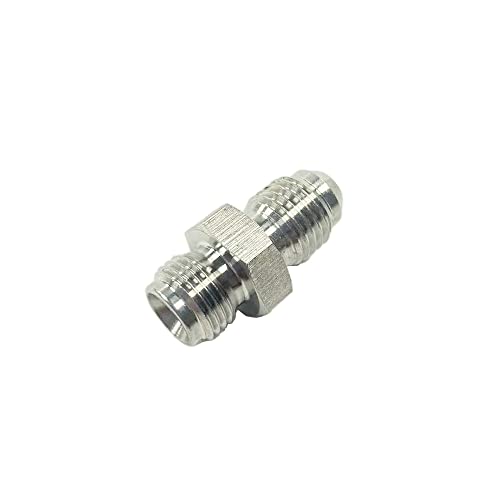
This stainless steel restrictor is designed for AN-4 lines with a 7/16″-24UNF adapter. The restrictor hole size is 1.5 mm, and the assembly is compatible with GT25/GT25R/GT28/GT28R/GT35/GT35R configurations. Best for users who need a robust, corrosion-resistant solution that fits common -4AN to -7/16-24 adapters. Choose this if you value stainless steel and a precise 1.5 mm flow restriction.
Who this is best for: builders with stainless steel line builds and BW/GT-series turbo kits that accept -4AN to -7/16-24 adapters. Why selected: Material choice and precise hole size suit heavy-duty installations. Caution: Ensure the adapter threads align with your mounting hardware to prevent leaks or cross-threading.
XRTMD 4AN Oil Feed Restrictor Fitting For Borg Warner

Made of high-quality copper, this restrictor includes a 1 AN4 oil restrictor fitting suitable for Borg Warner S200/SX/SXE families, S200SX, S400/S500 lines, and other compatible models. Best for copper-plated or copper-finished line builds where corrosion resistance and heat tolerance matter. Choose this if your system uses Borg Warner external lines and copper fittings for reliability. Caution: Copper is softer than steel—handle with care during installation to avoid deformation.
Buying Guide
What should I consider when choosing a turbo oil feed restrictor?
Identify your turbo model and line size (AN-3 vs AN-4). Determine whether your setup benefits from a fixed hole restrictor or a regulator-based approach. Consider materials (steel, copper, stainless) for durability in high-heat environments. Ensure the restrictor hole size aligns with desired oil pressure outcomes for your specific turbocharger and oil pump characteristics.
How do hole size and fitting size affect performance?
A smaller hole reduces oil flow and increases pressure within the feed line, which can help stabilize oil pressure at high engine speeds. Too small a hole may starve the turbo of oil, causing bearing wear. Balance hole size with your turbo’s design and the oil pump output. AN-4 versus AN-3 refers to thread size and line diameter; match fittings to avoid leaks.
When would you choose a regulator over a restrictor?
A regulator maintains a target oil pressure regardless of engine rpm, which can be beneficial in varied operating conditions. However, regulators add components that may alter flow characteristics differently than a fixed restrictor. If your goal is precise, fixed flow behavior, a restrictor in the feed line is typically preferred.
Are inline restrictors easier to install than regulators?
Inline restrictors are generally straightforward: place in the oil feed line between existing -4AN or -3AN connections. Regulators require mounting, bleed considerations, and sometimes additional filtering. For many users, inline restrictors offer quicker, simpler installation with predictable performance.
What installation cautions are common?
Ensure all seals and fittings are tightened to the correct torque to prevent leaks. Verify clearance around hoses and fittings to avoid interference with moving engine components. When using copper or stainless steel parts, check for compatibility with existing adapters and ensure correct thread engagement to prevent cross-threading.
Frequently Asked Questions
- What is the typical purpose of a turbo oil restrictor? It limits oil flow to the turbo to maintain safe bearing pressure and prevent over-oiling the turbo bearings.
- Is a restrictor always required for turbo setups? Not always; some setups can use a regulator instead, or may not need an additional restrictor depending on the oil system design.
- What hole size is commonly used for GT-series turbos? A 0.9 mm (0.035 inch) hole is common for specific -4AN or -3AN configurations, but always verify with your turbo maker’s guidance.
- Can I mix restrictors and regulators? It’s possible, but it requires careful planning to avoid excessive backpressure or inadequate oil supply. Follow component guidelines and consider professional advice.
- Which material should I choose for high-heat environments? Stainless steel or alloy steel offer strong durability; copper is workable but softer and may wear faster in extreme conditions.
- How do I verify compatibility with Borg Warner S200/SX models? Check the adapter sizes (AN-4 to 7/16-24, for example) and ensure the hole size matches your install requirements and turbo oil pressure goals.