When selecting auto paint colors, a reliable color chart helps you visualize finishes before committing. This guide highlights five color-chart and color-mixing products that are well-suited for shade matching, touch-up work, and design decisions. Ideal buyers include professional painters, hobbyists refining their color palette, and shops needing quick reference tools. The following picks combine clarity, portability, and practical visualization to support accurate color decisions.
Summary table of selected products:
| Product | Best For | Key Benefit | Limitations |
|---|---|---|---|
| Eastwood Branded Color Paint Chart | Professional-grade urethane coatings users | See the color in Eastwood single-stage urethane finishes | Limited to Eastwood coatings |
| Custom Shop 48 Color Chart Flake Chart | Visualizing metallic/pearl flake colors | Rich flake samples for accurate comparison | Flake-only reference |
| 4 Pcs Color Wheel (Nezyo) | Color theory learning and mixing | Two sizes for classroom or studio use | Educational tool, not a finish reference |
| Touch Up Paint Pen (White) | On-spot scratch repair for light colors | Two-in-one pen and brush for precision | Limited color range (light colors) |
| SUPERDANT Color Wheel Poster | Wall reference for artists and design planning | Hand-drawn style wheel with archival ink | Decorative rather than finish-muitable |
Eastwood Branded Color Paint Chart Printed 8 1/2″x 11″ Durable Stock

The Eastwood color chart is designed for users of single-stage urethane coatings. It provides a tangible reference for gloss, metallic, and satin finishes, enabling a quick visual check before purchasing paint. Best for professional painters and shops that work with Eastwood’s urethane line, this chart helps minimize color misfires by showing the exact color family and finish options available.
Who it’s best for: automotive shops and bodymen who regularly apply Eastwood single-stage finishes and want a reliable, print reference to compare color options on sight. Why selected: It directly aligns with Eastwood’s coating lineup, reducing guesswork during color selection. Caution: It’s focused on Eastwood products; cross-referencing with other brands may still be necessary for non-Eastwood finishes.
Custom Shop 48 Color Chart Flake Chart

The Custom Shop flake chart features 48 distinct flake samples to visualize metallic and pearl finishes across a broad spectrum. It serves as an accurate reference for selecting custom paint flake colors in automotive, craft, or industrial applications. The compact and organized layout makes it easy to carry and display in professional or personal workspaces.
Who it’s best for: technicians and designers evaluating metallic and pearl possibilities for custom finishes. Why selected: The wide range of flakes helps users compare subtle shifts in tone and reflectivity. Caution: It focuses on flake colors and may not cover every base coat shade; use alongside a broader color guide for full-body color decisions.
4 Pcs Color Wheel, Paint Mixing Learning Guide Art Class Teaching Tool

This set includes four color wheels in two sizes—5.5 inches and 9 inches in diameter—designed to show which colors are complementary and how they mix. The front side highlights color and mixing results, while the backside explains color relationships, grayscale values, and triad colors. Best for learning color theory in classrooms and workshops.
Who it’s best for: students, apprentices, and educators seeking a practical, hands-on tool to grasp color theory. Why selected: It translates theory into visual outcomes, which is useful for selecting paint mixes or understanding color harmony. Caution: It focuses on color science rather than real automotive paint finishes; use it as a learning aid rather than a finish reference.
Touch Up Paint For Cars White – 2-in-1 Paint Scratch Repair Pen

This white touch-up pen features a two-in-one design with a fine pen tip for precise dots and a broader brush for longer scratches. It covers small to medium defects on hoods, doors, bumpers, and other panels. Best for quick, on-the-spot fixes in light-colored vehicles.
Who it’s best for: shops and DIYers who need a quick fix for minor blemishes with minimal downtime. Why selected: The dual-tip approach supports varied scratch types in one product. Caution: Limited to light colors; darker finishes may require alternative matching or multi-step color correction.
Touch Up Paint For Cars Black – 2-in-1 Repair Pen
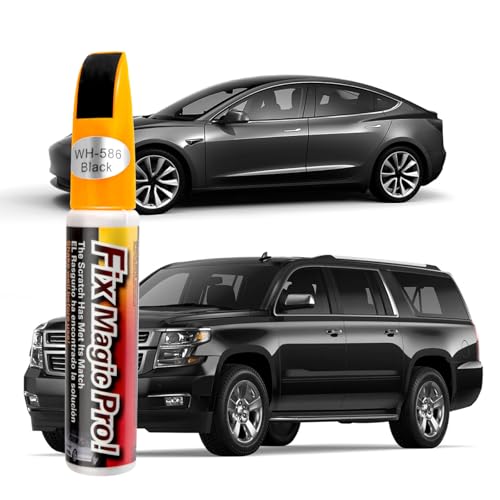
Similar to the white variant, this black touch-up pen provides a dual-tip design for precision dots and broader repairs on black or near-black finishes. It’s suitable for quick fixes to hide chips or scratches on various exterior surfaces. Best for dark-color vehicles needing fast concealment.
Who it’s best for: body shops and individuals working with dark-colored vehicles that require prompt scratch coverage. Why selected: The dual-tip feature supports both detailed and broader repairs in one tool. Caution: Color matching can be challenging for very deep blacks or metallics; consider a test spot before full application.
Buying Guide: Color Charts And Visualization For Auto Paint
What should I look for in a color chart for auto paint? Start with the finish type and the brand alignment. If you frequently work with a specific line, a chart that mirrors that line’s finishes (gloss, satin, metallic) helps reduce cross-brand confusion. For learners, a color wheel or mixing guide complements finish charts by teaching color relationships that apply to tinting and blending.
Is a flake/chart best for metallics or solid colors? Flake charts are particularly helpful for visualizing metallics, pearlescents, and flake density. For solid colors, a standard color chart paired with a color wheel supports shade-matching and correct hue selection. If you need both, consider combining a flake chart with a traditional color reference in your toolbox.
How do size and portability affect usability? Smaller charts are excellent for shops with limited wall space or fieldwork, while larger posters or wheels offer more precise comparisons at a glance. When mobility matters, choose compact, durable stock charts you can easily carry between jobs.
What about educational tools for color theory? A color wheel or learning guide helps non-professionals understand color relationships and mixing. These are especially useful in classrooms, hobby projects, and initial color planning before applying any paint finishes.
How can I maximize accuracy in color selection? Use a multi-tool approach: reference the finish-specific color chart, compare against sample panels under similar lighting, and test a small mix or test panel before committing to large work. This minimizes color surprises after the job is underway.
FAQ
- What is the main purpose of a color chart for auto paint? To visualize and compare finish colors, metallics, and flakes before purchasing or applying paint.
- Which chart is best for metallic finishes? Flake charts or color charts with metallic and pearl options are best for metallic finishes, as they show reflectivity and color shifts.
- Can color wheels replace traditional color charts? They help with color theory and mixing but do not substitute specific finish or brand color references; use both for best results.
- Are touch-up pens reliable for large scratches? They work well for small defects and quick fixes, but larger or color-mismatched areas may need a full repaint or re-finish.
- Should I buy multiple charts? Yes, combining a finish-specific chart with a flake or color wheel provides comprehensive reference coverage for most projects.
- How should I store color charts? Keep charts flat, away from direct sunlight, and in a clean environment to prevent fading or damage.