Answering the common question of how to stop engine oil leaks, this guide highlights top products designed to seal and rejuvenate gaskets, seals, and worn valve seals. The selections are best for drivers facing slow leaks, blue exhaust, or oil consumption concerns. The top picks suit different engine types and maintenance needs, from high-mileage vehicles to modern turbocharged engines. Below, a quick summary table helps compare the five most relevant products at a glance, followed by detailed sections for each option.
| Product | Brand | Notes |
|---|---|---|
| Lucas Oil 10278 Engine Oil Stop Leak | Lucas Oil | Compatible with various oil types; renews seals |
| Bar’s Leaks OS-1 Oil Seal Engine Oil Burning & Leak Repair | Bar’s Leaks | Works on multiple engine configurations; reduces burn and blue smoke |
| STP High Mileage Oil Treatment + Stop Leak | STP | Designed for vehicles over 75,000 miles; anti-wear protection |
| Bar’s Leaks 1000 High Mileage Engine Repair | Bar’s Leaks | Restores compression and reduces oil-related noise |
| Lucas Oil 10279 Engine Oil Stop Leak | Lucas Oil | Low-solvent formula; reduces oil consumption |
Lucas Oil 10278 Engine Oil Stop Leak

Product Type: Auto Oil. Package Dimensions: 8.89 L x 10.16 W x 30.48 H cm. Package Weight: 0.953 kg. This stop-leak additive targets worn seals and gaskets to help reduce minor leaks. Best for drivers with aging engines or vehicles that experience occasional oil seepage. Caution: avoid excessive use in engines with severely damaged seals or significant leaks that require professional repair. The formulation supports compatibility with petroleum, semi-synthetic, and full synthetic oils, and it may help raise oil pressure as seals become more pliable over time.
Bar’s Leaks OS-1 Oil Seal Engine Oil Burning & Leaks

Key use: repairs leaking main seals and gaskets; renews worn valve seals and guides; stops oil burning and blue exhaust smoke. Best for engines that burn oil or show leakage around seals. Suitable for gasoline and diesel engines, including turbocharged, EcoBoost, and hybrid configurations, as well as racing engines with appropriate dosage. Limitation: results depend on the severity of wear; percentage of oil consumption may vary. This is a broad-seal restoration product rather than a fix for severe mechanical damage.
STP High Mileage Oil Treatment + Stop Leak

Best for high-mileage vehicles over 75,000 miles. This product combines an oil treatment with a stop-leak effect and includes a ZDDP anti-wear additive. It creates a viscosity cushion to reduce metal-to-metal friction. Use with each oil change to potentially rejuvenate seals and gaskets, reduce engine noise, and limit smoking. Caution: not a substitute for a leaking gasket that requires mechanical repair; use as part of routine maintenance as directed.
Lucas Oil 10279 Engine Oil Stop Leak
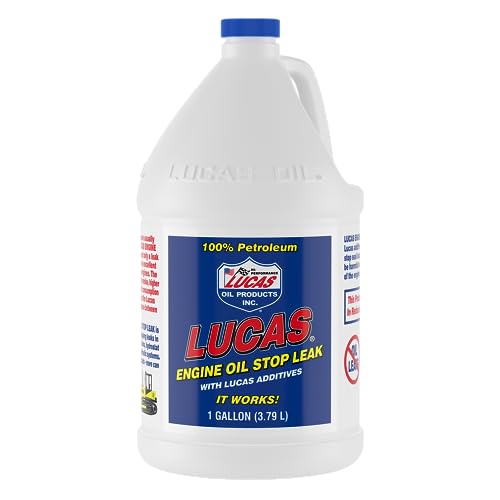
Best for petroleum, semi-synthetic, and full synthetic oils; contains no harmful solvents. It aims to reduce oil consumption, lower engine noise, and raise oil pressure by renewing worn seals. Best for drivers seeking a clean-running option with minimal harsh solvents. Limitations: effectiveness varies with the condition of seals; not a substitute for heavy-duty repair needs.
Lucas Oil 10279 Engine Oil Stop Leak
Best for drivers seeking no-solvent or low-solvent options with preventive protective benefits. The cited features emphasize compatibility with multiple oil types and seal renewal without corrosion risk. Choose this if you want a conservative formulation that emphasizes durability and reduced wear, while monitoring any changes in oil consumption or pressure. Caution: results depend on current engine condition and leak location.
Buying Guide
What type of leak are you dealing with?
Small seepage from crankcase gaskets or valve covers commonly responds to stop-leak additives. More significant leaks or damaged seals may require mechanical repair, gasket replacement, or professional evaluation. Start with a product known to rejuvenate worn seals and gradually assess the leak’s persistence.
Is your engine type compatible?
Most products listed are designed for gasoline engines and support a range of oil types, including petroleum, semi-synthetic, and full synthetic. If you drive a diesel or turbocharged engine, confirm dosage guidelines and applicability in the product description before use.
What mileage and wear level are you targeting?
High-mileage vehicles often benefit from products marked for aging seals and O-rings. For newer engines, select a formulation that focuses on preventing wear and protecting seals without masking a significant leak.
How should you use these products?
Follow the recommended dosage with each oil change when advised. Avoid mixing incompatible additives and discontinue use if symptoms worsen. If oil consumption remains high or leaks do not diminish after the suggested period, consult a mechanic.
What are practical limitations to expect?
Seal restoration additives may not fix all leaks. They work best on minor seepage or aging seals. Heavy leaks, cracked cylinders, or damaged main seals typically require mechanical repair. Consider these products as preventive or supplementary measures alongside routine maintenance.
What about safety and compatibility?
Use as directed and store out of reach of children. Check for any engine-specific warnings in the product labeling. If you operate a vehicle under warranty, verify that use of stop-leak additives does not affect warranty terms or service requirements.
Quick comparison at a glance
- Best for high-mileage engines: STP High Mileage Oil Treatment + Stop Leak
- Best for seal renewals with broad engine compatibility: Lucas Oil 10278 and Lucas Oil 10279
- Best for engines burning oil or with blue smoke: Bar’s Leaks OS-1
- Best for compression restoration and noise reduction: Bar’s Leaks 1000
Frequently Asked Questions
- Do stop-leak products fix major oil leaks? Not typically. They address sealing and wear in many cases but severe leaks usually require mechanical repair.
- Can these products harm my engine? When used as directed, they are formulated to be compatible with common engine oils; misuse or overuse can cause oil thickening or other issues.
- Will they raise oil pressure? Some formulations claim to improve oil pressure by rejuvenating seals, but results vary by engine condition.
- How often should I use stop-leak additives? Follow the product’s dosing with oil changes or as directed. Do not overuse in a short period.
- Should I replace parts after using stop-leak products? If leaks persist or seals remains damaged, a professional inspection is advised to determine necessary repairs.
- Are these products safe for turbocharged engines? Many are designed for a wide range of engines, but confirm compatibility for turbocharged configurations before use.