If you haul kayaks, canoes, or gear behind a bike, you need a trailer that is sturdy, versatile, and easy to assemble. This guide highlights five trailers that are well-suited for both bikes and watercraft, with practical notes on load capacity, terrain handling, and setup. The top picks span heavy-duty carts, multi-use trailers, and off-road capable options. They’re ideal for weekend explorers, camping families, and anglers who want a reliable tow behind a bicycle or hand-cart use.
Summary table of select products:
| Product | Best For | Key Strength | Limitations |
|---|---|---|---|
| Rambo Canoe and Kayak Trailer Cart | Heavy-duty hauling on rugged terrain | Extendable length, padded contact points | Higher price point |
| Malone MPG461KB MicroSport Trailer | Versatile watercraft transport with racks | 2 J-Rack carriers and spare tire | Assembly complexity |
| VEVOR Bike Cargo Trailer 160 lbs | Daily hauling and camping gear | High load capacity, rust-resistant frame | Basic wheel size |
| VEVOR Bike Cargo Trailer 70 lbs | Lightweight commuting and shopping | Compact and foldable | Lower capacity |
| Ruff-Sport Trailer | All-around utility with durability | Galvanized finish, wide crossbars | Not specialized for high-end watercraft |
Rambo Canoe and Kayak Trailer Cart

The Rambo trailer is designed for heavy-duty kayak and canoe transport with a high 300 lbs load limit when used as a hand cart. It extends up to 10 feet, making it adaptable for longer watercraft or gear arrangements. Thick foam-padded contact points protect your craft from dents on rough terrain, and included ratchet straps keep loads secure. This trailer suits buyers who frequently haul larger or multiple watercraft and value a long extension for flexible loading. A caveat is assembly and storage space requirements due to its extended length when deployed.
Malone MPG461KB MicroSport Trailer

The MicroSport trailer focuses on versatility with two J-Rack kayak carriers and bike racks, plus a spare tire. It has a substantial 800 lbs capacity, suitable for carrying two kayaks, canoes, or mixed loads. The submersible-friendly design and marine-grade galvanized steel construction provide corrosion resistance. Best for buyers who want a multi-use trailer that can adapt to watercraft and bike needs, especially on varied terrain. A potential limitation is assembly and setup complexity, which may require careful alignment during first use.
VEVOR Bike Cargo Trailer 160 Lbs

This trailer offers a robust 160 lbs load capacity in a sturdy, rust-resistant steel frame. It uses 16″ wheels and a simple, practical design, making it suitable for camping gear, groceries, or fishing gear. The powder-coated finish helps extend lifespan in damp environments. Choose this if you need a reliable workhorse for regular bike hauling with a focus on durability. A limitation to consider is wheel size practicality on very rough terrain; larger tires could improve off-road performance.
VEVOR Bike Cargo Trailer 70 Lbs

This lighter-weight trailer is ideal for urban bikers and light-duty trips, offering a 71 lbs (approximately 32 kg) capacity and a 27.2″ x 16.9″ x 11″ cargo area. Its foldable design and 20″ dual-layer tires with steel rims provide steady handling on paved roads and moderate trails. Best for shoppers who prioritize portability and storage, with the caveat that heavier loads may approach the upper limit quickly.
Ruff-Sport Trailer (Galvanized)

Ruff-Sport offers a galvanized steel frame with large 4.80 x 12″ wheels and broad crossbars, making it a practical option for hauling kayaks, bicycles, and SUP boards. The galvanized finish resists corrosion, which is beneficial for exposure to water and humidity. It’s best for buyers who want a durable, all-around trailer that can support multiple gear types. A potential limitation is that it may be heavier and less specialized for high-end watercraft transport compared with purpose-built kayak trailers.
Malone MPG586XV EcoLight 2 Kayak Trailer
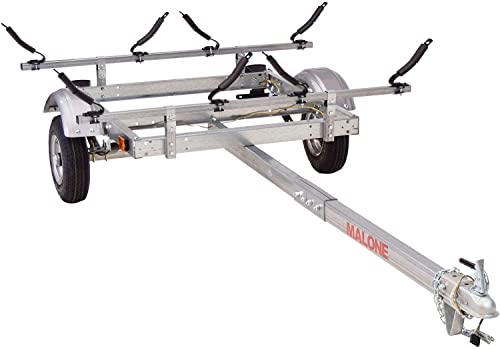
The EcoLight 2 Kayak Trailer is built to carry two 14′ canoes or kayaks with a 400 lbs capacity. It’s fully submersible, featuring oversized pontoon wheels and a plug-and-play submersible LED light kit. The trailer is constructed from marine-grade galvanized steel, designed for durability in wet conditions and long-term use. Best for buyers who regularly transport two watercraft and need submersible lighting for low-visibility conditions. The trade-off is higher initial investment compared to smaller, single-watercraft trailers.
Malone MPG441KB-BLK MicroSport Off-Road Trailer
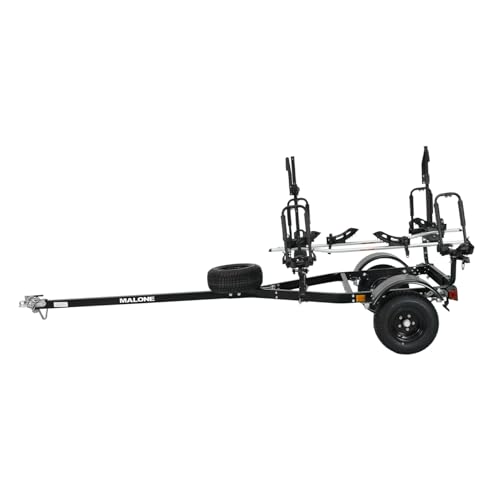
This MicroSport Off-Road trailer adds a rugged edge with a dedicated off-road design, including a spare tire and a 800 lb capacity. The included 65″ curved tray-style bike rack makes it possible to mount bicycles while transporting watercraft or gear. It’s best for buyers who anticipate off-road trails or sandy/rocky routes. A limitation is the need for careful balance when carrying multiple types of loads on rough terrain, which can affect stability on uneven surfaces.
Buying Guide: Practical Considerations For Bike And Kayak Trailers
What load capacity do you need?
Consider the heaviest expected load, including watercraft, gear, and any accessories. Trailers above 200 lbs are typically for larger watercraft or multiple items, while 70–160 lbs suits single kayaks with gear. For two canoes or kayaks, aim for at least 400–800 lbs capacity where possible.
How important is modularity and rack options?
Trailers with built-in kayak or bike racks, or the ability to add J-Racks, save setup time and improve stability. If you regularly switch between cargo types, prioritize models with flexible mounting options and a wider rail system.
What terrain will you encounter?
Urban roads, gravel, and grass require sturdy tires and a stable frame. Off-road needs may justify larger wheels, heavier frames, and submersible features for watercraft use. A trailer designed for submersion is beneficial if water crossings are common.
Durability and maintenance considerations
Look for powder-coated steel, galvanized finishes, and corrosion resistance to extend life in wet environments. Check for rust protection on fasteners and hardware. Long-term use favors marine-grade materials and reliable load-securement options.
Storage and portability
Foldable or compact designs ease storage in small spaces. Consider how easy it is to assemble, disassemble, and repair if needed. A trailer with a simple height and length adjustment helps across different vehicles and loads.
Compatibility with bikes and vehicles
Ensure the hitch system and wheel alignment work with your bicycle frame and cargo setup. Some trailers offer universal hitches and extendable lengths to fit a wider range of bikes and loads.
FAQ
- Can I use these trailers with both bikes and hand-pull use? Yes, most listed models are designed to attach to bikes and also function as hand carts, though setup and balance may vary by model.
- Are these trailers suitable for submersible use? Several models offer submersible capability or marine-grade construction, which is beneficial for water-adjacent transport and durability in wet environments.
- What is the typical load capacity range? Capacities range from about 70 lbs to 800 lbs, depending on the model and configuration. Choose according to your heaviest anticipated load.
- Do these trailers include racks for kayaks or bikes? Some models include J-Racks and bike racks, while others are sold as trailers with optional mounting accessories.
- Is assembly required? Yes, several options require assembly in a garage or backyard with provided guides; some include more modular components for easier setup.
- Which trailer is best for off-road use? Off-road-oriented models with larger wheels and sturdy frames are more suitable for rough surfaces and uneven terrain.