Answering the common DIY question: which engine oil extractor vacuum pump best fits your needs? This guide covers five top options, each suited for different setups and user skill levels. Ideal buyers include weekend mechanics, boat owners, and RV enthusiasts who want clean, spill-free oil changes without jack stands or shop air. The table below highlights the core profiles to help you compare at a glance.
| Product | Best For |
|---|---|
| EWK 6.5L Pneumatic/Manual Oil Extractor | DIYers needing fast, spill-free changes with optional pneumatic speed |
| VEVOR 6.5L Pneumatic/Manual Extractor | Users wanting a complete kit with multiple tubes and adapters |
| Vocoleca 6L Vacuum Oil Extractor | Portable, budget-friendly manual option with long hoses |
| VEVOR 6.5L Manual Fluid Extractor | Simple, dependable manual operation with all-in-one kit |
| FOUR UNCLES Oil Extractor | Flexible, always-ready pneumatic/manual dual-use for tight spaces |
Below, each product section explains who it’s best for, why it’s a sound pick, and a practical caution to help you decide quickly.
EWK 6.5L Oil Extractor: Quick, Clean Oil Changes
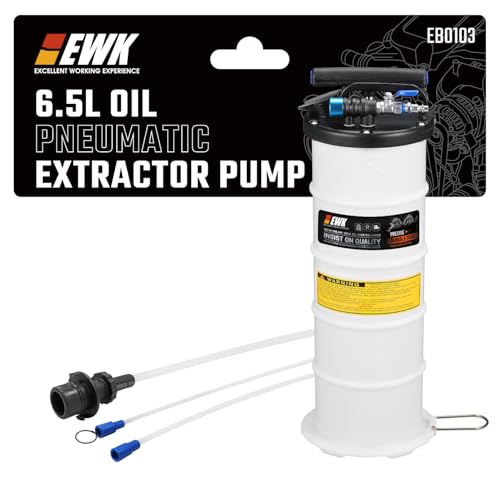
The EWK extractor is designed for DIYers who want to remove engine oil through the dipstick without lifting the vehicle. It offers a dual mode: manual use outdoors or pneumatic acceleration for faster service at home or in a shop. With suction up to 1.8 L/min, it can drain engine oil quickly, minimizing spills. Two long suction tubes reach deep into the oil reservoir for a thorough pull.
- Best for: DIY enthusiasts who value spill-free changes and flexibility between manual and pneumatic modes.
- Why selected: Strong balance of speed, simplicity, and reach for common car engines.
- Caution: Pneumatic mode requires an air source for maximum speed; ensure your air supply is compatible.
VEVOR 6.5L Pneumatic/Manual Extractor

VEVOR’s model is a comprehensive kit with both pneumatic and manual modes. It includes a 1.74-gallon (6.5 L) tank, a main tube, a dipstick, two extension tubes, a suction hose, sealing rings, and a user manual. The four tube sizes help reach deep into tanks for thorough extraction, making it a solid choice for multi-vehicle maintenance in a home shop.
- Best for: Users who want an all-in-one kit with multiple tube options for varied vehicles.
- Why selected: Flexible operation and broad accessory set support broader maintenance tasks.
- Caution: Assembly of several parts may take a bit longer for first-time users.
Vocoleca 6L Vacuum Oil Extractor

This portable manual pump emphasizes light weight and portability. It uses a precision-machined design to deliver strong suction without electricity or an air compressor. The kit includes a long main hose, three extension tubes, and a brake bleeding hose, plus clear tank markings to monitor progress. Real-time observation helps ensure a complete extraction and clean operation.
- Best for: On-the-go repairs or smaller garages where electricity is limited.
- Why selected: Simple, reliable manual operation with visible fluid levels.
- Caution: Manual pumping requires effort; high-volume jobs may be slower than pneumatic options.
VEVOR 6.5L Manual Fluid Extractor

This model focuses on a straightforward manual operation with a complete all-in-one kit. It features a 6.5 L reservoir and a set of four suction tubes designed to reach the deepest parts of a reservoir. The cycle is simple: pump to create suction, then drain through the output hose. It’s a solid pick for users who want a reliable, no-fruss kit for routine oil and fluid changes.
- Best for: Handyman users who prefer a simple, proven manual workflow.
- Why selected: Clear kit contents and robust extraction capability for many vehicle types.
- Caution: Manual operation may be slower for larger engines or high-volume maintenance.
FOUR UNCLES Oil Extractor: Dual-Mode Flexibility

The FOUR UNCLES model offers both pneumatic and manual operation, with a fast extraction rate that claims up to 1.8 L/min in pneumatic mode. It includes three tube options and a main tube designed to reach deep into the reservoir, plus additional hose for brake fluid tasks. It’s designed for quick, efficient oil changes in a variety of conditions.
- Best for: Users who need quick changes in a shop-like flow, plus flexibility for brake fluid tasks.
- Why selected: Strong performance in pneumatic mode and versatile tubing options.
- Caution: Pneumatic mode requires an air source; ensure compatibility with your compressor.
Buying Guide
What matters most when choosing an engine oil extractor vacuum pump?
Capacity and workflow
Choose a capacity that fits your typical vehicle. 6–7 L tanks cover most cars on a single drain. If you perform frequent changes or work on larger machines, a higher capacity reduces refills.
Manual vs. pneumatic operation
Manual pumps are simple and portable, ideal for garages without an air compressor. Pneumatic pumps offer faster extraction, better for busy shops or multi-vehicle weekends. Some models provide both options for flexibility.
Tube variety and reach
Look for multiple extension tubes and a long main hose. Deeper reach helps remove more oil, especially in vehicles with obstructed sump openings.
Ease of use and maintenance
Clear tank markings, straightforward tube connections, and robust seals reduce spills and leaks. A one-piece tank design with good O-rings helps maintain a clean workspace.
Compatibility and accessories
Check included hoses and adapters to ensure compatibility with your vehicle types. Brake-fluid hoses are a plus for multi-task tasks on the same tool.
Safety and spill prevention
Prefer systems with secure seals and spill-prevention features to protect floors and engine bays from dripping oil during changes.
Durability and materials
Polypropylene tanks and corrosion-resistant fittings extend service life, especially in oily environments and frequent use.
Frequently Asked Questions
- What is the advantage of a pneumatic oil extractor? It speeds up extraction, reducing time for multi-vehicle maintenance, especially in a shop setting.
- Can these pumps handle brake fluid changes? Some models include a brake-fluid hose and are designed for brake bleeding tasks in addition to oil changes.
- Is manual operation enough for large engines? Yes, but it may take more effort and time than pneumatic options for large or multiple engines.
- What maintenance is needed? Regularly inspect seals, clean hoses, and ensure hoses are not kinked. Replace worn gaskets as needed.
- Are all kits ready for professional use? They vary; many provide comprehensive tube sets and manuals suitable for home shops and hobbyists.
- How do I prevent spills during extraction? Use a well-sealed tank and keep output hoses directed into a drain or container to minimize drips.