Answering the most common buyer question: which 5W-30 motor oil should you choose for longevity, engine cleanliness, and high-mileage protection? This guide highlights five well-rounded options suited for different needs—from high-mileage protection to pure synthetic performance. It helps New-Car owners, high-mileage vehicles, and engines with tougher driving conditions pick the right oil. Below is a quick summary of the top picks to compare at a glance.
| Product | Best For | Key Benefit |
|---|---|---|
| Castrol GTX Full Synthetic 5W-30 | Daily drivers seeking strong sludge and wear protection | Excellent sludge protection and viscosity stability |
| Mobil 1 High Mileage 5W-30 | Engines with 75k+ miles | Triple Action protection for longevity |
| Castrol GTX High Mileage 5W-30 Synthetic Blend | Older engines needing leak control | Seal conditioners and sludge defense |
| Valvoline MaxLife High Mileage 5W-30 Synthetic Blend | High-mileage engines with leaks | Seal conditioners with enhanced wear and deposit defense |
| Castrol Edge High Mileage 5W-30 | High-mileage engines seeking data-driven protection | Phosphorus replacement tech and fewer leaks |
These products come from trusted brands and align with common American driving needs, from routine maintenance to extending engine life in older cars. The sections below explain who each product is best for, why it was chosen, and any practical caveats to watch for.
Castrol GTX Full Synthetic 5W-30 Motor Oil, 5 Quarts

Best for: Drivers seeking strong protection against sludge and wear. Castrol GTX Full Synthetic 5W-30 provides clear advantages in sludge resistance and viscosity stability, helping keep engines clean during long intervals between changes. This oil is well-suited for modern engines and daily commuting in varying temperatures. Reason for selection: it demonstrates superior wear protection and sludge control relative to many peers. Limitation: may be more expensive than blend options, which could matter for budget-focused buyers.
Mobil 1 High Mileage Full Synthetic 5W-30, 5 Quart

Best for: Engines with 75,000 miles or more. Mobil 1 High Mileage 5W-30 is designed to go up to longer service intervals and helps mitigate LSPI risk with its Triple Action Formula. It also targets engine cleanliness and fuel economy improvements. Reason for selection: offers durable protection for aging engines while supporting longer oil-change intervals. Caution: higher price point and synthetic formulation may be overkill for newer, low-mileage engines.
Castrol GTX 5W-30 Synthetic Blend
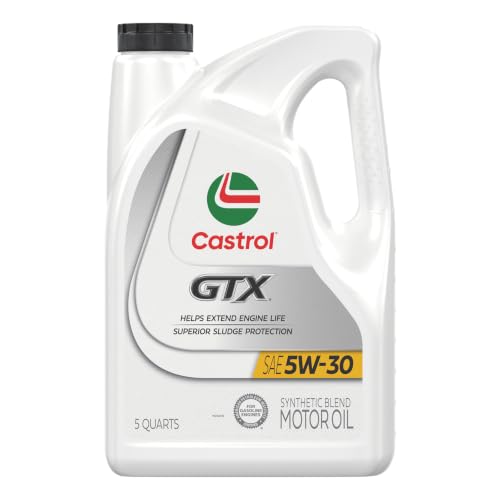
Best for: Budget-conscious shoppers needing solid sludge and deposit defense. Castrol GTX Synthetic Blend offers 1.4X sludge protection and good protection against high-temperature deposits, making it a practical choice for everyday driving and older engines where lower-cost synthetic blended oils are preferred. Reason for selection: strong protection with a cost-friendly blend. Caution: might not deliver the max performance level of a full synthetic in extreme temperatures or high-stress driving.
Castrol Edge High Mileage 5W-30 Advanced Full Synthetic

Best for: High-mileage engines needing proactive protection against leaks and burn-off. Castrol Edge High Mileage uses Phosphorus Replacement Technology to help extend the life of emission systems, while reducing leaks and burn-off. This option suits owners who want to minimize deposit-related power loss and maintain engine cleanliness. Reason for selection: advanced formulation aimed at high-mileage wear and leak prevention. Caution: as a high-mileage product, price and availability may vary more than standard oils.
Castrol Edge Extended Performance 5W-30

Best for: Long-life protection with extended warranty-style coverage. Castrol Edge Extended Performance markets a longer service window (up to 20,000 miles or 25,000 miles in some contexts) and focuses on sustained performance and engine cleanliness. Reason for selection: designed for drivers seeking fewer oil changes under typical conditions, with a focus on protecting modern engines. Caution: packaging may vary, and warranty-like claims should be verified in your vehicle’s maintenance schedule.
Buying Guide: Key Purchase Considerations
- Engine age and mileage: High-mileage engines commonly benefit from specialist formulations with seal conditioners and deposit control.
- Driving conditions: Frequent short trips, extreme temperatures, or heavy loads may favor full synthetic options with robust wear protection.
- OEM specifications: Always match the oil’s viscosity and approvals to your vehicle’s manual (5W-30 is common, but some engines require different specs).
- Budget vs. performance: Blends offer strong protection at lower cost, while full synthetics prioritize long-term cleanliness and wear resistance.
- Oil change intervals: Synthetic options often allow longer intervals, but always follow the manufacturer’s guidance for your vehicle.
FAQ
- What does 5W-30 mean?
It indicates the oil’s viscosity, with 5W representing cold-temperature flow and 30 representing hot-temperature viscosity. This is common for many modern engines. - Is high-mileage oil necessary for older cars?
Not always, but engines with 75k+ miles can benefit from seal conditioners and deposit control to reduce leaks and sludge buildup. - Should I choose a full synthetic or synthetic blend?
Full synthetic offers max protection and cleaner performance; blends are typically more budget-friendly while still providing strong protection. - How often should I change 5W-30 oil?
Follow the vehicle manufacturer’s recommended interval, which can range from 5,000 to 10,000 miles depending on oil type and driving conditions. - Can I mix brands or types of oil?
Avoid mixing oils unless the manufacturer allows it, as incompatible formulations can affect performance and protection. - What is “sludge protection” and why does it matter?
Sludge can reduce engine efficiency and protection; higher sludge resistance helps maintain clean engine internals and performance.