If you frequently tow different trailers, you need a versatile wiring harness that converts between 4-pin flat and 7-pin blade connectors with reliable performance. This guide identifies five top options that balance durability, ease of use, and compatibility for common American vehicles and trailers. The picks are best for everyday towing, RVs, boats, and utility trailers. Each product section explains who it’s best for and why, plus a practical note to help avoid common wiring issues.
| Product | Connector Type | Best For | Why It Stands Out |
|---|---|---|---|
| Oyviny 7 Pin Round To 4 & 5 Pin Flat | 7 to 4/5 Pin | Drivers needing 2-in-1 conversion | Durable, weatherproof nylon housing; secure fit; two dust covers |
| Nilight 4 Way Flat To 7 Way Round Blade | 4 to 7 Pin | Mostly standard 4-pin to 7-pin conversions | Compact, sealed design; protects inner contacts; mounting bracket |
| MECMO Multi-Tow 4-Way To 7-Way & 4-Way | 4 and 7 Pin | Versatile towing with dual outputs | Dual-output, includes brake/reverse/power leads; mounting bracket |
| URANT 7-Pin To 4-Pin Waterproof | 7 to 4 Pin | Long cable flexibility and rugged use | Long 13.8-inch extension; wear-resistant nylon; rubber dust cover |
| MECMO 7 Way Blade To 4 Way Flat Coiled | 7 to 4 Pin, coiled | OccasionalExtension needs | Coiled design reduces ground-hanging wires; up to 5 ft stretch |
Oyviny 7 Pin Round To 4 & 5 Pin Flat Adapter

Best for: Vehicle owners needing a compact, 2-in-1 conversion from a 7-way RV-style connector to 4- or 5-pin flat plugs. This unit fits multiple common makes and trailer types, including boats and RVs.
Why selected: It offers a secure, tight fit with a robust nylon housing and brass terminals for solid conductivity. The dual dust covers help protect the terminals when not in use, reducing corrosion risk.
Caution: Ensure your trailer’s wiring matches the 4- or 5-pin flat standard before plugging in, to avoid mismatched circuits.
Nilight 4 Way Flat To 7 Way Round Blade Adapter

Best for: Tow vehicles with a 4-pin flat socket that need to connect to trailers using a 7-pin blade. Ideal when using a standard trailer with a 7-way connection.
Why selected: Durable black plastic housing and a well-sealed, spring-loaded cover protect against dust and moisture. The design minimizes wobble and secure fit is emphasized with a robust mounting option.
Caution: Confirm that your trailer uses the 7-blade round standard; some older trailers may vary in pin layout.
MECMO Multi-Tow 4-Way To 7-Way RV & 4-Way Adapter Kit
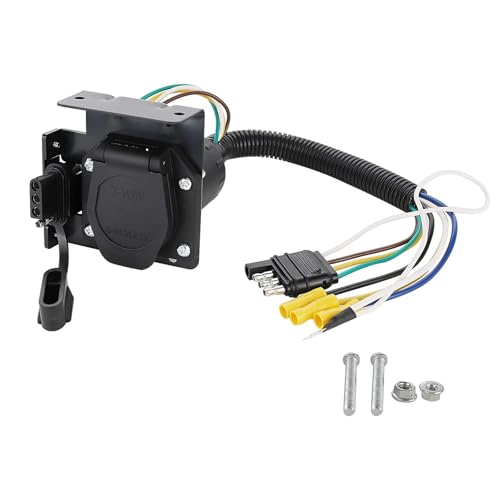
Best for: Vehicle owners who tow different trailers (4- and 7-pin) and want a single adapter that covers both outputs. This kit adds versatility with extra leads for brake, reverse, and power.
Why selected: It provides dual connections in one unit and uses a mounting bracket for easy, secure attachment to a hitch or bumper. The design supports flexible towing setups.
Caution: Some setups may require additional wiring knowledge for optimal reliability in custom installations.
URANT 7-Pin To 4-Pin Waterproof

Best for: Towing setups that require longer extension flexibility and rugged use in outdoor environments, such as RV and boat trailers.
Why selected: Features a long 13.8-inch extension cable, enhancing installation flexibility. The dual protection system includes a wear-resistant nylon sheath and a rubber dust cover on the 4-pin plug.
Caution: The extra length may introduce more cable slack; secure it properly to avoid snagging during travel.
MECMO 7 Way Blade To 4 Way Flat Coiled

Best for: Towers needing occasional extension without clutter, thanks to the coiled design that retracts when not stretched.
Why selected: Combines a 7-pin blade to 4-pin flat conversion with a flexible 5-foot stretch. The coiled cable keeps the harness off the ground and reduces wear.
Caution: Coiled cables can add resistance; ensure the stretch remains within safe travel length to avoid overheating or binding.
Buying Guide: Key Considerations For 4 To 7 Trailer Wiring Harnesses
When choosing a 4 to 7 trailer wiring harness, prioritize compatibility, durability, and ease of installation. Consider the most common trailer types you tow and whether a single adapter can cover those needs or if dual-output designs are necessary.
Connector Compatibility
Verify that the adapter matches your vehicle’s socket (4-pin flat or 7-pin round blade) and your trailer’s connector. Some trailers use 7-way RV blade sockets, while others use standard round or flat configurations.
Durability And Weather Protection
Look for rugged housings, brass terminals, and protective dust covers. Weatherproofing and UV resistance extend the life of adapters used outdoors or in harsh environments.
Cable Length And Flexibility
Longer extensions help with difficult positions between vehicle and trailer. Coiled designs reduce slack and minimize drag, but ensure the length can reach without excessive tension.
Installation Simplicity
Plug-and-play designs without wiring are ideal for frequent trailer changes. If a kit includes mounting brackets, it simplifies secure attachment to your hitch area.
Safety And Reliability
Choose adapters with tight fits to prevent loose connections. Brass or copper conductors provide better conductivity and stability across towing sessions.
Frequently Asked Questions
- What does a 7-to-4 pin trailer adapter do? It converts a 7-pin round blade connection on a vehicle to a 4-pin flat trailer plug, enabling compatibility with trailers that use a 4-pin system.
- Do I need a dual-output adapter? A dual-output adapter is helpful if you tow trailers with different connector standards, reducing the number of adapters you carry.
- Can I use adapters for all trailers? Most common trailers use 4-pin or 7-pin connections, but some specialized trailers may have unique configurations. Check your trailer manual.
- Are waterproof adapters necessary? If you tow in rain or damp conditions, waterproofing reduces corrosion risk and improves reliability.
- How do I know if I wired it correctly? Use the vehicle’s fuse box diagram and trailer wiring diagram to ensure correct pin-to-function mapping; test with a trailer light tester when possible.
- Will these affect vehicle electrical systems? Properly designed adapters should not affect other vehicle electronics; ensure no accidental splicing or overloading of circuits.