Finding the right floor jack for a lowered car means prioritizing low clearance, stable lifting, and reliable performance. This guide highlights five top options that balance reach, strength, and maneuverability for sports cars, modified ride heights, and workshop use. Each pick below is evaluated on capacity, lift range, construction, and usability to help you choose a jack that safely handles your vehicle without excessive pumping or racking time.
| Product | Brand | Lift Capacity | Lift Range |
|---|---|---|---|
| Maxority 3-Ton Low Profile Hydraulic Floor Jack (Orange) | Maxority | 3 tons (6,600 lbs) | Approx. 3.74″ to 18.25″ |
| AV Steel Floor Jack 2.5 Ton, Low Profile | AV Steel | 2.5 tons (5,500 lbs) | 3.4″ to 14.6″ |
| Jack Boss 3 Ton Aluminum/Steel Racing Floor Jack | Jack Boss | 3 tons (6,600 lbs) | 3-15/16″ to 18-5/16″ |
| DNA Motoring TOOLS-00234 2 Ton Floor Jack | DNA MOTORING | 2 tons (4,000 lbs) | 5.1″ to 13″ |
| BIG RED T815016L 1.5 Ton Low Profile | BIG RED | 1.5 tons (3,000 lbs) | 3.5″ to 14″ |
Maxority 3-Ton Low Profile (Orange)

The Majority orange low-profile floor jack combines a wide lifting range with a compact, stable profile suitable for lowered vehicles. It features an extended reach to access hard-to-reach jacking points on sports cars and modified machines. The RAPID PUMP technology minimizes the number of strokes required to reach lift height, helping technicians and hobbyists save time during routine maintenance or emergency tire changes. Built for home and workshop use, this jack prioritizes durability and stable contact under load with a dual-piston setup.
AV Steel Floor Jack 2.5 Ton, Low Profile

With a 2.5-ton lifting capacity and a low-profile design, this AV Steel jack aims for versatility across sedans, coupes, and light trucks. The wide saddle and overload protection valve offer added safety during operation, while dual wheels improve mobility and positioning. Its single-piston hydraulic pump delivers lifting efficiency, reducing effort for routine jacks and tire changes. A practical choice for garages that prioritize straightforward operation and solid construction.
Jack Boss 3 Ton Low Profile Aluminum/Steel Racing Floor Jack
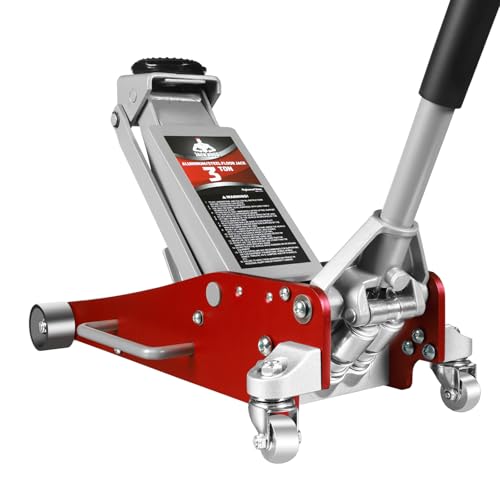
This Jack Boss model blends aluminum and steel for a favorable strength-to-weight ratio, crucial for frequent use in racing or performance settings. It offers a low profile of 3-15/16″ minimum height and an expansive maximum height, enabling quick, precise lifts for SUVs and sports cars alike. Dual pistons and a robust saddle help stabilize the load, while the large reach ensures you can access common jacking points on a variety of vehicles. Net weight around 58.5 lbs makes it manageable for frequent repositioning in a shop.
DNA Motoring TOOLS-00234 2 Ton Low Profile Floor Jack
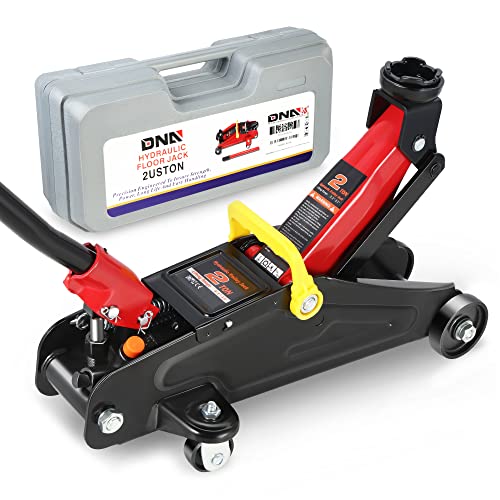
DNA Motoring’s 2-ton floor jack emphasizes high-quality construction and practical lifting range. With a min height of 5.1″ and a max height of 13″, it accommodates a variety of vehicles, including mid-size cars and some SUVs. The jack includes an overload protection mechanism and a large saddle to distribute load effectively, helping safeguard undercarriage components during lifting. It’s designed for garage service as well as light industrial tasks, delivering reliable performance for routine maintenance and emergency lifts.
Maxority 3-Ton Low Profile (Red)
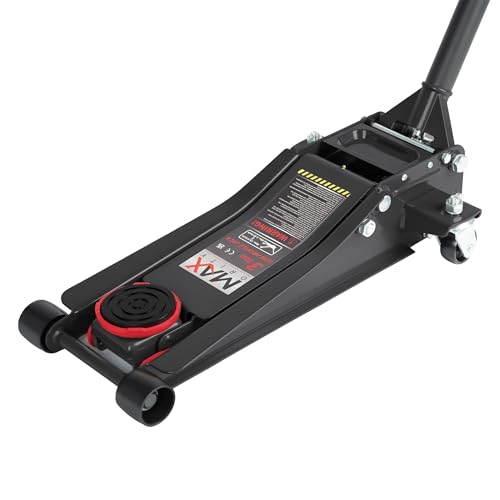
This red variant of the Majority low-profile floor jack emphasizes the same core strengths: extended reach for low clearance, a true low-profile design for easy slipping under vehicles, and RAPID PUMP technology for quick lifting. Its dependable build supports daily garage tasks, tire changes, and maintenance on cars with lowered undercarriages, with attention to durable construction and ease of use for both professionals and enthusiasts.
TONDA Low Profile 2.5 Ton Jack

The TONDA low-profile jack offers a lifting range suitable for family cars and light SUVs, with a 2.5-ton capacity. Its compact profile helps you slide beneath lowered vehicles, while the caster wheels and detachable handle improve mobility around a workspace. The lifting height range supports quick service on everyday drivers and small trucks, making it a practical option for hobbyists and home garages.
Buying Guide: Key Purchase Considerations For Lowered Cars
- Low-profile height: Look for jacks that can clear the lowest ground clearance on your vehicle. A minimal height under 3.5 inches is common among good options for lowered cars, with some models enabling even closer access.
- Lift capacity: Choose a jack with a capacity well above your vehicle’s weight. For most passenger cars, 2–3 tons is sufficient; for heavier sedans or light SUVs, 3 tons provides appropriate margin for safety and stability.
- Lift range: A broad lift range helps accommodate tires, wheel assemblies, and suspension components. Consider min heights for slipping under the pinch welds and max heights to clear underbody points safely.
- Saddle and saddle protection: A large, well-padded saddle distributes load evenly and protects the vehicle’s pinch welds. A flexible or adjustable saddle can be beneficial for different vehicle types.
- Hydraulic system and speed: Jack speed matters during tire changes or quick maintenance. RAPID PUMP or similar high-speed pumping reduces the number of strokes and effort required.
- Wheels and mobility: Dual wheels or casters improve maneuverability around a shop or garage. Locking wheels add safety on uneven surfaces.
- Build quality and material: Aluminum components reduce weight in higher-end models, while steel builds offer durability and lower cost. Consider corrosion resistance for long-term use.
- Safety features: Overload protection valves and robust return mechanisms help prevent accidents if a load exceeds capacity. A reliable release valve provides controlled lowering.
- Maintenance and warranty: Check for available service kits, seals, and warranty coverage. Regular oil checks and hydraulic fluid replacement extend jack life.
- Compatibility with accessories: Some models include extra features like rubber saddle pads, handles, or side levers. These can improve usability with different vehicle types.