This guide highlights top 100Ah LiFePO4 batteries designed for reliable off-grid power, RV living, and home energy systems. Each entry features built-in BMS, high cycle life, and strong energy density to support portable and stationary setups. We compare pack weight, durability, and compatibility to help you choose a safe, long-lasting solution.
Summary of chosen products:
- Dumfume 12V 100Ah LiFePO4 Battery (Group 31) with 1.28 kWh energy
- LITHINENG 12V 100Ah LiFePO4 Battery with Bluetooth and low-temp protection
- GrenerPower 12V 100Ah LiFePO4 Battery, Group 24, 1280Wh, 100A BMS
- HumsiENK 12V 100Ah LiFePO4 Battery, IP67, 15000+ cycles
- Dumfume 12V 100Ah Mini LiFePO4, 1280Wh, 6000+ cycles
Dumfume 12V 100Ah LiFePO4 Battery With Built-in BMS
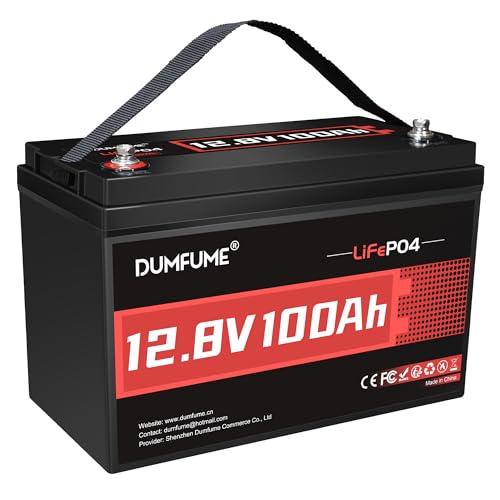
Dumfume’s 12V 100Ah LiFePO4 battery delivers 1.28 kWh of energy with a built-in 100A BMS. It claims 6000+ cycles and a compact form suitable for RVs, campers, solar arrays, and off-grid systems. It is positioned as a drop-in replacement for lead-acid options, supporting small- to mid-size energy storage projects. The unit is lighter than AGM equivalents, offering significant weight savings for portable setups. It’s not recommended for starting motors or golf cart applications, and proper wiring practices should be followed for parallel or series configurations (up to 4S4P).
Key considerations: energy density, cycle life at varying Depths of Discharge (DOD), and compatibility with 12V systems. While the product emphasizes urban-friendly weight and density, adopters should verify compatibility with their existing inverters and charge controllers to ensure optimal performance and lifecycle longevity.
LITHINENG 12V 100Ah LiFePO4 Battery With Bluetooth
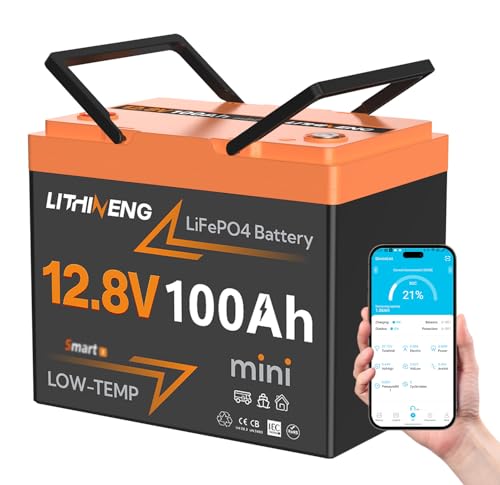
LITHINENG offers a Bluetooth-enabled 12V 100Ah LiFePO4 battery with a built-in 100A BMS and low-temperature protection. Its standout feature is real-time monitoring via BT, with quick QR-based pairing and access to voltage, current, capacity, and system health data. The battery is designed for RVs, trolling motors, marine applications, and solar storage. It emphasizes rugged performance across extreme temperatures and vast cycle capability, asserting safe operation from -40°F to 162°F. The product highlights include deep discharge tolerance and protection against common electrical faults.
Considerations include reliability of wireless monitoring in remote areas, charger compatibility, and ensuring a proper BT pairing workflow. The device-friendly app experience can influence daily usability and maintenance efficiency in off-grid or RV setups.
GrenerPower 12V 100Ah LiFePO4 Battery, Group 24

GrenerPower presents a Group 24 LiFePO4 battery with 100A BMS, ~1280Wh capacity, and a claimed 15,000 deep cycles. It emphasizes compactness and lighter weight (about 22.6 lbs) relative to lead-acid equivalents, making it a strong fit for RVs, boats, and off-grid energy storage. The design supports safe high-power operation with heat management and multiple protective features. The note clarifies it is intended for energy storage, not as a starting or golf cart battery.
Evaluation points include the Group 24 sizing compatibility with specific RV compartments, duty cycle requirements, and the availability of parallel/series configurations for larger systems. Users should confirm inverter/charger compatibility and warranted cycle life in their environmental conditions.
12V 100Ah LiFePO4 Battery With 1280Wh, 6000+ Cycles
This Dumfume model mirrors the 1280Wh energy capacity with 6000+ cycles and similar notes on not using it for starting engines or golf carts. The battery’s 25% size reduction aids portability, and its 4S4P compatibility supports expandable configurations for higher voltage or capacity systems. The BMS protects against overcharge, over-discharge, short circuits, and overheating. The price-to-performance argument centers on weight savings and higher energy density compared with traditional 12V lead-acid packs.
Purchase considerations include the system’s required voltage, series/parallel expansion plans, and how the BMS behaves under extreme environmental conditions. Prospective buyers should ensure the charger and inverter are LiFePO4-compatible to maximize lifespan and reliability.
Dumfume Mini 12V 100Ah LiFePO4 Battery, Group 24

The Dumfume Mini offers a compact 12V 100Ah LiFePO4 option with 1280Wh and 6000+ cycles. It emphasizes light weight (about 19–20 lbs) and a 1/3 reduction in weight compared with lead-acid counterparts, while delivering higher energy density. The unit is positioned for portable camping, off-grid, and home storage use. It uses a built-in 100A BMS and notes a 10-year lifespan with strong cycle performance at 60%–100% DoD.
Key decision points include portability needs, cold-weather performance, and how many units may be staged in parallel or in series for larger systems. Verify temperature guidelines and return policies for low-temperature charging and overall system integration with your chosen inverter and solar controller.
Buying Guide: Key Purchase Considerations For 100Ah LiFePO4 Batteries
- Compatibility: Ensure the battery voltage (12V or configured packs), BMS protections, and charging profile align with your inverter, solar charge controller, and wiring diagram.
- Cycle Life and DoD: Most 100Ah LiFePO4 packs advertise 4,000–15,000 cycles depending on DoD. Higher cycles at 60–80% DoD typically translate to longer overall lifespan.
- Weight and Form Factor: LiFePO4 batteries offer lighter weight than AGM/lead-acid. Compare Group size (24 vs 31) and dimensions to fit your enclosure or battery tray.
- Temperature Tolerance: Low-temperature performance and BMS cut-off thresholds matter in winter installs. Look for low-temp protection and operating ranges that match your climate.
- Bluetooth/Monitoring: Some models include real-time monitoring and data logging. Decide if you need remote status checks via an app or a separate battery monitor.
- Expansion Capabilities: If planning larger systems, verify if the battery supports series/parallel expansion (for voltage or capacity scaling) and the maximum safe configuration (e.g., up to 4S4P).
- Safety Certifications: Check for certifications such as UN38.3, CE, FCC, and SDS documentation to confirm safety and compliance.
- Warranty and Support: Review warranty length, replacement terms, and vendor support for RV, marine, or off-grid usage scenarios.
- Price vs. Performance: Compare energy density, weight, cycle life, and protection features to determine best value for your intended use (RV, solar storage, or home backup).