Keeping devices powered on the go is essential for road trips, daily commutes, and emergency use. The right 12V to 110V car inverter converts your vehicle’s battery power into standard AC outlets and USB ports, allowing you to run laptops, cameras,CPAP machines, and more. This guide highlights five reliable options, covering different wattage ranges, port configurations, and safety features so you can choose the best inverter for your needs.
| Product | Brand | Wattage (Continuous) | Key Ports | All-Weather/Design Notes |
|---|---|---|---|---|
| BESTEK Power Inverter DC 12V to AC 110V | BESTEK | 300W | 2 AC, 2 USB | Aluminum housing; compact; widely used |
| Pro Chaser 400W Power Inverters for Vehicles | Pro Chaser | 400W | 2 AC, 2 USB | 30-inch cord; road-trip ready |
| EPANEE 400W Inverter 12V to 110V | EPANEE | 400W | 2 AC, 1 PD USB-C, 1 USB-A QC | Built-in safety protections; cooling fan |
| TWING Car 1000W Inverter | TWING | 1000W | 2 AC, 2 USB (QC 3.0, PD3.0) | Digital display; robust build |
| YSOLX 500W Power Inverter | YSOLX | 500W | 2 AC, 2 USB | Dual connection modes; road-trip ready |
Note: This table summarizes selected models to help compare capabilities at a glance. Individual product pages provide detailed specs and safety features.
BESTEK Power Inverter: 300W 12V To 110V With Dual USB

The BESTEK inverter offers 300 watts of continuous power with an instantaneous peak suitable for laptops and larger devices. It features two AC outlets and two USB ports for fast charging, with an aluminum housing that keeps the unit cool and durable during road trips. The design emphasizes compact size and compatibility with a wide range of vehicles, including modern cars and SUVs. This model is well-suited for general travel use and on-the-go charging needs without taking up much space.
Key considerations: wattage adequacy for your devices, number of outlets, USB charging speed, and vehicle compatibility. The dual USB ports provide efficient charging for smartphones, tablets, and power-hungry accessories, while the 2 AC outlets handle laptops and other AC-powered gear.
Pro Chaser 400W Inverter: Strong Mid-Range Power

The Pro Chaser inverter delivers 400 watts of continuous power with a peak of 800 watts, making it capable of supporting laptops, cameras, and other mid-sized devices. It includes dual 110V outlets and two USB ports to keep multiple devices charging simultaneously. A 30-inch power cord adds flexibility for placement in the cabin, trunk, or cargo area, reducing clutter and extending reach for passengers and drivers alike. It’s a practical choice for family road trips or mobile work setups.
Key considerations: continuous wattage versus peak power, outlet spacing for larger plugs, and cable length for optimal placement. The longer cord enhances versatility when outlets are not immediately accessible.
BESTEK 150W Inverter With PD USB-C And QC USB-C
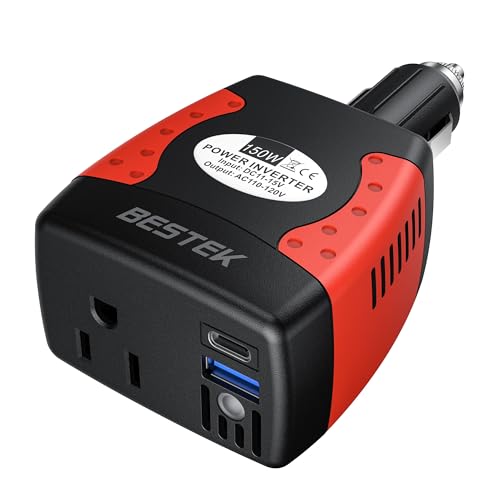
This smaller, 150-watt BESTEK model focuses on fast charging and efficient USB-C power delivery. It packs a PD USB-C port and a QC USB-A port in addition to a single AC outlet, making it ideal for travelers who rely on fast charging for smartphones, tablets, and lightweight laptops. Built-in cooling and multiple protections help safeguard devices and vehicle electronics during use, especially on long drives or in warmer climates.
Key considerations: match device charging speed with PD/USB-C ports, ensure there is a spare outlet for essential devices, and verify protection features to prevent overheating or overload in smaller vehicles.
FOVAL 150W Car Power Inverter: Compact And Lightweight
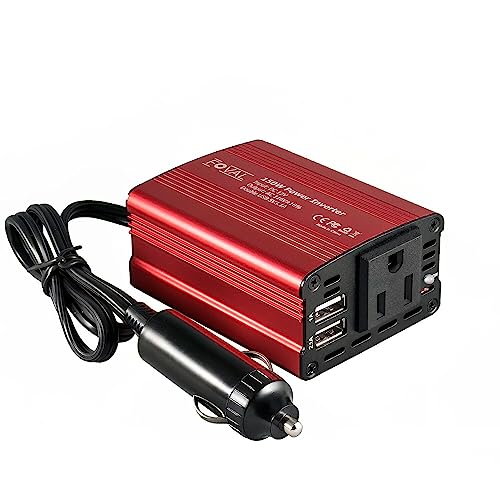
The FOVAL 150W inverter is a compact, cigarette-lighter-sized option with dual USB ports and 1 AC outlet. Its aluminum shell keeps the unit lightweight and portable, with a design that fits easily in glove compartments or cup holders. It’s well-suited for charging phones, tablets, cameras, and other small electronics on road trips, camping getaways, and daily commutes. Suitable for lightweight devices where space and weight matter most.
Key considerations: power ceiling for higher-wattage devices, physical footprint, and heat management. This is a practical pick when small form factor and portability are primary requirements.
TWING 1000W Inverter: High-Capacity Vehicle Power

The TWING inverter targets higher-wattage needs with 1000W continuous power and dual 110V outlets, plus USB ports including QC 3.0 and PD 3.0. It integrates a digital display and protective features for over-voltage, over-temperature, and short circuits, making it suitable for powering laptops, mini-fridges, projectors, and other demanding devices during road trips or camping. The robust design and clear readouts help users monitor load and battery status in real time.
Key considerations: higher load management, cooling requirements, and the necessity of a strong, dedicated power source in vehicles with multiple high-draw devices. This option is best for users who frequently run power-hungry equipment simultaneously.
YSOLX 500W Power Inverter: Mid-Range With Fast USB

The YSOLX inverter offers 500W continuous power with two AC outlets and two USB ports, providing flexible charging and device support for road trips and camping. It supports rapid USB charging and includes dual connection modes for power accessibility in the car or when connected to a deep-cycle battery during emergencies. This makes it a balanced choice for travelers who need more than a basic setup without stepping up to very high wattage.
Key considerations: ensure the inverter’s peak and continuous ratings meet your device needs, and consider how you will connect to a battery for extended off-road use or in vehicles without easy outlets.
Buying Guide: Key Purchase Considerations
- Power needs: Match continuous wattage to the largest device you plan to run. Include a buffer for startup surges on devices like laptops and CPAP machines.
- Number and type of outlets: Decide how many AC outlets and USB ports you require, and whether PD USB-C or QC ports are necessary for fast charging.
- Portability vs. capacity: Smaller units save space but may limit running high-wattage devices. Higher wattage units are bulkier but more versatile for camping or work trips.
- Protection features: Look for short-circuit protection, overvoltage/undervoltage protection, overheat protection, and built-in cooling fans to extend inverter life and reduce risk.
- Cable length and installation: Longer cords provide flexibility in cabin placement. Consider units with easy-to-reach outlets and stable mounting options if used in vans or trucks.
- Vehicle compatibility: Ensure the inverter is designed for standard 12V automotive systems and can handle the vehicle’s electrical environment, including blended battery systems in hybrids or EVs when applicable.
- Portability and build quality: Aluminum housings offer durability and heat dissipation; compact designs aid storage in trunks or cargo areas.
- Use cases: Road trips, camping, work-from-road setups, and medical device power require different features—prioritize the model that aligns with your typical scenarios.
When choosing, consider a balance of wattage sufficiency, safety protections, and port configuration. If you regularly power laptops or cameras, models with dual AC outlets and faster USB charging tend to minimize setup friction. For mobile work or family travel, a higher-wattage inverter with robust protection and a clear display helps manage multiple devices confidently.