Choosing the right fire extinguisher for a boat is essential for safety on the water. This guide reviews five marine-focused extinguishers, highlighting fire classes they handle, corrosion resistance, discharge times, and mounting options. Use the summaries below to compare performance and pick the model that best fits your vessel size and typical cruising environments.
| Product | Brand | Marine Class Coverage | Notable Features |
|---|---|---|---|
| Kidde Fire Extinguisher for Boats, Single-Use 5BC | Kidde | Class B & C | All-metal construction; corrosion-resistant; durable aluminum and stainless steel components |
| Kidde Fire Extinguisher for Boats, Single-Use 10BC | Kidde | Class B & C | 8–12 second discharge; 6–8 ft range; 100 PSI |
| First Alert Marine1 Fire Extinguisher, UL 1-A:10-B:C | First Alert | General marine fires (A, B, C) | All-metal construction; USCG-approved with bracket |
| First Alert Fire Extinguisher | Marine 14″ | First Alert | UL 1-A:10-B:C; Marine class suitability | Rechargeable by professionals; durable valve and trigger |
| Kidde Mariner 5 Fire Extinguisher for Boats 5BC | Kidde | Class B & C | Discharge 8–12 seconds; 4–6 ft range; corrosion-resistant |
These options emphasize marine durability, corrosion resistance, and straightforward operation. The following sections expand on each product to help you compare performance, mounting compatibility, and maintenance needs for day trips, weekend cruising, or longer passages.
Kidde Fire Extinguisher for Boats, Single-Use 5BC

Kidde’s 5BC model is designed to combat common marine fires, including flammable liquids, gases (Class B) and electrical equipment (Class C). The extinguisher features corrosion-resistant aluminum and stainless steel components, ensuring durability in humid marine environments. Its all-metal valve assembly and rust-resistant lever provide a reliable, straightforward discharge. This unit is well-suited for smaller to mid-sized vessels where compact, maintenance-free protection is preferred.
Kidde Fire Extinguisher for Boats, Single-Use 10BC
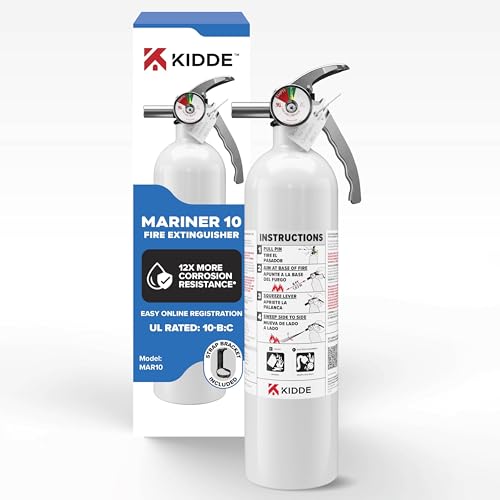
The 10BC version expands protection for decks with more equipment and potential fire sources aboard. It targets typical boat fires (Class B and Class C) and offers enhanced corrosion resistance thanks to durable aluminum and stainless-steel components. A quicker, more powerful discharge—8–12 seconds over 6–8 feet at around 100 PSI—helps crews respond rapidly in emergencies on larger boats or crowded cabins.
First Alert Marine1 Fire Extinguisher, UL 1-A:10-B:C

First Alert’s Marine1 unit is UL rated 1-A:10-B:C and emphasizes durability with all-metal construction and a commercial-grade valve and trigger. The product includes a secure mounting bracket and strap and is US Coast Guard–approved when used with the bracket. This extinguisher balances reliable fire suppression with a straightforward mounting and maintenance process, making it suitable for recreational boats and small skiffs.
First Alert Fire Extinguisher | Marine 14″
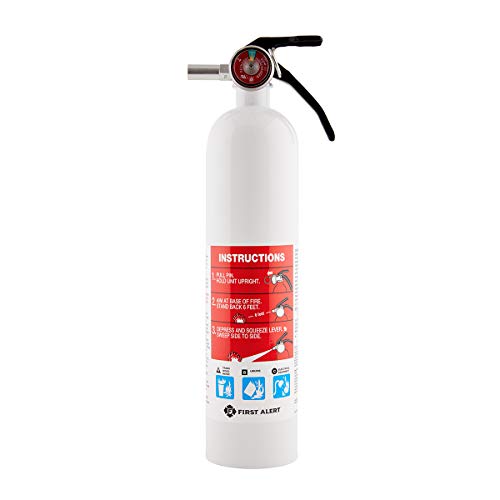
This 14-inch model from First Alert shares the UL 1-A:10-B:C rating and all-metal construction, including a robust valve and trigger. It handles a range of fires—wood, paper, plastics, gasoline, oil, and electrical equipment—making it a versatile option for larger or more gear-intensive boats. It is rechargeable by certified professionals after use, which can be an advantage for long-term fleet safety planning.
Kidde Mariner 5 Fire Extinguisher for Boats, 5BC

The Kidde Mariner 5 is designed for common marine fires in a compact form. It provides strong corrosion resistance through aluminum and stainless steel construction and features a discharge time of 8–12 seconds with a 4–6 foot range at 100 PSI. This model is well-suited for small to mid-sized boats where space is at a premium but reliable protection is necessary for Class B and C fires.
Leyanny Fire Extinguishers For Home And Boat (1 Pack)

Leyanny’s compact extinguisher is marketed for multi-environment use, including homes and boats. It is designed to withstand a wide temperature range and claims suitability across A, B, C, and K classes. While versatile, it is useful to verify compatibility with your specific vessel and fire risk profile, especially for kitchens and engine compartments where marine-grade protection is crucial.
Ostutry Upgraded 8-In-1 Marine Fire Extinguisher

The Ostutry 8-in-1 model is designed for A B C K fires with a 13-foot spray range and a broad operating temperature range (-4°F to 140°F). It emphasizes an enhanced extinguishing agent and a non-toxic, biodegradable formula, aiming to reduce residue and simplify cleanup. This option may appeal to boaters seeking a wider fire-type coverage and a longer reach for safe operations on deck or near galley areas.
ZiQianHard Fire Extinguisher For Home And Boat
ZiQianHard offers a 1-pack extinguisher designed for both home and boat use, with A, B, C, and K fire support. The model stresses easy operation—pin removal, aim at the base, press and sweep. It is positioned as a simple, user-friendly solution for quick on-water response, suitable for glove compartments, cabins, and near the galley or engine area on boats.
Buying Guide: Key Purchase Considerations For Boat Fire Extinguishers
When selecting a marine extinguisher, consider the vessel size, typical fire risks, and maintenance needs. The following perspectives help balance performance, durability, and practicality:
- Fire Class Coverage: For boats, Class B (flammable liquids) and Class C (electrical) are common. Some models also address Class A (ordinary combustibles) and K (cooking oils), which can matter in larger boats with galleys.
- Corrosion Resistance: Marine environments demand corrosion-resistant materials (aluminum, stainless steel). All-metal constructions tend to be more durable at sea.
- Discharge Time and Range: Shorter discharge times are suitable for small vessels, while larger boats benefit from longer ranges and quicker discharge to tame fires before spreading.
- Mounting and Accessibility: Look for included brackets or easy mounting options. Ensure the extinguisher is accessible from common crew areas and free of obstructions.
- Rechargeability: Some models can be recharged after use by professionals. On longer trips, rechargeable units may reduce replacement costs, but check dealer recommendations.
- Certification and Safety Compliance: USCG approvals or relevant certifications provide assurance of performance and suitability for marine use.
- Maintenance and Inspection: Regular inspection (monthly visual checks and annual professional checks, if required) helps ensure readiness. Note expiration dates and replace units as needed.
- Size and Weight: A compact unit saves space on smaller boats but ensure it offers adequate protection for your fire risk and cabin size.
- Ease of Use: Simple operation with clear instructions is valuable in high-stress emergencies. Practice with family or crew on a non-emergency basis if permitted by local regulations.
In practice, most boaters choose one or two extinguishers with marine-grade construction, Class B/C coverage, and easy mounting. For larger vessels, complementary devices or multiple units placed in accessible locations—near the engine, galley, and cabin—can improve readiness and response times.