For new detailers and DIY enthusiasts, selecting a cutting compound that delivers clear results without a complicated process is essential. The following guide highlights beginner-friendly options that remove scratches, swirls, and oxidation while leaving a showroom-worthy finish. Each product below comes from trusted brands and is paired with a brief overview of its strengths, helping you choose the right compound for your vehicle’s paint condition and your polishing setup.
| Product | Brand | Best For | Approx. Use |
|---|---|---|---|
| Meguiar’s Mirror Glaze M105 Ultra-Cut Compound | Meguiar’s | Moderate to heavy defects | All-in-one with fast cutting |
| 3M Perfect-It EX AC Rubbing Compound | 3M | Clearcoat restoration | Fast cutting, low residue |
| Menzerna Heavy Cut Compound 1000 | menzerna | Deep scratches and swirls | Silicone-free, versatile |
| Chemical Guys C4 Clear Cut Correction Compound | Chemical Guys | Swirls and haze | Professional-grade, fast-cut |
| Menzerna Heavy Cut Compound 400 | menzerna | All-in-one heavy to finish | High versatility, silicone-free |
These selections provide a range of cutting power, from aggressive to refined, ensuring beginners can progress from defect removal to a flawless finish without switching brands mid-project. Each entry includes clear instructions aligned with common beginner workflows, so you can start with confidence and build your polishing skills over time.
Meguiar’s Mirror Glaze M105 Ultra-Cut Compound

Meguiar’s M105 Ultra-Cut is a staple for those tackling moderate to heavy defects. Its micro-abrasive technology is designed to cut quickly while minimizing new swirl introduction, allowing beginners to achieve noticeable improvements in fewer passes. The compound excels at removing oxidation, scratches, and sanding marks up to 1200 grit, resulting in a smoother surface that’s easier to finish with a lighter polish. Use with a dedicated cutting pad and a safe speed range to prevent heat buildup that can stress delicate finishes.
Features emphasize a balance between aggressive cutting and a refined finish, reducing the need for multiple passes or secondary steps. It’s well-suited for beginners who want efficient defect removal while maintaining a path toward a glossy, durable result. Always follow with a finishing glaze or polishing step to maximize depth and clarity after defect removal.
3M Perfect-It EX AC Rubbing Compound
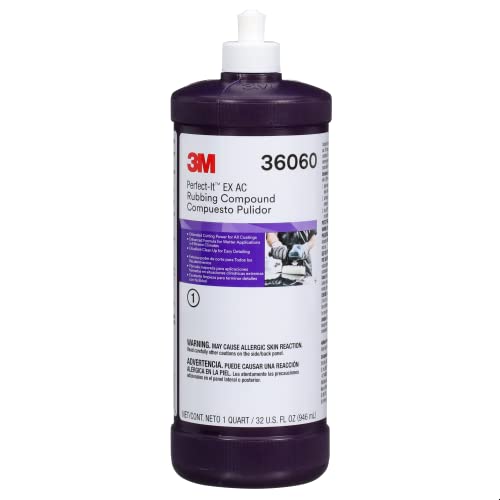
This fast-cutting compound is designed to remove P1200 grade or finer scratches while preventing excessive film buildup or residue. It’s a strong choice when you’re dealing with stubborn marks that resist lighter polishes. The formulation helps avoid clogging and sticking, which can derail beginner sessions. The finish is typically good enough for a show-ready base that can be refined with a dedicated finishing polish for a deeper gloss. Pair with a dual-action polisher and the appropriate pad to optimize speed without sacrificing control.
The 3M system can be particularly forgiving for novices who want predictable results. It’s also a solid option for those performing paint correction on a variety of vehicle colors and finishes, including newer clearcoats that require careful handling to avoid haze or micro-marring. Always wear proper eye and skin protection, and use light-to-moderate pressure to prevent heat-induced defects.
Menzerna Heavy Cut Compound 1000

Menzerna’s Heavy Cut Compound 1000 targets deep scratches, sanding marks, and swirls with strong abrading action. It’s silicone-free, making it suitable for those who want a cleaner finish and compatibility with various pads and machines. Beginners can pair this compound with a suitable heavy-cut pad and an orbital or rotary polisher to achieve a balanced cut-and-finish workflow. While aggressive, it remains controllable with the right technique and light-to-moderate pressure, helping protect delicate clears during the correction process.
Polishing and buffing afterward is essential to reduce holograms and restore clarity. This product shines when you need significant defect removal but still aim for a high-gloss finish after refinement with a finishing compound. For first-timers, practice on a test panel or inconspicuous area before tackling more visible sections of the vehicle.
Chemical Guys C4 Clear Cut Correction Compound

Chemical Guys C4 is a professional-grade correction compound designed to swiftly remove scratches, swirls, oxidation, and holograms. Its formula is structured to cut through defects efficiently while finishing down to a smooth surface ready for refinement with a dedicated polish. This makes it a strong candidate for beginners who want fast results with fewer product changes during a single session. The finish tends to be well-prepared for subsequent steps, reducing the need for multiple layers of correction if used with the correct technique and pad choice.
As a two-step approach, many detailers pair C4 with a finishing polish (or P4 equivalent) to maximize depth, color, and gloss. Always monitor pad temperature and work in shaded conditions to maintain control and prevent heat-related issues on the paint.
Menzerna Heavy Cut Compound 400

Menzerna Heavy Cut Compound 400 offers versatility as an all-in-one option that transitions from heavy cutting to finishing with a single product family. It’s particularly appealing to beginners who want fewer product changes but still need effective defect removal, including deeper scratches and holograms, followed by a finishing step. Silicone-free formulations help ensure compatibility with a broader range of pads and buffers, reducing the risk of hazing or residue that can complicate early attempts at correction.
For beginners, progress naturally from heavy cutting to finishing by selecting the appropriate pad and speed settings. Practicing on test panels helps you gauge cutting rates and finishing behavior, enabling confident adjustments as you work on the actual vehicle.
Buying Guide: Key Purchase Considerations For Beginners
- Defect level compatibility: Choose a compound with the cutting capability suited to the most common defects you will encounter, from swirling to deeper scratches.
- Finishability: Consider whether you want a product that leaves a finish ready for polishing, or one that requires less follow-up work to achieve gloss and clarity.
- Pad compatibility: Ensure the compound matches the pads you own (light-cutting, heavy-cut, or all-in-one kits). Pad density and firmness influence cutting speed and heat generation.
- Silicone-free formulations: For beginners, silicone-free options reduce risk of halos and long-term residue, especially for show cars or frequent repainting projects.
- Machine compatibility: Most beginners benefit from dual-action (DA) polishers, which are more forgiving than rotary machines. If using a rotary, practice with light pressure and slower speeds to avoid heat buildup.
- Clean-up and residue: Some formulas rinse away easily; others may require more effort to remove residue. Consider your workspace and ventilation when choosing.
- Color and gloss expectations: Some compounds finish down with a higher gloss than others. If you’re aiming for show-quality depth, pair with a suitable finishing polish to maximize reflectivity and color depth.
- Safety and skin exposure: Use appropriate protective gear, including gloves and eye protection, and work in a well-ventilated area as compounds can emit fumes during use.
In practice, many beginners start with a high-cut compound to address the most obvious defects, then move to a dedicated finishing polish or glaze to boost gloss and depth. A test panel or door, hood, or bumper area is ideal for experimenting with different products and pad combinations before tackling the entire vehicle. Consistency in technique—steady backing plate pressure, even passes, and controlled speed—often matters more than the exact product choice for initial results.