Choosing the right 12 volt marine battery is essential for ensuring dependable power for your boating adventures. These batteries must offer durable, long-lasting performance while being lightweight and safe in marine environments. Below is a summary table of top-rated 12V marine batteries that combine advanced technology, safety features, and versatility for various marine and outdoor uses.
| Battery | Type | Capacity | Weight | Key Feature |
|---|---|---|---|---|
| Newport 12V50Ah Deep Cycle Heavy-Duty Marine Battery | Sealed AGM | 50Ah | 30 lbs | Lightweight, troll motor compatible |
| Weize Deep Cycle AGM 12V 100Ah Battery | Sealed AGM | 100Ah | Approx. 62 lbs | Maintenance-free, low self-discharge |
| Renogy Deep Cycle AGM 12V 100Ah Battery | Sealed AGM | 100Ah | Approx. 62 lbs | Exceptional safety, expandable connections |
| Rvpozwer 12V 100Ah LiFePO4 Battery | Lithium Iron Phosphate | 100Ah | Group 31 size, lightweight | 15-year lifespan, built-in smart BMS |
| GOLDENMATE 12V 12Ah LiFePO4 Lithium Battery (2 Packs) | Lithium Iron Phosphate | 12Ah each | 3.31 lbs each | IP67 waterproof, 5000+ deep cycles |
Newport 12V50Ah Deep Cycle Heavy-Duty Marine Battery

The Newport 12V 50Ah battery offers a lightweight design at only 30 pounds, making it easy to transport and install in marine vessels. Constructed as a sealed AGM lead acid battery, it guarantees a leak-proof, safe operation ideal for demanding marine environments. It’s specifically compatible with trolling motors, delivering long-lasting and dependable power for your fishing and boating needs. This battery balances durability and portability without sacrificing power, making it a perfect solution for small to mid-sized watercraft applications.
Weize Deep Cycle AGM 12 Volt 100Ah Battery
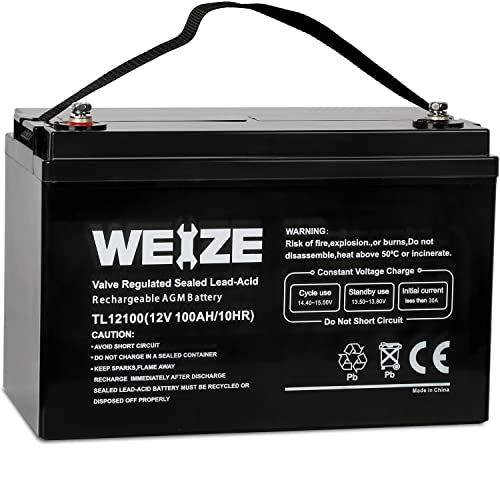
This maintenance-free 100Ah battery by Weize is designed using absorbed glass mat (AGM) technology to prevent acid leakage and reduce upkeep. It operates optimally in temperatures ranging from 5℉ to 122℉, accommodating various climate conditions. The battery’s low self-discharge rate of around 3% ensures it retains charge even after prolonged storage. Featuring a maximum discharge current of 1150A for up to 5 seconds, it provides power necessary for more demanding marine, RV, solar, and off-grid applications.
Renogy Deep Cycle AGM 12 Volt 100Ah Battery

With over 230,000 units sold worldwide, Renogy’s 12V 100Ah AGM battery is known for exceptional safety and chemical stability. Its sealed design limits maintenance, making it reliable for marine and off-grid setups. It supports series and parallel connections without limitations, allowing scalable power solutions to meet specific needs from boats to cabins. The stable internal structure minimizes the risk of internal faults, ensuring smooth operation over numerous cycles.
Rvpozwer 12V 100Ah LiFePO4 Battery with Built-in 120A BMS

This lithium iron phosphate (LiFePO4) battery stands out with an impressive 15-year lifespan and 15,000 deep cycles at 60% depth of discharge. It delivers powerful, reliable energy for marine and RV applications while being lightweight and compact, compliant with Group 31 standards. The integrated 120A smart battery management system (BMS) protects against overcharge, over-discharge, and short circuits. Its ability to connect up to 4 batteries in series or parallel provides scalable voltage and capacity for larger power needs.
GOLDENMATE 12V 12Ah LiFePO4 Lithium Battery (2 Packs)

Ideal for smaller marine electronics and portable power wheels, the GOLDENMATE 12V 12Ah LiFePO4 battery offers superior cycle performance with over 5000 cycles and an IP67 waterproof rating. Equipped with a built-in battery management system (BMS), it offers overcharge and short circuit protection, enabling safe and efficient use. The lightweight design (just 3.31 lbs each) facilitates easy handling and storage, while the low self-discharge rate allows for long-term storage without power loss.
Buying Guide for 12 Volt Marine Batteries
When selecting a 12 volt marine battery, consider the following factors to ensure optimal performance and longevity:
Battery Type and Chemistry
- AGM (Absorbed Glass Mat): These sealed batteries provide maintenance-free operation, are spill-proof, and generally offer good cycle life. Ideal for those prioritizing safety and ease-of-use.
- Lithium Iron Phosphate (LiFePO4): Offers higher energy density, lighter weight, longer lifespan (up to 15 years), and more deep charge cycles than lead-acid batteries. Usually costlier but economical over time.
Capacity and Power Requirements
Match the amp-hour (Ah) rating of the battery to your power demands. For trolling motors and smaller devices, 50Ah to 100Ah batteries work well. For higher power needs or longer runtimes, consider 100Ah or higher capacities.
Weight and Portability
Weight is a critical factor for marine batteries. AGM batteries tend to be heavier, while lithium batteries are significantly lighter, improving boat handling and fuel efficiency.
Maintenance and Safety
Sealed batteries like AGM and LiFePO4 require minimal to no maintenance and are safer due to spill-proof designs. Built-in Battery Management Systems (BMS) in lithium batteries protect against overcharge, over-discharge, and short circuits.
Operating Temperature and Environmental Conditions
Check the temperature range the battery supports, especially if boating in extreme climates. AGM batteries typically tolerate cold better, while LiFePO4 batteries offer excellent performance in varied conditions but may require protection from extreme cold.
Scalability and Connection Options
If you need more power or voltage, select batteries that support series and parallel connections. This is important for expanding power systems in larger boats or off-grid marine applications.
Durability and Cycle Life
Consider how many charge-discharge cycles the battery can handle, which affects lifespan and replacement frequency. Lithium batteries often provide thousands of cycles compared to a few hundred for traditional lead-acid batteries.