Finding a reliable anchor for sandy or muddy bottoms can be challenging. The right anchor delivers solid holding power, easy deployment, and minimal snagging in shallow and deep water alike. Below are five top picks designed for sand, mud, and similar bottoms, suitable for a range of small to mid-size boats. Each option blends durable construction with practical features to help you stay put in varied conditions.
| Product | Why It Stands Out |
|---|---|
| SandShark Premium Fluke Anchor | Lightweight, high-strength aluminum with serrated flukes for strong sand holds |
| Greenfield Original Richter Anchor | High versatility for sand, mud, rocks, and rivers |
| X-FLOAT Dock Auger | PVC-compatible sand anchor, adaptable for sandbar bottoms |
| Spike design with vinyl coating for protection on varied bottoms | |
| 304 stainless steel with crossbar, cross-application for shallow water |
SandShark Premium Fluke Anchor

The SandShark fluke anchor uses serrated edges to dig into sand, delivering stronger holding power in mixed conditions. Built from high-strength aircraft-grade aluminum alloy, it combines durability with lighter weight for easier handling and storage. Its compact dimensions make it practical for boats up to 30 feet, and the retractable shaft design aids storage aboard pontoons and small boats. This anchor is well-suited for both saltwater and freshwater environments, ensuring a secure hold in sandy substrates.
Greenfield Original Richter Anchor

Known for versatility, the Richter anchor from Greenfield is designed to perform across sand, mud, rocks, rivers, and lakes. The spike-style design provides a reliable grip in challenging bottoms, and its coated finish helps protect hulls during deployment and retrieval. This anchor is a solid choice for those who encounter varied substrate conditions and need a single anchor that adapts to multiple environments.
X-FLOAT Dock Auger (Sand Auger)
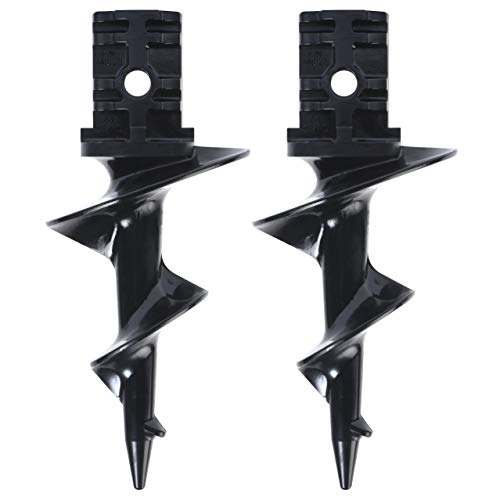
The X-FLOAT Dock Auger is designed to fit 1.5-inch Schedule 40 PVC, making it a practical option for DIY sand anchors. Its 1.57-inch inner diameter suits standard PVC piping, enabling easy construction of sand anchors for lake or river bottoms. It’s particularly suitable for mud, sand, clay, or small stones, providing a simple, adaptable anchoring solution for shallow and semi-shallow waters.
Anchor-Man Vinyl Coated Richter Anchor

This vinyl-coated spike anchor aims to combine secure holds with deck protection. The spike design helps secure footing in sand, mud, weeds, and rocky bottoms, making it a versatile option for lakes and rivers. The protective coating reduces hull wear during deployment and retrieval, contributing to longer equipment life in frequent-use scenarios.
Insaga 26” Sand Anchor
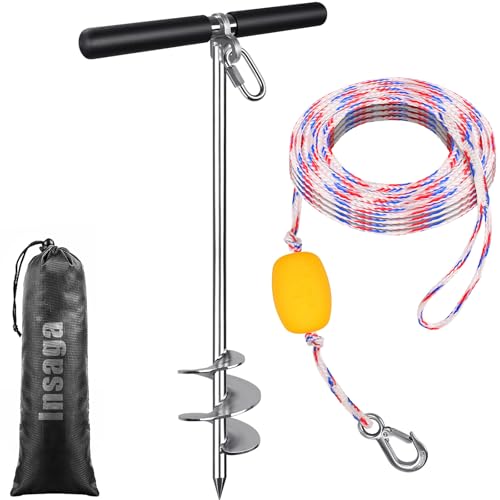
Insaga’s 26-inch sand anchor features a solid 304 stainless steel construction with a crossbar and a fully welded double-sided helix. The removable crossbar aids quick installation, and the wider helix improves grip in sand and shorelines. Its design supports a variety of watercraft, including boats, jet skis, kayaks, and pontoons, especially in shallow coastal zones.
BeneLabel 17″ Sand Bar Anchor

The BeneLabel 17-inch sand bar anchor is made from high-strength stainless steel with a propeller-like design to enhance grip. It weighs about 1.28 pounds and includes a storage bag for portability. The screw-in installation and lightweight frame make it suitable for quick deployments on beaches and shallow waters, including lakes and shorelines.
Anchor-Man Vinyl Coated Richter (Second Listing)

This variant again emphasizes reliable lake and river anchoring with spike geometry designed for secure holds in varied substrates. The vinyl coating protects surfaces and improves handling. It’s positioned as a practical multi-environment anchor, suitable for pontoons and smaller recreational craft operating in sand, mud, weeds, and rocks.
AMMSUN Beach Umbrella Sand Anchor

While not a boat anchor, the AMMSUN sand anchor for umbrellas demonstrates a common design approach: a strong, wind-resistant base anchored in sand using a spiral screw pattern. Its 5-spiral design provides stability against gusts up to 50 mph, illustrating principles applicable to portable, beach-based anchoring systems used near boat entries and shorelines.
Buying Guide: Key Purchase Considerations and Comparisons
Bottom type and water depth strongly influence anchor choice. For sandy and muddy bottoms, spikes and fluke designs with serrated edges often outperform simple furnishers, providing better penetration and grip. Material matters: aluminum offers light weight and corrosion resistance for smaller craft, while stainless steel adds durability for frequent use and rough bottom conditions. Coatings, like vinyl, protect decks and hulls from abrasion during deployment, especially for longer trips.:
- Bottom substrate: sand vs mud vs mixed bottoms — choose anchors with proven performance for your typical substrate.
- Boat size and weight: ensure the anchor is rated for your craft length and use-case (pontoon, small fishing boat, jet ski, etc.).
- Deployment and storage: lighter, retractable options are easier to store on smaller vessels; consider crossbars and screw-in designs for quick setup.
- Corrosion resistance: stainless steel and coated alternatives reduce wear in saltwater and humid environments.
- Maintenance: check for wear on spikes, flukes, and coatings; rinse after use in saltwater to extend life.
In evaluating options, consider whether you need a universal solution for both sand and mud or a specialized unit optimized for one substrate. For multi-environment boating, a versatile spike or fluke anchor with a protective coating can simplify gear management while delivering dependable holds across varied water conditions.