Choosing the right braking system for flat towing enhances control, safety, and peace of mind on the road. The following selected products cover a range of electric, vacuum, and hybrid options from trusted brands. This guide highlights setup efficiency, braking responsiveness, and compatibility with common tow vehicles and RVs to help you compare effectively.
The table below summarizes the five highlighted braking systems, including type, primary benefit, and compatibility notes to aid quick scanning before diving into full product details.
| Product | Type / System | Key Benefit | Compatibility / Notes |
|---|---|---|---|
| Blue Ox BRK2022 Patriot | All-electric flat tow brake | Smaller profile; auto pressure checks; faster stopping | 8 x 7.5 x 11.5 in; 6.2 lb |
| Blue Ox BRK2019 Patriot 3 | All-electric, universal fit | Faster response; extended RF range | In-coach controller |
| Hopkins Towing Solutions BrakeBuddy 39494 | Brake Buddy system | Instant alerts from braking unit | Compact packaging; portable setup |
| Roadmaster Invisibrake | Vacuum-powered brake assist with emergency breakaway | Out-of-sight, compact; strong integration with vehicle brakes | 5-100 PSI, USA-made |
| RVi RVibrake3 | Portable braking system | One-Touch Auto Positioning; audio setup guide | Easy setup feedback |
Across these options, you’ll see a mix of compact profiles, in-coach controllers, and remote monitoring features. The right choice depends on how you tow (dinghy vs. motorhome), your vehicle’s braking system, and how much you value install ease versus integrated control.
Blue Ox BRK2022 Patriot Flat Tow Brake

This model introduces a smaller profile and lighter weight, designed to fit a wider range of towed vehicles. It operates as an all-electric brake system and features automatic brake pressure checks during setup, plus continuous monitoring while towing. The design emphasizes faster braking action and more responsive stops, helping to reduce stopping distances when leading vehicles brake suddenly. At 6.2 pounds, it weighs notably less than earlier Patriot iterations, which can ease hitch installation and handling during setup and removal.
Key considerations include verifying compatibility with your motorhome’s electrical system and ensuring the smaller footprint fits behind driver-side components in your towed vehicle. The automatic pressure checks can simplify initial setup and ongoing safety checks, but proper calibration remains essential for consistent performance on varied terrains.
Blue Ox BRK2019 Patriot 3

The BRK2019 Patriot 3 offers an all-electric design with a universal fit. It includes an in-coach controller featuring extended RF range for reliable communication between the tow vehicle and the braking unit. Faster response braking time is highlighted, contributing to improved control during emergency stops and normal deceleration. This model is well-suited for RV setups where the driver prefers centralized control from the vehicle’s cockpit.
For potential buyers, the universal fit enables compatibility with a broad set of tow vehicles. Consider the RF range and the ease of integrating the system with existing RV electrical infrastructure. While it promises rapid braking responses, proper alignment with the towed vehicle’s brake system is critical to ensure proportional braking during towing.
Hopkins Towing Solutions BrakeBuddy 39494

The BrakeBuddy 39494 offers a compact, portable braking option that delivers instant alerts from the braking unit. This can help drivers quickly recognize braking status or faults without needing to consult separate gauges or displays. The package dimensions and weight indicate a system that is manageable for frequent setup and takedown, which is ideal for RVers who tow occasionally or switch between trailers.
From an operational standpoint, users should assess how the alerting system integrates with their overall safety checks. The effective use of instant alerts can reduce reaction times during setup and towing, but it remains essential to verify that the alert thresholds align with the vehicle’s braking performance and the RV’s braking demands.
Roadmaster Invisibrake
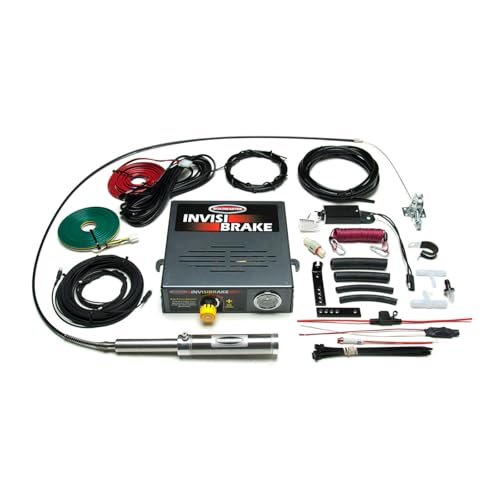
The Roadmaster Invisibrake system is designed to work with vacuum-powered brakes in many towed vehicles. Its standout feature is the “invisible” form factor, with dimensions around 8 by 8 by 2 inches, allowing installation out of sight under seats or behind panels. It energizes the power brakes to mimic the feel of braking from an integrated system, delivering proportional braking that mirrors the motorhome’s braking input.
Key advantages include minimal footprint and straightforward integration for compatible vehicles. However, compatibility with vacuum-powered brakes is essential; for vehicles without vacuum assist, an alternative braking approach may be necessary. The US-made assurance adds a quality expectation for durability and service support.
RVi RVibrake3 Portable Flat Towing Braking System

The RVibrake3 from RVi emphasizes portability and user-friendly setup. It includes an Audio Assistant to guide users through initial configuration, a Brake Lock Detection feature for safety during operation, and One-Touch Auto Positioning that automates the system’s alignment. These features streamline the initial setup and ongoing usage, making it convenient for RV owners who tow infrequently or need a quick deploy-and-go solution.
When evaluating RVibrake3, consider how often you tow and the environments you use it in. Audio guidance can simplify installation for first-time users, but ensuring reliable battery and connectivity in remote areas is important. The system’s portability makes it a strong option for seasonal or mixed towing configurations.
Buying Guide: Key Purchase Considerations
- Type and power source: Decide between all-electric and vacuum-assisted designs. All-electric systems tend to offer straightforward installs and strong control, while vacuum-based systems can deliver proportional braking in certain vehicle configurations.
- Compatibility: Check compatibility with your tow vehicle, RV, and the braking style (dead pedal vs. vacuum-assisted) to ensure proper engagement and braking force.
- Controller and monitoring: In-coach controllers and RF remote monitoring improve convenience, but verify signal range and interference resistance, especially in remote areas.
- Installation footprint: Consider the system’s physical size and whether it fits behind seats, under panels, or in other concealed locations to preserve interior functionality.
- Safety features: Look for auto pressure checks, continuous monitoring, brake alerts, and one-touch positioning to improve setup confidence and on-road safety.
- Portability and storage: For RV users who tow intermittently, portable systems offer flexibility but verify security and weather resistance during storage and transport.
- Warranty and support: A robust warranty and accessible customer support can reduce downtime if adjustments or repairs are needed after long trips.
- Maintenance: Consider how easy it is to service or recalibrate the system, and whether professional installation is recommended for your vehicle type.
Overall, the best braking solution depends on how you tow, the frequency of use, and the level of automation you desire. For frequent, long-haul towing, a compact, all-electric system with a reliable controller often provides the most consistent stopping performance. For occasional use with varied vehicles, a portable or hidden-in-cabin option that offers easy setups and quick removal may be preferable. Always verify compatibility with your specific motorhome and towed vehicle configuration before purchase.