High mileage engines can develop oil burning, leaks, and reduced compression. The right engine additive can help restore seals, reduce friction, and extend engine life. Below are five well-regarded products that address common wear and oil-related issues in older engines, with a snapshot of features and how they work.
| Product | Brand | Key Benefit | Standard Size |
|---|---|---|---|
| Bar’s Leaks 1000 High Mileage Engine Repair | Bar’s Leaks | Restores performance, stops leaks | 16.9 oz |
| Sea Foam High Mileage Motor Treatment HM16 | Sea Foam | Clean fuel system and oil passages | 16 oz |
| Liqui Moly MoS2 Anti-Friction Engine Treatment | Liqui Moly | Forms protective MoS2 film for high load bearing | 300 ml |
| Slick 50 Recharged High Mileage Engine Treatment | Slick 50 | Restores performance and stops leaks | 15 oz |
| XADO EX120 Engine Restore | XADO | Rebuilds worn parts with ceramic-metal coating | 8 ml syringe |
Note: The right choice depends on engine condition, maintenance history, and driving style. The following sections highlight each product’s approach and typical use cases for high-mileage engines.
Bar’s Leaks 1000 High Mileage Engine Repair
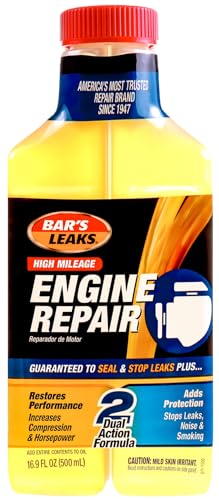
Bar’s Leaks 1000 combines performance additives designed to address common oil-related problems in high-mileage engines. It is formulated to restore compression and horsepower while reducing noise and oil consumption. The product targets worn cylinders, rings, bearings, seals, and gaskets, providing a broad approach to engine wear. It is marketed as a last-chance solution before major repairs, making it suitable for vehicles with frequent leaks, smoking, or noisy operation caused by aging seals.
Sea Foam High Mileage Motor Treatment HM16

Sea Foam HM16 is designed to help keep high-mileage vehicles on the road by cleaning both fuel and lubrication pathways. The recommended use is to add Sea Foam to fuel to clean injectors and carb jets, and to crankcase oil to clean deposits that contribute to oil burning. This approach focuses on reducing injector and combustion chamber deposits, which can be a contributor to reduced performance in older engines.
Liqui Moly MoS2 Anti-Friction Engine Treatment

Liqui Moly MoS2 Anti-Friction Engine Treatment uses a high-load lubricating film of MoS2 to reduce wear and improve engine sound and control at high RPMs. This universal oil additive is designed to work across a range of engine types, enhancing lubrication on friction surfaces. Users often report a quieter, smoother engine feel after treatment, particularly in engines with older components that experience higher friction losses.
Slick 50 Recharged High Mileage Engine Treatment

Slick 50 Recharged is marketed as a high-mileage solution that protects against friction and wear, restores performance affected by old seals, and helps stop leaks. The formulation emphasizes replenishing lubricant content and sealing capability to reduce oil consumption and extend engine life in aging vehicles. It is commonly used by drivers seeking a balance of performance recovery and leak mitigation in older engines.
XADO EX120 Engine Restore

XADO EX120 focuses on rebuilding worn metal surfaces and forming a protective metal-ceramic coating. The syringe packaging is designed for targeted dosing, and the product claims to extend engine component life for up to about 62,000 miles. In addition to wear restoration, it highlights potential improvements in fuel efficiency and oil pressure optimization, contributing to smoother operation and longevity in high-mileage engines.
Buying Guide
When selecting an additive for a high-mileage engine, consider the following factors:
- Engine condition: Assess leaks, burning oil, noisy operation, and compression loss. Choose a product that targets the primary issue.
- Application method: Some additives are liquids added to fuel or oil, while others are applied directly into the engine via syringe or bottle. Follow label instructions for dosage and intervals.
- Formulation focus: If leaks are a major concern, products that boost seal performance may be preferred. For noise and wear, anti-friction or wear-reduction formulations can be prioritized.
- Compatibility: Ensure the additive is compatible with your engine type, oil grade, and fuel. Universal formulations are common, but confirm suitability for your vehicle.
- Driving conditions: Long highway drives may benefit from cleaners targeting deposits, while stop-and-go city driving may accelerate oil consumption, influencing the choice toward detergents and seal conditioners.
- Maintenance plan: Additives are not substitutes for mechanical repair. If leaks or major performance deficits persist, consult a technician for diagnosis and repair.
- Expected outcomes: Most products advertise improved lubrication, reduced wear, cleaner deposits, and sometimes fuel efficiency gains. Real-world results vary by engine condition and maintenance history.
Comparative notes: For engines with significant leakage or smoking, a product emphasizing seal restoration and leak prevention (such as Bar’s Leaks or Slick 50 Recharged) may be appropriate. For multi-system cleaning (fuel and oil passages) Sea Foam offers a dual-action approach. Lubricity-focused additives like Liqui Moly MoS2 can help with high-load bearing engines, while XADO and TriboTEX (listed in related options) focus on surface restoration and protective coatings. Consider combining an oil system cleaner with a dedicated seal-friendly additive if leaks are persistent, and always follow the manufacturer’s dosage guidance.