Answering the need for portable, reliable refueling on job sites or remote locations, this guide highlights five top fuel tank transfer systems. Each option suits different workloads—from heavy-duty fleet support to mobile, compact setups. The products below help buyers choose based on capacity, portability, and pump power. The table compares capacity, type, and primary use to streamline decision-making.
| Product | Capacity | Best For | Key Benefit |
|---|---|---|---|
| Transfer Flow 50/50 Gallon | 50/50 Gallons | Transport-heavy operations | Split capacity for balanced fuel loads |
| Better Built 36-Gallon | 36 Gallons | Mid-size fleets | Automatic overfill shutoff and baffles |
| Vigorighter 51 Gallon Combo | 51 Gallons | Truck bed with toolbox needs | Tank and toolbox in one unit |
| VEVOLR VEVOR 58 Gallon | 58 Gallons | Portable refueling on terrain | 10.6 GPM flow with dual-filter system |
| RDS MFG 60-Gallon | 60 Gallons | Versatile auxiliary fueling | Fully welded seams for durability |
Transfer Flow 50/50 Gallon Split Refueling Tank
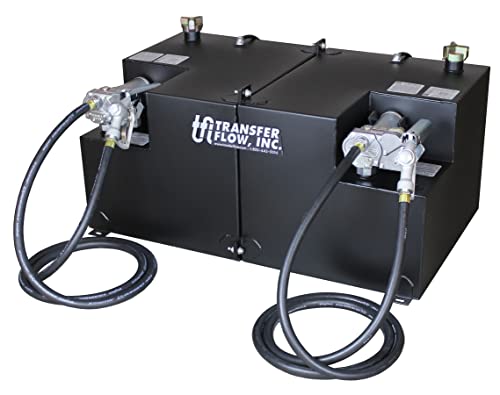
The Transfer Flow 50/50 Gallon split refueling tank is designed for large-volume fueling needs. Best for operators who require two separate compartments to manage different fuels or to balance loads during transport. The unit’s overall footprint is substantial, making it ideal for heavy-duty staging areas or larger service fleets. Best for: fleet operators needing distinct fuel banks in one transportable unit.
Why selected: It provides a dual-compartment approach in a single package, reducing the need for multiple tanks. Caution: Ensure the vehicle bed or trailer can accommodate the taller profile and weight—the package weight is substantial.
Better Built Steel Transfer Fuel Tank
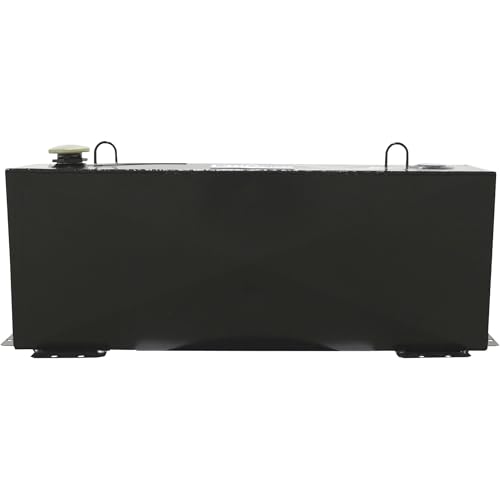
Better Built’s 36-gallon rectangular steel transfer tank is a solid mid-size option for contractors and hobbyists alike. It includes an overfill restriction to prevent spills and built-in baffles to reduce shifting during transport. Best for: operators who want a durable steel tank with spill protection for mid-size workloads.
Why selected: The combination of automatic shutoff and baffles improves safety and stability. Caution: Steel tanks can be heavier and may require careful mounting to avoid vibration or mounting wear on rough roads.
51 Gallon Aluminum Fuel Tank Toolbox Combo
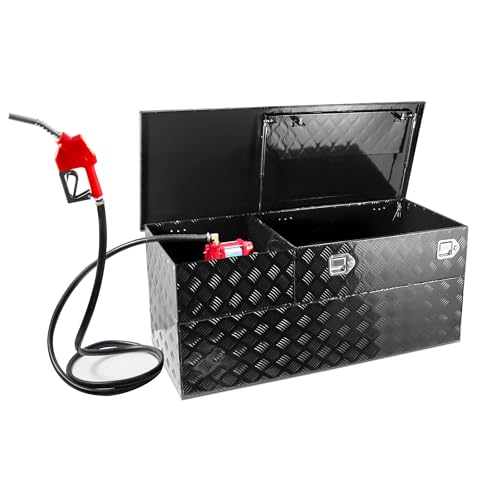
This all-in-one unit combines a 51-gallon aluminum tank with a built-in toolbox, optimized for truck beds. A 12 GPM pump, 13 ft hose, and auto nozzle support spill-free refueling directly in the field. Best for: mobile operators needing fuel storage plus tool storage in a compact footprint.
Why selected: Space efficiency and integrated design streamline job-site operations. Caution: The overall length is substantial; ensure adequate clearance in the truck bed and access to mounting points.
VEVOR Portable Diesel Tank, 58 Gallon

VEVOR’s 58-gallon portable diesel tank emphasizes mobility with a 12V transfer pump rated at 10.6 GPM and a 13.1 ft hose. The unit features a lockable lid and duplex filtration for cleaner fuel transfer. Best for: remote work sites requiring fast, controlled refueling while protecting contents from contaminants.
Why selected: High-capacity tank with integrated filtration supports longer intervals between maintenance. Caution: Polyethylene construction, while durable, can be lighter than steel; handle with care to avoid deformation during transport.
RDS MFG INC Fuel Tank – 60-Gallon

RDS MFG INC offers a 60-gallon auxiliary fueling tank, suitable for varied vehicle configurations. The design emphasizes compatibility with different short-bed vehicles and ease of installation, with an emphasis on durable construction and welded seams. Best for: users who prioritize compatibility and durability in a primary or secondary fueling setup.
Why selected: Its fully welded seams contribute to long-term durability and reliability on rugged terrains. Caution: Confirm bed dimensions before ordering to avoid fit issues on compact trucks.
Buying Guide: Key Purchase Considerations
- Capacity vs. vehicle space: Balance tank capacity with bed length, height, and weight constraints. Larger tanks require sturdier mounting and may limit maneuverability.
- Material and durability: Aluminum and steel each have benefits. Aluminum resists corrosion and is lighter; steel is typically tougher but heavier and prone to rust without coatings.
- Pump specs and flow rate: Higher GPM speeds fueling but may demand more power. Consider available power sources (12V, battery, or generator) and hose length.
- Spill prevention: Look for automatic shutoff, adjustable nozzles, and built-in vents to minimize spills during transfer.
- Filtration and contaminants: Duplex filters or inline screens improve fuel cleanliness, especially for engines sensitive to impurities.
- Portability vs. permanency: Portable tanks suit job sites and temporary setups; fixed installations benefit fleets with regular fueling cycles.
- Compatibility: Verify fuel types (gasoline, diesel, kerosene) and compatibility with your vehicle or trailer mounting system.
- Security: Lockable lids and theft deterrents help protect contents in remote locations.
- Maintenance: Access to pump replacements, seals, and hoses reduces downtime. Check replacement part availability.
Frequently Asked Questions
- What is a fuel tank transfer system used for?
It stores and transfers fuel between containers or vehicles, increasing fueling efficiency on sites or in transit. - What capacity should I choose for a mobile setup?
Choose a capacity that fits your vehicle bed and anticipated fueling frequency to avoid excessive weight or space constraints. - Is aluminum better than steel for these tanks?
Aluminum is lighter and corrosion-resistant; steel is tougher but heavier and may require coatings to prevent rust. - Do these systems include a pump?
Many models include a built-in pump or offer compatible pump kits; verify pump flow and power source before purchase. - Can I carry multiple fuels in one system?
Some dual-compartment designs allow two fuels in separate bays; check labeling and compatibility for safety and regulatory compliance. - What maintenance is required?
Regularly inspect hoses, seals, and filters; replace worn parts promptly to maintain safe transfers.