Finding the right generator for a 5th wheel ensures you have safe, dependable power for appliances, air conditioning, and cooking while camping or boondocking. This guide highlights five top-rated options that balance wattage, fuel flexibility, and convenience. Whether you prefer dual-fuel versatility, inverter efficiency, or transfer-switch readiness, these selections cover a range of RV setups and travel styles.
Summary of selected products:
| Product | Brand | Fuel Type | Key Benefit |
|---|---|---|---|
| TF1450 | WEN | Gas/Propane/Natural Gas | Tri-fuel versatility with transfer-switch readiness |
| DF1100T | WEN | Gas/Propane | High power, dual-fuel, wheel kit |
| 2500-5000 Range Inverter (example) | Westinghouse | Gas/Propane | Quiet operation, inverter efficiency, RV-ready |
| DF475T | WEN | Gas/Propane | Compact dual-fuel with wheel kit |
| DF1100T Variant (if applicable) | WEN | Gas/Propane | EV start and robust transfer switching |
WEN 14500-Watt Tri-Fuel Generator TF1450

The TF1450 from WEN offers a true tri-fuel design, switching among gasoline, propane, and natural gas with a simple dial. It supports both 120V and 240V outputs, which makes it compatible with standard home transfer switches and RV connections. The 500cc OHV engine provides substantial surge watts (14500) and running watts (11500) to handle air conditioners and multiple appliances simultaneously. A built-in electric start adds convenience, while the wheel kit simplifies transport around your campsite. For safety, the unit is equipped with a CO shutdown sensor to automatically power down when elevated carbon monoxide is detected. This combination of power, flexibility, and safety features makes TF1450 a strong option for larger 5th wheels that require robust, adaptable power.
Key considerations for TF1450 include fuel availability and noise levels. In tri-fuel mode, you can rely on whichever fuel source is easiest to access at your destination, reducing the risk of running out of gasoline. However, natural gas installation dependencies and longer startup times when switching fuels may impact use in off-grid locations. The 120/240V capability helps support heavy-duty appliances, but noise considerations remain important for campgrounds with sound restrictions. Overall, TF1450 suits RV owners who prioritize maximum wattage and multi-fuel flexibility for extended trips.
WEN 11,000-Watt DF1100T Dual-Fuel Portable Generator
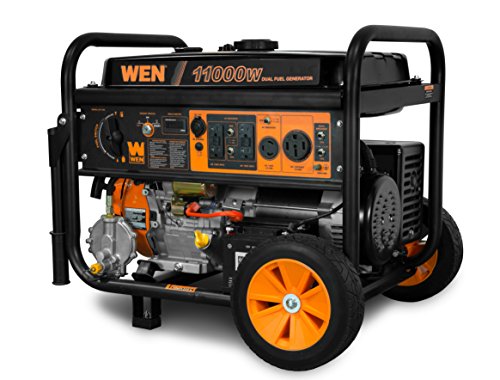
The DF1100T delivers substantial power with dual-fuel capability, allowing operation on gasoline or propane. With an 457cc OHV engine and electric start, you can deploy this generator quickly, making it suitable for 5th wheels that require backup power for climate control and kitchen appliances. The unit offers 120V/240V output options to support both standard outlets and RV connections, and it includes a wheel kit for easier mobility around campsites or yards. The built-in CO watchdog enhances safety by monitoring carbon monoxide levels and shutting the unit down if necessary, providing peace of mind in enclosed camping spaces.
Considerations for DF1100T include fuel cost and availability, as well as noise at higher loads. Dual-fuel efficiency is strong, but propane availability may vary by location. Its size and weight are more suited to larger RVs rather than ultra-compact setups. Still, the DF1100T provides reliable power and flexibility for those needing frequent high-wattage use in a 5th-wheel lifestyle.
Westinghouse 4000 Peak Watt Dual Fuel Portable Inverter

This Westinghouse model pairs dual-fuel capability with inverter technology to deliver clean power ideal for sensitive RV electronics. With 4000 peak watts and 3300 running watts, it supports essential appliances and electronics while maintaining stability at less than 3% THD. Features include a telescoping handle, 5–20R 120V outlet, TT-30R RV outlet, and two USB ports, making it well-suited for travel trailers and 5th wheels. The unit also includes automatic low-oil and CO shutdown protections, enhancing safety during extended trips. The LED display provides real-time feedback on fuel level, power output, runtime, voltage, and hours, helping you manage efficiency on the road.
Potential drawbacks include the inverter’s peak watt limit, which might require careful planning for high-load events like air conditioning. Its relatively compact size means it’s best for mid-sized RV setups or nights with a few electricity-demanding devices running. For RV owners prioritizing quiet operation and electronics safety, this Westinghouse inverter option offers a balanced mix of portability and power.
WEN 4,750-Watt DF475T Dual-Fuel Portable Generator

The DF475T provides a lighter, more compact option without sacrificing dual-fuel flexibility. Running on gasoline (4750 surge, 3800 running) or propane (4350 surge, 3500 running), it supports 120V and 240V outputs, facilitating transfer-switch compatibility for RV systems. The electric start simplifies startup, especially after periods of winter storage or extended travel. With a 224cc engine, the DF475T is a practical choice for mid-sized fifth wheels that don’t require the high-wattage demands of larger units but still want dependable, versatile power. Noise and vibration are typical considerations for smaller generators, but the unit remains portable for easy storage in an RV shed or under a camper hatch.
For RV travelers with moderate power needs, the DF475T balances cost, weight, and functionality. It’s best suited for owners who frequently camp with essential appliances and perhaps a small air conditioner or heater, rather than running multiple high-demand devices simultaneously.
WEN 11,000-Watt DF1100T — Revisited
Note: This section reiterates the DF1100T due to its prominence for RV power needs. With robust gasoline and propane capability, electric start, and a large dual-fuel engine, it remains a top pick for 5th wheels that demand reliability across varying fuel sources and substantial wattage. Users should plan for fuel logistics on extended trips and consider the unit’s weight and footprint when storing in an RV bay or garage. The unit’s transfer-switch readiness makes it a solid candidate for shore power scenarios and off-grid camping alike.
Buying Guide: Key Purchase Considerations For 5th Wheel Generators
- Power needs: Estimate peak wattage (air conditioner, heater, microwave) and running watts. Larger fifth wheels often benefit from 8,000–12,000+ watt capacity, while lighter setups can manage with compact, inverter-based models.
- Fuel flexibility: Dual- or tri-fuel designs offer resilience when one fuel source is scarce. Consider availability of gasoline, propane, or natural gas at your typical destinations.
- RV compatibility: Look for 120V/240V outputs and RV-ready outlets (TT-30R). A transfer switch-ready generator simplifies safe power transfer for home or park connections.
- Portability: Wheel kits, handles, and weight affect how easily you can move and store the unit at an RV site or storage space.
- Safety features: Automatic CO shutdown, low-oil shutdown, and alert displays help protect occupants and extend engine life.
- Noise and emissions: Inverter designs generally offer quieter operation and cleaner power suitable for sensitive electronics on the road.
- Reliability and maintenance: Brands with robust dealer networks and readily available parts reduce ownership friction. Look for warranties and ease of service.
- Startup and usability: Electric start with key fob or push-button control saves time when you’re ready to hit the road or set up camp.
When evaluating options for a 5th wheel, balance wattage, fuel flexibility, and portability against your typical travel tempo and campground rules. For some users, maximum peak watts are critical for hot summers and lengthy stays; for others, quiet operation and inverter-clean power for electronics take priority. This guide provides a spectrum of choices to fit multiple RV lifestyles, from large, well-equipped setups to lighter, weekend adventures.