What matters most to buyers seeking a 12 inch car speaker box is clarity, bass depth, and fit. This article highlights five solid options designed to deliver strong, reliable bass while fitting a range of vehicle spaces and subwoofers. Whether you drive a compact car or a full-size truck, the right enclosure can improve sound without crowding the cabin. Consider sealed vs. vented designs, internal airspace, and mounting depth to pick the best match for your system.
| Product | Best For | Key Benefit |
|---|---|---|
| QPower 12 Inch Dual Subwoofer Box | Two-sub setups in one enclosure | Vented dual-chamber design for cooler operation |
| QPower QBASS Dual 12 Inch Box | Deep bass in trucks and SUVs | Two chambers with shared slot port |
| QPower QTW12 Sealed Box | Compact trucks with tight bass | Sealed enclosure for tight, accurate response |
| American Sound Connection 12″ Vented | Balanced, concert-like bass | Vented design for efficient cooling |
| QPower Single 12″ Vented Ported QBOMB12VL | Strong low-end in a simple install | High-output vented design |
QPower 12 Inch Dual Subwoofer Box

Best for: Buyers seeking a two-sub setup within a single enclosure. The dual-chamber vented design aims to maximize bass impact while spreading air pressure across two subs. This is a strong pick for users upgrading from a single-box system or building a louder, street-ready rig. The box is built to keep subs cool with a shared slot port that promotes air movement.
Why chosen: The dual enclosure approach helps manage bass output and heat, which can be critical for high-volume listening. Its rugged construction supports daily use in cars and trucks. A caution: compatibility depends on subwoofer size and mounting depth, so verify your subs fit the chambers.
Best for: Those who want louder, more aggressive bass with two 12″ subs without buying two separate enclosures. It offers a practical balance of space efficiency and output.
Limitations: The design requires two suitable 12″ subs and enough mounting depth. If you only run a single 12″ sub, this box may be less efficient than a sealed or single-chamber option.
QPower QBASS Dual 12 Inch Box
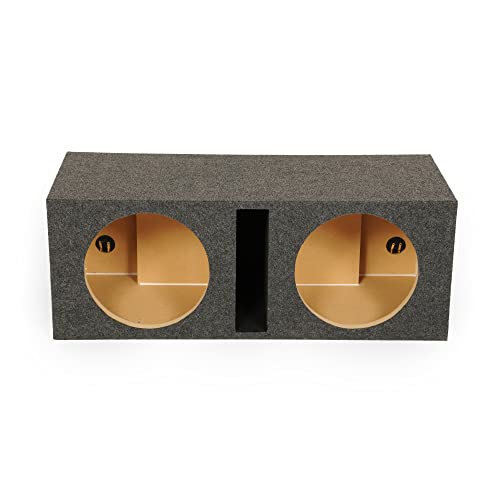
Best for: Truck and SUV owners who want deep bass with a simple, rugged enclosure. The dual sub enclosure uses separate chambers and a single slot vent to manage heat while delivering powerful low frequencies. The MDF build helps resist flex under heavy bass.
Why chosen: The single slot vent across both chambers can help regulate temperature during long listening sessions, which helps protect the subs from heat buildup. This design supports a stable, cohesive bass response across the stereo system.
Limitations: The dual-chamber design requires careful measurement to ensure both subs fit behind or under seats. If space is very limited, a smaller sealed option might be preferable.
QPower QTW12 Sealed Box (Pair)

Best for: Vehicles where space behind the seat is available and precise bass is preferred. The sealed design often delivers tighter, more controlled low-end, which can be ideal for rock, pop, or jazz enthusiasts who want accuracy over slam.
Why chosen: Each enclosure provides 0.88 cubic feet of internal airspace, contributing to tight bass with minimal port timing issues. The compact depth helps fit behind truck seats or in small SUVs.
Limitations: Sealed boxes typically require careful subwoofer pairing to achieve the desired bass footprint. If you crave deeper low-end thump, a vented design may be more suitable.
QPower Single 12″ Sealed Box — 1.2 Cu Ft

Best for: Shoppers needing a compact, single-sub enclosure with a robust airspace and solid MDF construction. It suits small vehicles or tight trunks where depth is a critical factor.
Why chosen: The 1.65 cubic feet air space and sturdy 0.75–1 inch MDF structure provide solid foundation for deep bass without excessive panel resonance. It keeps installation manageable and vibration under control.
Caution: Sealed designs rely on the subwoofer’s efficiency; pairing a sub with insufficient excursion may limit bass depth. Verify fit and required mounting depth before purchasing.
Q Power 12 Inch Heavy-Duty Sealed Box
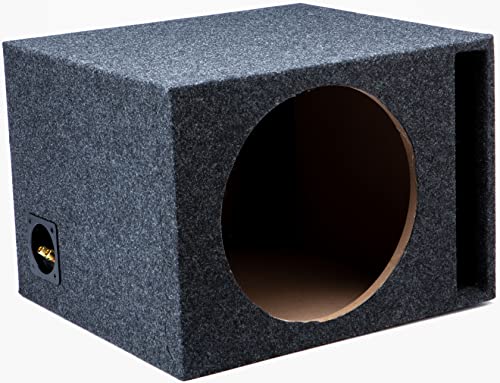
Best for: Buyers wanting a rugged, charcoal-gray carpeted enclosure with reliable, even bass. The heavy-duty MDF construction supports long-term use in demanding setups.
Why chosen: The enclosure uses a 1.25–1.5 inch thick front panel design to resist flex under heavy bass. The dimensions and air space balance allow for strong low-end output without excessive box resonance.
Caution: The stacked thickness may affect installation depth. Confirm your vehicle’s available space before purchase to ensure a proper fit.
QPower Quad Easy Set 4 Hole Sealed Box

Best for: Systems requiring multiple 12″ drivers with simple wiring. The quad sealed design offers 4 separate compartments and easy push-button terminals, aiding straightforward installation.
Why chosen: Its 1 cubic foot airspace per sub provides robust bass response while maintaining manageable enclosure size. The MDF construction and carpet finish ensure durability in vehicle environments.
Caution: Quad configurations can demand more mounting depth and space. Measure your trunk or cargo area to confirm fit before ordering.
Qpower Single 12″ Vented Ported QBOMB12VL

Best for: Those seeking the deepest low frequencies from a single 12″ box with a vented design. It emphasizes vented air flow to boost bass extension in a straightforward install.
Why chosen: The single vented chamber supports efficient air movement, enhancing low-end response. The high-quality MDF provides strength and reduced enclosure flex during heavy bass play.
Limitation: If you have limited space behind a seat, check the exact mounting depth to ensure the QBOMB12VL clears obstacles and seat frames.
Buying Guide
What size and space are available? Measure mounting depth, width, and height to ensure an enclosure fits behind seats, in trunks, or under cargo areas. Sealed boxes are typically shallower but may require more precise sub pairing. Vented boxes offer more bass output but need space for air movement.
Sealed vs. vented design: Sealed enclosures provide tight, accurate bass with less power draw, while vented enclosures deliver deeper bass but require more space and attention to port tuning for smooth response.
Internal airspace matters: Larger air space generally increases bass potential, but must align with subwoofer displacement and enclosure dimensions. Cross-check each sub’s recommended enclosure specs.
Construction and durability: MDF cabinets are common for car sub enclosures due to stiffness and resonance control. Carpet finishes help protect the box and blend with vehicle interiors.
Number of drivers and layout: If you plan to run two 12″ subs, dual-chamber or quad designs can simplify mounting and thermal management. For single-sub setups, sealed or vented single-box options are often best.
Fit and compatibility: Confirm mounting hole patterns, enclosure depth, and terminal placements to avoid clearance issues with seats, spare tires, or other car components. Some boxes assume standard 12″ sub mounting configurations; verify compatibility with your subs.
FAQ
- What’s the difference between sealed and vented 12″ boxes? Sealed boxes trap air for tight bass and compact sizes, while vented boxes use a port to extend low-frequency output at the cost of requiring more space and tuning.
- Do I need two 12″ subs to use a dual-sub box? If the enclosure is designed for two subs, yes. A single sub may underutilize the chamber’s potential, while two subs can maximize output and balance.
- How do I know if a box will fit my car? Check mounting depth, trunk space, seat clearance, and the sub woofer’s required mounting diameter. Compare with the box’s dimensions and port layout.
- Is MDF better than plastic for sub boxes? MDF is common due to stiffness and resonance control. Plastic boxes can be lighter but may not dampen vibrations as effectively over time.
- Can I install a 12″ box myself? Basic installations are feasible with proper tools, wiring safety, and a clear mounting plan. If uncertain, seek professional help for wiring and enclosure sealing.
- Should I choose a vented or sealed box for street music? For deeper bass and louder, party-ready sound, vented is often better. For precise, controlled bass in smaller spaces, sealed is preferred.