Find the right 2-cycle oil measuring device to mix fuel accurately and avoid engine damage. This guide highlights five reliable options suited for hobbyists, contractors, boaters, and outdoor power equipment users. Each product helps you achieve the correct oil-to-gas ratio with clear markings, durable construction, and practical design for daily use.
Quick comparison table of selected products:
| Product | Best For | Key Benefit | Typical Capacity |
|---|---|---|---|
| Power Performance Premium 2-Cycle Oil 16oz | Homeowners and DIYers | Easy-to-read markings; dual ounce and mL scales | 16 oz bottle |
| MEASURE RIGHT 2 Stroke Oil Measuring Cup | Budget-conscious users | Built-in ratio conversion chart | 16 oz pitcher |
| Seachoice 32 Oz Measuring Container | Marine and outdoor equipment | Clear volume markings in liters and gallons | 32 oz |
| Samorillo [2-Pack] Wide Mouth Oil / Gas Bottle | Pro shops and fleets | Six ratios; smudge-proof markings | Each up to 20 oz |
| Maxima Quick-2-Mix Oil/Gas Bottle | Racers and pros | Calibrated for 24:1 to 100:1 | 20 oz |
Power Performance Premium 2-Cycle Oil 16oz Easy to Measure Bottle

Best for: Home users who value simple, straightforward measurements. This bottle provides 2.6 oz and 3.2 oz markings, plus 80 mL and 100 mL indicators, with ounce and mL scales along the side for larger quantities. It supports 50:1 and 40:1 mixes for 1 gallon of gas. Meets JASO FD specifications, ensuring compatibility with many 2-stroke engines. Caution: Only use as directed; ensure the bottle is clean to avoid cross-contamination.
2 Stroke Oil Measuring Cup – 16 Oz Oil Gas Mixing Pitcher

Best for: Budget-conscious builders and DIYers who blend fuel themselves. This pitcher includes a built-in conversion chart to match manufacturer ratios, helping you mix accurately every time. Made from tough polypropylene that resists cracking if dropped. It’s ideal for a variety of equipment like outboards, chainsaws, and lawn tools. Limitation: It may require frequent cleaning to maintain readable markings after heavy use.
Seachoice 2-Cycle Engine, Oil to Gas Measuring Container

Best for: Marine and outdoor engines where clear, volume-based measurements are essential. The 32 oz bottle features liters and gallons markings and supports common mixing ratios including 100:1, 50:1, 40:1, and 24:1. It’s a solid choice for boaters and outdoor enthusiasts who need reliable, readable guidance on the go. Caution: Ensure all scales are legible; heavy exposure to sun can fade markings over time, though this design minimizes that risk.
[2-Pack] Wide Mouth Oil / Gas Measuring Bottle by Samorillo

Best for: Professional settings with frequent fuel mixing. The two bottles hold up to 20 oz each and include six ratios (24:1, 32:1, 40:1, 50:1, 60:1, 100:1) with smudge-proof markings that resist fading over time. The wide mouth design reduces spills, and the double-turn caps prevent leaks. Choose this if you need to reuse bottles across multiple machines. Limitation: Large pouring openings can lead to splash if not controlled in windy outdoor areas.
Maxima Racing Oils 10920 Quick-2-Mix Bottle
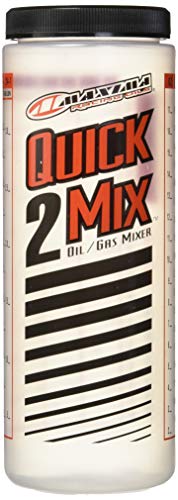
Best for: Racing or performance-oriented users who need precise calibration from 24:1 to 100:1. The bottle uses calibrated markings for oil to gas, with ounce, cubic centimeter, gallon, and liter calibrations for flexible use. It’s well-suited for riders, boaters, and pro shops that require consistent, repeatable mixes. Caution: As with all measuring bottles, ensure cap seals are intact to prevent leaks during transport.
T-H Marine Gas/Oil Mixing Bottle – 2-Stroke Bottle

Best for: Portable backup oil containers for boats and small engines. The 25 oz capacity supports a range of engine sizes, with easy-read guidelines for quick measurements. It’s handy for on-deck or garage use where space is limited. Limitation: Not as feature-rich as some larger capacity models, but adequate for essential mixes in tight spaces.
Jet Skis International 2-Pack 2-Stroke Bottles

Best for: Enthusiasts who need multiple bottles for simultaneous fuel mixing or spare units for on-site use. The Quick 2 Mix bottles enable accurate ratios with ounce and CC calibrations and support common mixes such as 24:1 to 100:1. Pack of 2 offers convenience for trips, races, or large maintenance projects. Caution: Verify that the scale is legible after exposure to sun and moisture to maintain accuracy.
Buying Guide
- Capacity and portability: Choose a bottle or pitcher with a capacity that matches your typical fuel quantity. Larger bottles reduce refills, while compact designs are easier to carry on boats or in maintenance totes.
- Ratio coverage: Look for products offering common ratios (24:1, 32:1, 40:1, 50:1, 60:1, 100:1). A built-in conversion chart is helpful for customizing mixes per manufacturer specifications.
- Clear, durable markings in multiple units (ounces, milliliters, liters, gallons) support quick measurements and reduce mistakes. Consider smudge-resistant scales for field work.
- Material and durability: Polypropylene and rugged plastics resist chemical exposure and impact. Avoid brittle materials in cold environments or high-impact settings.
- Leak prevention: Wide-mouth designs simplify pouring but may increase spill risk; double-turn caps or secure seals help prevent leaks during transport.
- Intended environment: Marine and outdoor use benefit from bottles with splash resistance and easy cleaning. Home workshops prioritize simple maintenance and portability.
- Cost of ownership: Reusable measuring bottles save money versus disposable premixed cans but ensure readable scales hold up to repeated use and cleaning.
FAQ
- What is the best oil-to-gas ratio for small engines? Common ratios are 40:1 or 50:1, but always follow the engine manufacturer’s specification for your equipment.
- Can I use any oil with these measuring bottles? Most 2-stroke oils designed for gasoline use are compatible; check the bottle’s guidance and your oil’s compatibility with your engine.
- Should I mix oil and gas in the bottle or in a separate container? It depends on your workflow. Some devices are designed to be filled with oil first, then topped up with gas, while others are used to measure directly into a gas can.
- How do I clean these bottles after use? Rinse with clean fuel or appropriate solvents, then air-dry to prevent residue buildup that could affect future measurements.
- What happens if markings fade? Replace the bottle or verify with a separate measuring tool to avoid incorrect mixtures, especially for high-performance engines.
- Are these bottles suitable for marine engines? Yes, several models provide liter and gallon markings and robust construction for marine environments. Always ensure caps seal securely for saltwater use.