Answering the question most buyers have: which 20-inch front suspension fork should I choose for a fat tire bike or E-bike? This guide highlights five solid options, focusing on travel, weight, and compatibility to help you pick the right fork for your riding style. Ideal for riders seeking smoother rides on snow, sand, and rough trails, these forks balance control and ease of installation. The top picks include models suited for aggressive trail today or lighter urban fat-bikes tomorrow. Below, you’ll find a quick product snapshot, followed by in-depth sections and a practical buying guide.
| Product | Best For | Key Benefit |
|---|---|---|
| FOMAS 20 Inch Front Suspension Fork | All-around fat bike riders | Durable aluminum alloy with lockout for terrain versatility |
| Exceedhub 20 Inch 4.0 Fat Tire Suspension Fork (180mm Travel) | Aggressive trails and riders seeking extra travel | Lightweight magnesium+aluminum alloy with adjustable air system |
| ZTZ 20 Inch 4.0 Fat Tire Air Suspension Fork (130mm Travel) | Balanced performance and light weight | Ultralight design with reliable 130mm travel |
| BUCKLOS 20 Inch 4.0 Fat Tire Fork (180mm Travel) | Snow and beach riding with maximum travel | Low weight for high versatility and strong build |
| JURPLIX Air Suspension Fork (180mm Travel) | Durable, all-terrain fat bikes and E-bikes | Corrosion-resistant aluminum with robust internals |
FOMAS 20 Inch Front Suspension Fork

Best for riders who want a reliable, durable front fork with convenient features. The FOMAS fork is made from high-strength aluminum alloy to improve stability on demanding trails. It includes a lockout switch for on-the-fly terrain adjustments and a Fender mounting hole to help reduce splash and debris. This fork best suits riders who prioritize durability, straightforward ride quality, and easy cable management.
Who this is for: serious fat-tire riders needing dependable performance and a simple setup. Caution: check clearances to ensure the fender mounting hole aligns with your bike’s brake line routing.
Exceedhub 20 Inch 4.0 Fat Tire Suspension Fork

Best for riders who want substantial travel and modern air-spring design. This fork features 180mm of travel, a 28.6mm straight steerer, and a lightweight magnesium-aluminum alloy construction. It supports hydraulic disc brakes and an air-based damping system for smoother control over rough terrain. Choose this if you ride aggressively on mixed surfaces and need extra absorption without adding heavy weight.
Who this is for: riders prioritizing travel and a lightweight setup for steep descents. Caution: ensure compatibility with your wheel hub spacing and brake type before ordering.
ZTZ 20 Inch 4.0 Fat Tire Air Suspension Fork

Best for riders who want a lightweight option with reliable performance. The ZTZ fork weighs about 4.5 pounds and uses an air spring design for efficient damping. It offers 130mm travel and 135mm hub spacing, and it’s positioned as broadly compatible with various 20-inch fat bikes and E-bikes. Choose this if you want a light footprint with solid performance.
Who this is for: riders seeking a lightweight alternative for casual-to-moderate fat-bike use. Caution: verify exact model compatibility since multiple 20-inch fat bike configurations exist.
ZTZ 20 Inch 4.0 Fat Tire Oil Spring Fork
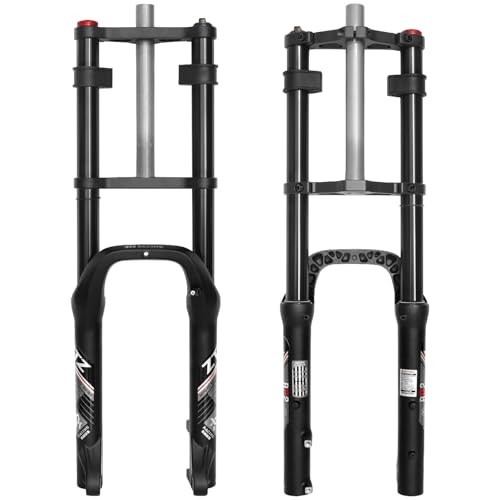
Best for riders who prefer a traditional oil-spring setup with lockout capability. This fork provides 180mm travel, 135mm hub spacing, and a 9mm quick-release axle. It’s designed for robust handling on snow and beaches while remaining suitable for various fat-bike configurations. Opt for this if you value a familiar damping feel with strong structural integrity.
Who this is for: riders who want a classic suspension feel and dependable performance. Caution: oil-spring systems can be heavier than air forks; confirm weight budgets for your build.
Exceedhub 20 Inch 4.0 Fat Tire Air Suspension Fork (Another Variant)

Best for riders who want a high-travel option with a lightweight frame. This Exceedhub fork matches the 180mm travel of the earlier model and emphasizes fast rebound response and overall ride comfort. It’s suitable for fat snow bikes and beach toys that demand both control and load tolerance. Choose this when you need maximum travel without excessive weight.
Who this is for: riders seeking aggressive terrain capability with a balanced, light build. Caution: verify star-nut inclusion and compatibility with your fork crown and steerer tube.
Buying Guide: Key Purchase Considerations
- Travel and terrain: If you ride rough trails or deep snow, prioritize forks with 180mm travel. For casual rides on flat terrain, 130–150mm is often sufficient.
- Steerer diameter and crown type: Ensure compatibility with your frame’s head tube and existing headset. Common standards include 1-1/8 inch straight steerers.
- Hub spacing and axle: Most fat-bike forks use 135mm QR hubs. Double-check this against your wheel assembly to avoid fit issues.
- Weight vs. strength: Lighter forks (around 4.5–5.8 lbs) improve handling but ensure the materials and damping system meet your riding demands.
- Lockout and damping: Lockout helps on smooth surfaces or climbing; consider air springs for adjustable feel and easy tuning on different terrains.
- Braking compatibility: Confirm disc brake type and rotor compatibility with your frame and brakes to avoid interference or clearance problems.
- Bike compatibility: While these forks target 20-inch fat tires, always verify model-specific compatibility with your bike’s geometry and the fork’s dimensions (steerer length, crown race, etc.).
Frequently Asked Questions
- Q: What does travel mean in a suspension fork? A: Travel describes how far the fork legs can move to absorb impacts, often measured in millimeters (e.g., 130mm, 180mm).
- Q: Is a lighter fork always better? A: Lighter forks improve handling, but must still meet your strength and damping needs for the riding you do.
- Q: Do I need a lockout? A: Lockout helps when climbing or riding on smooth surfaces; it reduces fork sag and conserves energy.
- Q: How do I check compatibility with my fat bike? A: Verify tire width (4.0 inches in these cases), hub spacing (135mm), steerer diameter, and overall frame clearance.
- Q: Are air-spring forks easier to tune than oil-spring? A: Air-spring forks generally offer easier adjustability and lighter weight, but oil-spring models have a classic damping feel that some riders prefer.
- Q: Can I install any 20-inch fork on a fat bike? A: Not automatically. Check steering tube dimensions, crown type, brake compatibility, and wheel hub spacing before purchasing.