If you’re shopping for 5/16-inch or 16mm silicone hoses, these options are tailored for higher temperature resistance, greater burst strength, and reliable long-term use in automotive cooling or vacuum systems. The best fits are for hobbyists upgrading their radiator hoses, DIY engine bypass projects, or anyone needing durable silicone tubing that resists coolant additives and harsh engine environments. Below, you’ll find five strong picks with practical notes on suitability, strength, and limitations.
| Product | Length | Key Strength | Best For |
|---|---|---|---|
| SATUGUOJI 5FT ID 5/8″ (16mm) Silicone Hose | 5 ft | 60 PSI working; 232 PSI burst; -20°C to 220°C | Radiator hoses and high-temp coolant lines |
| EVIL ENERGY 5/16″ Silicone Heater Hose | 5 ft | 60 PSI working; 246 PSI burst; -55°C to 180°C | Rigid engine bays; best for tight routing |
| 5/8″X5FT Silicone Heater Hose, Blue/Red | 5 ft | 60 PSI working; 232 PSI burst; -20°C to 220°C | Coolant lines with reinforced build |
| AUKITNNE 16ft 5/8” Silicone Hose | 16 ft | Broad temperature range; -40°F to 230°F | Long custom runs; flexible routing |
| Bekelan 16MM 5/8″ Silicone Heater Tubing | 3.28 ft | 145 PSI burst; -65°F to 350°F | High-pressure lines in tight spaces |
SATUGUOJI 5FT ID 5/8″ Silicone Hose
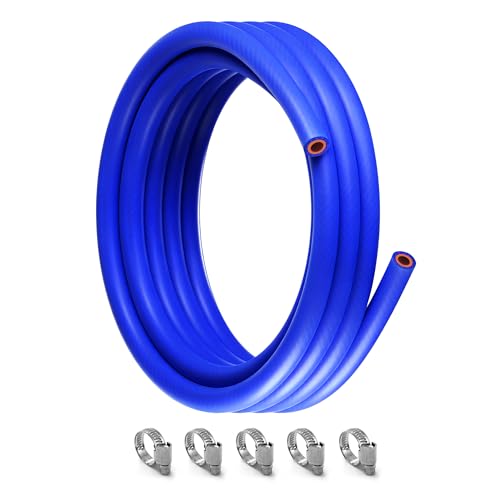
Overview: This blue silicone hose features an outer silicone wall with a reinforced inner polyester braid, designed for higher temperature resistance and durability. It is rated for a working pressure of 60 PSI and a burst pressure of 232 PSI, with an operating temperature range from -20°C to 220°C. The hose measures 5 feet in length with an ID of 5/8″ (16 mm) and an OD of 0.94 inches (24 mm).
- Best for: Medium-length radiator and cooling lines requiring robust temperature tolerance.
- Why selected: The dual-layer construction aims to resist aging and coolant exposure while maintaining flexible routing.
- Limitations: Lower working pressure compared with some high-performance hoses; ensure your system pressure stays within 60 PSI.
EVIL ENERGY 5/16″ Silicone Heater Hose

Overview: A 5-foot black heater hose built with braided polyester and silicone inner/outer layers. It meets SAE 20R3 Class A requirements and offers a high-temperature range from -55°C to 180°C. The stated working pressure is 60 PSI, with a burst capability of 246 PSI, and a minimum bend radius of 32 mm.
- Best for: Engine bays that demand strong heat resistance and flexible routing around tight corners.
- Why selected: Silicone construction provides better temperature resilience than EPDM, reducing aging under harsh coolant conditions.
- Limitations: Slightly narrower temperature span on the upper end than some premium options; verify compatibility with your coolant mix.
5/8″X5FT Blue & Red Silicone Hose
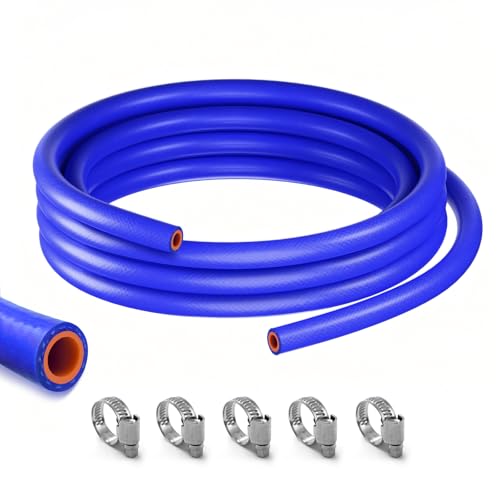
Overview: This hose emphasizes a thicker wall (0.27 inches) and reinforced polyester fiber with a color-coded blue exterior and red interior. It offers 60 PSI working pressure and 232 PSI burst pressure, designed for high-temperature stability and resistance to coolant additives.
- Best for: Applications requiring higher wall thickness for added durability and a color-coded routing method.
- Why selected: The extra wall thickness can reduce risk of deformation in high-flow setups.
- Limitations: Heavier than standard hoses; ensure compatible clamps and mounting space.
AUKITNNE 16ft 5/8” Silicone Hose

Overview: A long 16-foot roll designed with a 16mm ID and 24mm OD, combining a high-density polyester layer with premium silicone walls for excellent burst strength. It maintains flexibility across a wide temperature range (-40°F to 230°F) and supports long, custom routing for radiator bypass or vacuum lines.
- Best for: Projects needing extended hose length to minimize joins and avoid pressure points.
- Why selected: The three-layer design adds rigidity against expansion under pressure while maintaining flexibility.
- Limitations: Longer rolls require careful measurement to avoid waste and unnecessary extra fittings.
SATUGUOJI 5FT ID 5/16″ Blue Hose
Overview: This variant uses an ID of 5/16″ (8 mm) and an OD of 0.63 inches (16 mm) with a 5-foot length. It features reinforced inner and outer layers with a blue exterior and orange inner braid, offering a similar temperature range to the 5/8″ options and a comparable burst rating of 232 PSI.
- Best for: Shorter radiator or vacuum-line runs where compact size is essential.
- Why selected: Consistent reinforcement design helps maintain integrity under coolant exposure.
- Limitations: Smaller ID may constrain some high-flow setups; confirm compatibility with your system’s volume.
Buying Guide: Choosing The Right 5/16″ Or 16mm Silicone Hose
- What to measure: Confirm the inner diameter (ID) and outer diameter (OD) needed by your fittings and clamps. Common options are 5/16″ (8 mm) ID and 16 mm ID, with 24 mm OD or similar. Consider wall thickness for burst resistance and how it affects routing space.
- Temperature range: Silicone hoses generally tolerate higher temperatures than EPDM. Check your engine’s maximum operating temperature and any coolant additives to ensure compatibility.
- Pressure ratings: If your system runs under higher pressure, prioritize hoses with higher burst pressure ratings. Standard automotive cooling lines often operate near the 60 PSI range, but some applications may demand more.
- Reinforcement: Polyester fiber braiding or multi-layer constructions boost burst strength. Evaluate whether your routing requires extra rigidity to prevent collapse or kinking.
- Flexibility vs. durability: Thicker walls and reinforced layers increase durability but reduce bend radius. Plan routes that minimize sharp bends to extend hose life.
- Longevity considerations: Silicone hoses resist thermal aging better than rubber in many coolant formulas. However, cleaning and coolant compatibility remain important for long-term performance.
- Cost vs. use case: For casual DIY projects, standard silicone hoses with good ratings may suffice. For high-performance builds or tight engine bays, opt for reinforced or multi-layer designs with higher burst ratings.
FAQ
- What is the difference between 5/16″ and 16mm silicone hose?
– 5/16″ typically refers to the inner diameter in inches (around 8 mm), while 16 mm is the metric equivalent. Your choice depends on the fittings and the flow you need. - Are silicone hoses better than rubber hoses for coolant systems?
– Yes, silicone generally offers higher temperature resistance and longer life in harsh engine environments, though some applications may still use rubber for cost or flexibility. - Can I use these hoses for vacuum lines as well as coolant lines?
– Some options are rated for vacuum use, but confirm the specific model’s compatibility with negative pressure and intended media before use. - What should I consider when routing long hose runs?
– Plan to minimize bends, use proper clamps, and ensure enough clearance from moving parts to prevent wear or chafing. - Is color coding important when selecting hoses?
– Color coding can help route identification and maintenance, but it does not affect performance. Choose colors that help you organize your system.