Answering the common buyer question: a 5/7 lowering kit lowers the front by 5 inches and the rear by 7 inches, or provides a similar overall drop with components designed for level stance and improved geometry. These kits are best for truck owners seeking a more aggressive look, closer wheel fitment, and a lower center of gravity. Ideal buyers include DIY enthusiasts, off-roaders seeking a street-lean profile, and those who want a bolt-on solution with rust-resistant hardware. The following selections emphasize 5/7 drops, compatibility, and practical installation notes for popular GM pickup platforms.
Summary of chosen products:
- 1999-2006 GM 2WD 5/7 Lowering Kit W/Weld On C-Notch (Bolt-On) — Best for classic GM trucks with a level stance correction for Chevy lean.
- 2009-2018 Ram 2WD 5/7 Lowering Kit — Best for Dodge/RAM trucks seeking camber-friendly control arms and stable rear geometry.
- McGaughys 5/7 Lowering Kit for 2007-2013 Chevy Silverado / GMC Sierra 2WD — Best for factory ride feel with adjustable drop options.
- 1999-2006 GM 2WD 5/7 Lowering Kit W/Bolt On C-Notch — Best for DIY installers needing a bolt-on notch and American-made parts.
- 2014-2018 GM1500 5/7 Lowering Kit Extended/Crew Cab W/Bolt On C-Notch — Best for newer aluminum/stamped GM pickups with integrated control arms.
1999-2006 GM 2WD 5/7 Lowering Kit W/Weld On C-Notch

Best for: Classic GM trucks needing a level stance correction. This kit combines lowering with a weld-on C-notch and IHC control arms that address the notorious Chevy lean on 1999-2006 models. It is ideal for DIY enthusiasts who want a complete fix in one package.
Why selected: It includes a pinion-angle solution built into the flip kit, avoiding pinion shims, and is manufactured in the USA with a lifetime warranty on metal parts.
Limitations: Weld-on work requires basic fabrication skills and proper welding safety. Ensure frame access isn’t restricted by aftermarket hardware.
1999-2006 (2007 CLASSIC) GM 2WD 5/7 Lowering Kit W/Bolt On C-Notch

Best for: DIY installers wanting a bolt-on C-notch solution for Chevy trucks from the late 1990s to mid-2000s. It also targets owners who want a corrected stance without pinion-shim adjustments.
Why selected: It emphasizes a corrected Chevy lean, includes ¼” metal plate, and is made in the USA with a lifetime warranty on metal parts.
Limitation: Requires bolt-on notch installation and proper hardware torquing during assembly.
2009-2018 Ram 2WD 5/7 Lowering Kit

Best for: Ram 2WD trucks seeking a controlled camber correction with minimal maintenance and consistent rear geometry.
Why selected: Includes adjustable upper control arms for camber, Delrin bushings for durability, and relocation brackets to keep rear geometry aligned with OEM specs. Made in the USA.
Limitation: May require alignment after installation; ensure wheel fitment remains compatible with chosen wheels and tires.
McGaughys 5/7 Lowering Kit — 2007-2013 Chevy Silverado / GMC Sierra 2WD
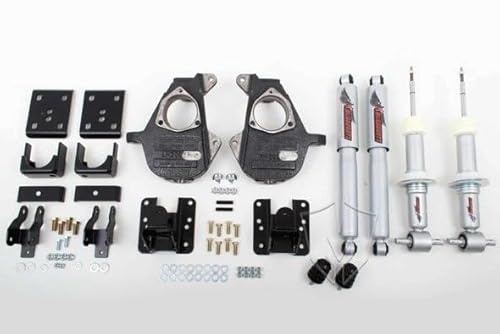
Best for: 2007-2013 GM trucks that want a flexible drop range and a stable, street-ready ride without sacrificing control.
Why selected: Provides adjustable drop options (3/5, 4/6, or 5/7) and includes drop coil spindles, adjustable front struts, rear flip kit, and shocks. It supports 17″ wheels or larger for proper clearance.
Limitation: Requires wheels of adequate diameter; not designed for factory auto ride with certain trims.
2014-2018 GM1500 5/7 Lowering Kit Extended/Crew Cab W/Bolt On C-Notch

Best for: Newer GM1500 models (Aluminum/Stamped) needing a level stance with a bolt-on notch for straightforward installation.
Why selected: It uses IHC control arms aligned to factory specs, includes camber-correcting upper arms, and features a built-in pinion-angle design to avoid shims. Made in the USA with lifetime metal-part warranty.
Limitation: Not ideal for installations requiring frame notching beyond the kit’s intended design; verify cab configuration fits the chosen kit.
Buying Guide
What should you consider when choosing a 5/7 lowering kit?
- Vehicle compatibility: Check year, model, cab type, and bed length to ensure the kit is designed for your exact truck.
- Front vs rear drop balance: A true 5/7 kit lowers both ends but verify whether the kit uses spindles, control arms, or a combination to achieve the drop.
- Camber and alignment: Look for adjustable upper control arms or built-in camber correction to minimize tire wear and improve handling.
- Material and durability: Prefer kits with steel components, Delrin bushings, and high-grade hardware for longevity.
- Installation approach: Bolt-on vs weld-on; weld-on C-notches require welding skills, while bolt-on options are more DIY-friendly.
- Rear geometry: Ensure rear flip kits or relocation brackets maintain OEM-like axle positioning to avoid wobble or instability at highway speeds.
- Warranty and origin: USA-made parts with lifetime warranties offer greater assurance of metal part durability.
Installation considerations by scenario
- DIY friendly: Bolt-on C-notches and non-weld kits with clear instructions.
- Professional install: Weld-on notches and frame modifications may require shop facilities and safety compliance.
- Wheel and tire fitment: Confirm wheel offset and diameter can accommodate the new ride height without rubbing, especially with 17″ or larger wheels as recommended.
FAQs
- What is a 5/7 lowering kit?
- Do these kits require alignment after installation?
- Are bolt-on kits easier to install than weld-on kits?
- Will a 5/7 kit affect ride quality?
- Can I install this on a vehicle with aluminum components?
- Is there a risk of axle or pinion misalignment with these kits?
A kit that reduces the front height by 5 inches and the rear height by 7 inches to achieve a balanced, lower stance.
Yes. Camber and toe changes are common after a lowering kit installation; alignment is recommended.
Generally, yes. Bolt-on C-notches are typically easier for DIYers, while weld-on options require professional or skilled welding.
Lowering can alter ride height and spring dynamics; choosing kits with quality control arms and bushings helps maintain ride characteristics.
Some kits target aluminum- or stamped-structure models; verify compatibility with your specific trim and materials.
Some kits integrate pinion-angle solutions; others may require shims. Check the kit details to understand the pinion handling.