Choosing the right boat anchor can make the difference between a peaceful day on the water and constant drifting. The following selections cover a range of boat sizes, substrates, and conditions to help you secure your craft with confidence. Each option is designed for American waters, from calm lakes to coastal currents. Explore practical setups, from all-in-one anchor kits to specialty sand anchors, and find the best match for your vessel.
| Product | Boat Size Fit | Type | Notable Feature |
|---|---|---|---|
| JY PERFORMANCE 8 lb Galvanized Fluke Anchor Kit | 12-22 ft | Fluke Anchor Kit | All-in-One: rope, chain, shackles |
| JY PERFORMANCE 13 lb Galvanized Fluke Anchor Kit | 20-32 ft | Fluke Anchor Kit | Higher weight for larger craft |
| Attwood 15-Pound Large Eye Navy Anchor | General purpose | Cast Iron Navy Anchor | Durable, rust-resistant coating |
| SandShark Supersport 3.0 Boat Anchor | Shallow water | Shallow Water Anchor | Designed for beach, sandbar, and shore |
| Insaga 17″ Sand Anchor | Shallow water | Stainless Steel Sand Anchor | Crossbar for easy installation |
In the sections that follow, each product is examined for suitability, setup considerations, and how its features translate into practical mooring benefits. The goal is to present objective, actionable guidance to help you select an anchor that matches your boat type, typical water conditions, and boating activities.
JY PERFORMANCE 8 lb Fluke Anchor Kit

The 8 lb galvanized fluke anchor kit from JY PERFORMANCE is tailored for smaller boats, especially pontoons and dinghies in the 12 to 22 ft class. It provides an all-in-one solution with an 8 lb fluke anchor, 6.5 ft steel chain, two D-ring shackles, and 100 ft of nylon rope. This combination minimizes the need for extra purchases while delivering a practical setup for lakes, coastal coves, or light offshore use. The fluke design excels in sand or mud, where the anchor can set quickly and hold with a weighted chain that improves grip in moderate currents.
Key considerations: this kit is ideal when you want a compact, ready-to-go mooring system with a balance of weight and handling. It suits calm to moderately windy days; for stronger conditions or larger vessels, a heavier anchor or different fluke type may be preferred. Maintenance includes checking the galvanized finish for wear and inspecting the rope and shackles for fray or corrosion.
JY PERFORMANCE 13 lb Fluke Anchor Kit
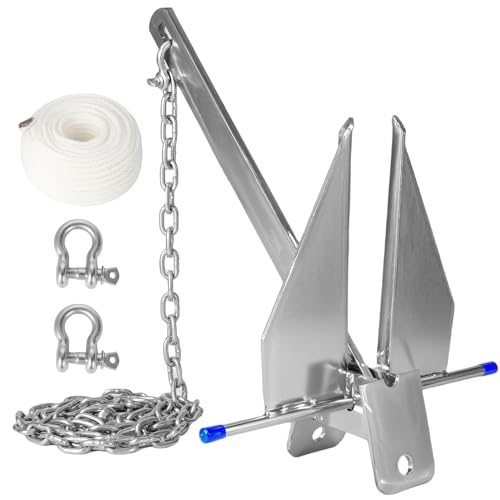
The 13 lb galvanized fluke anchor kit is designed for vessels ranging from 20 to 32 ft. It mirrors the all-in-one concept with a 13 lb anchor, 6.5 ft steel chain, 2 D-ring shackles, and 100 ft of nylon rope. The stronger anchor weight improves holding power in sand or mud, and the built-in chain helps reduce rope wear and absorb shock during gusty conditions. Like the smaller kit, this option is geared toward ease of use and reliability in typical leisure boating environments, including lakes and coastal waters with light to moderate currents.
Useful tips: ensure the anchor’s fluke size matches the boat’s weight and expected wind exposure. Regular inspections of the chain and shackles are recommended to prevent corrosion and ensure secure connections to the rope and anchor line.
Attwood 15-Pound Large Eye Navy Anchor

The Attwood 15-pound navy anchor uses solid cast iron with a black PVC-coated finish to resist rust and protect your boat’s hull. The large eye design simplifies connection to anchor lines or rode, making it a straightforward choice for standard mooring setups. This type is well-suited for a wide range of boats, from mid-sized powerboats to sailboats, particularly in areas with sandy or muddy bottoms where a robust, dependable anchor is beneficial. Ongoing care includes periodic coating checks and cleaning to maintain corrosion resistance.
SandShark Supersport 3.0 Shallow Water Anchor

The SandShark Supersport 3.0 is designed specifically for shallow-water use, making it ideal for near-beach, sandbar, or shore environments. It features a lightweight construction with a collapsible design that stores easily and includes a padded nylon case. The anchor is made with reinforced nylon and high-strength resin materials, plus aircraft-grade aluminum components for durability. Its adjustable range (29″ to 48″) accommodates varying sand depths and allows for quick deployment in flexible beach settings. This anchor is particularly useful for jet skis, pontoons, and small boats that frequently anchor in shallow zones.
Considerations: while excellent in shallow conditions, it is less suited for deep-water mooring or strong currents where heavier, traditional anchors may perform better. Always align deployment with local shore conditions and water depth to optimize holding power.
BeneLabel 36″ Sand Anchor

The BeneLabel 36″ sand anchor is a stainless steel screw-in anchor designed for shallow-water mooring. Its 36-inch length provides substantial grip in sand and shorelines, while the 304 stainless steel construction offers corrosion resistance in saline environments. The included storage bag aids transport and organization. With a lightweight design at around 3 pounds, this anchor is easy to handle for smaller boats and kayaks. The screw-in mechanism facilitates quick anchoring and retraction, making it practical for frequent guests at beaches and sandbars.
Insaga 17” Sand Anchor

The Insaga 17″ sand anchor is a robust option built from 304 stainless steel, featuring a fully welded double-sided helix and a removable crossbar for quick installation. This anchor is designed for shallow-water use on kayaks, jet skis, pontoons, and small boats. The wider helix improves grip in sandy bottoms, enabling stable mooring along shorelines and sandbars. The crossbar adds versatility, allowing you to install and remove the anchor with relative ease on beaches or shallow lagoons.
Buying Guide: How To Choose The Right Boat Anchor
- Boat size and weight: match anchor weight and rope/chain length to your vessel’s displacement and typical load. Heavier boats in stronger currents often need larger fluke or grapnel anchors and longer rode.
- Bottom type: sand and mud provide good holding for fluke anchors, while rocky or grassy bottoms may require different shapes or anchors with more aggressive teeth or large flukes. For shallow water near beaches, sand anchors or screw-in options offer quick holding.
- Location and conditions: consider wind, current, tides, and exposure. Calm lakes may suffice with lighter kits, while coastal days with gusty winds may demand heavier anchors and robust chains.
- Rode length and material: nylon rope is common for flexibility and shock absorption; steel chain reduces rope wear and improves weight transfer. Ensure the rode length is enough to reach the bottom and allow proper set.
- Maintenance and durability: choose corrosion-resistant materials (galvanized steel, stainless steel, coated cast iron) and inspect regularly for wear, rust, or frayed lines. Store hardware properly to prolong life.
- Ease of use: all-in-one kits simplify setup, but modular systems let you adapt to different boats and conditions. Consider how easy it is to deploy and recover the anchor in your typical cruising spots.
- Portability and storage: compact or collapsible anchors are convenient for smaller boats and limited storage space. Protective cases help keep gear dry and organized.
When selecting an anchor, compare the trade-offs between hold power, ease of use, and cargo weight. For weekend boats, an all-in-one kit with a mid-range weight and a durable rope/chain combination often provides a balanced, reliable mooring solution. For frequent trips to beaches or shallow bays, a dedicated sand anchor or a screw-in design can offer faster setup and solid grip in loose substrates. Always observe local regulations and recommended anchoring practices for your area to optimize performance and safety.