Looking for effective auto heat shields at good value? This guide highlights five standout heat shields that pair thermal protection with practical installation. Each pick fits different needs—from high-temp industrial environments to DIY automotive work—so you can choose the best option for your project and budget. The buyer personas covered include DIY enthusiasts, professional installers, and general car owners seeking engine bay protection.
| Product | Best For | Why It Stands Out |
|---|---|---|
| SINNSIDELIN Exhaust Heat Shield (16″ x 78.7″) | General automotive chassis protection | Heavy-duty embossed aluminum, high heat resistance, flexible for custom fitting |
| FLASLD Aluminized Heat Shield (12″ x 40″) | High-temp DIY projects | Up to 2000°F rating, reflective surface, easy to trim |
| BSTFLEX Exhaust Heat Shield (15″ x 39″) | Muffler/exhaust system shielding | 0.5 mm thick, flexible, complete DIY kit |
| Amerbro Heat Shield (12″ x 24″) | Custom cooling and protection near fridges, cabinets, or vehicle surfaces | 95% radiant heat reflection, easy to cut |
| MAUTEMOWING Titanium Adhesive Backed Shield (24″ x 40″) | Heavy-duty protection near embers and high heat | Basalt-based, high-temp up to 2500°F, easy to clean |
SINNSIDELIN Exhaust Heat Shield 16″ x 78.7″

The SINNSIDELIN heat shield uses a heavy-duty embossed aluminum panel, 0.5 mm thick. It offers good heat resistance, handling sustained temperatures up to 1022°F and is designed for mufflers, exhaust ducts, and chassis protection. It includes 20 cable ties for quick securing. Best for: DIY installers needing a long, flexible shield to wrap around irregular shapes. Limitation: aluminum may require careful cutting and shaping for tight curves.
FLASLD Aluminized Heat Shield Thermal Barrier (12″ x 40″)
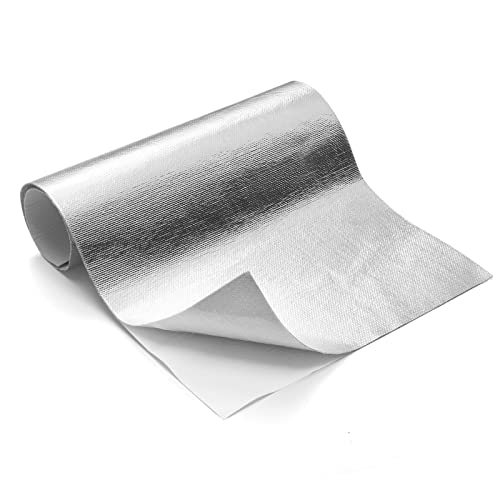
FLASLD offers an aluminized heat barrier with a flexible silica weave rated for up to 2000°F. The reflective surface can screen radiant heat by up to 95%, aiding protection for sensitive panels. It comes in multiple sizes and is easily trimmed to fit various projects. Best for: applications requiring extremely high heat tolerance and straightforward trimming. Limitation: effective bonding relies on proper surface prep and alignment, particularly on curved surfaces.
BSTFLEX Exhaust Heat Shield 15″ x 39″

BSTFLEX provides a 0.5 mm embossed aluminum shield designed for mufflers and exhaust components. The kit includes 20 stainless steel zip ties, enabling a complete DIY installation. Best for: users who want a durable shield with a ready-to-use mounting kit. Caution: ensure you cut to fit precisely to avoid interference with moving parts or exhaust components.
Amerbro Heat Shield Reflective, 12″ x 24″

Amerbro’s heat shield emphasizes radiant heat reflection. Its 12″ x 24″ size is versatile for various surfaces, and its 95% heat reflectivity helps keep adjacent surfaces cooler. Best for: protecting painted surfaces or plastics in automotive or kitchen environments. Limitation: larger shapes may require multiple pieces or trimming for full coverage.
MAUTEMOWING Titanium Adhesive Backed Shield (24″ x 40″)

This titanium-inspired shield uses a basalt-based insulation approach to withstand up to 2500°F, offering robust protection around high-heat areas. It’s easy to clean and can be wrapped around hoses or surfaces for a tidy look. Best for: high-heat environments near embers or intense heat sources. Limitation: heavier duty shields may be bulkier and harder to fit in tight spaces.
Buying Guide: Key Considerations When Choosing an Auto Heat Shield
- Temperature rating: Match the expected heat exposure to the shield’s maximum temperature. Higher ratings offer more margin for safety around engines and exhaust components.
- Material and thickness: Embossed aluminum (around 0.5 mm) balances durability with flexibility. Thicker shields resist deformation but may be less easy to shape.
- Surface treatment: Aluminum and aluminized surfaces reflect radiant heat, reducing surface temperatures of protected components.
- Installation kit: Some products include zip ties or adhesive backing; consider the tools you already have and whether you’ll need mounting accessories.
- Cutting and shaping: Large shields allow custom cutting to fit complex geometries, while pre-cut pieces speed up installation for straightforward applications.
- Flexibility vs. coverage: Flexible shields contour around pipes and curves but may require more pieces for complete coverage in some areas.
- Application scope: Determine whether you shield mufflers, exhaust ducts, fuel tanks, or consumer appliances like refrigerators and ovens for radiant heat control.
- Adhesion and surface prep: Adhesive-backed options require clean, dry surfaces for best bonding; consider surface texture and exposure to fuels or oils.
FAQ
- What heat shield is best for a DIY exhaust project?
A: A 0.5 mm embossed aluminum shield with a complete DIY kit (like BSTFLEX) offers durable protection and included mounting hardware for straightforward installation. - Can aluminized heat shields withstand kitchen or appliance heat?
A: Yes, aluminized shields rated up to high temperatures can reflect radiant heat effectively in both automotive and home environments, though surface cleanliness and proper adhesion are essential. - Do I need adhesive backing or hardware to install a shield?
A: It depends on the product. Adhesive-backed shields are easier for quick installs, while kits with zip ties offer adjustable mounting for curved surfaces. - Is a larger shield always better?
A: Not necessarily. A shield should cover the critical heat sources without obstructing moving parts. Overly large shields can hinder airflow or fit in restricted spaces. - How do I ensure a good bond on a curved exhaust surface?
A: Cut the shield to fit, clean the surface well, and use securing methods (zip ties or high-quality adhesive) that tolerate high temperatures without sliding.