Answering the need for reliable valve grinding tools, this guide highlights top options for automotive valve lapping and seating work. The best-fit choice depends on your setup: shop use, home garage projects, or frequent valve maintenance on small engines. The featured products cover grinding stones, lapping compounds, and pneumatic or manual tool kits. Read on to compare what each tool specializes in, who it’s best for, and practical limitations to consider before buying. A quick summary table of the chosen products is provided below.
| Product | Best For | Why It Stands Out |
|---|---|---|
| Rahish Tools Valve Seat Grinder Stones Set | Workshop valve seat work, multi-seat diameters | Comprehensive stone set with pilots and Sioux-style compatibility |
| Permatex Valve Grinding Compound | All-purpose valve seating and lapping | Easy-to-use paste that forms a smooth grinding/lapping medium |
| HERCHR Valve Grinder / Lapping Tool | Engine valve grinding with air-operated systems | Sturdy stainless steel tool with air operation and maintenance notes |
| TSIEBRV Valve Lapping Kit | Valve seating on cars, motorcycles, ATVs, small engines | Five suction cups in multiple sizes for versatile valve work |
| Holts Valve Lapping Tool & Polish Kit | Comprehensive valve grinding and polishing | Includes fine and coarse polish for resealing and deposit removal |
Rahish Tools Valve Seat Grinder Stones Set of 12 Pcs

The Rahish Tools kit is a small-assembly, Sioux-style valve seat grinding option designed for workshop use. It includes 12 grinding stones with an 80 grit aluminum oxide composition and 45-degree seat angles, plus 6 straight pilots and 2 stone holders with drive ball. Best for mechanics handling multiple valve seat diameters in a single setup. Limitations include setup sensitivity and the need for compatible grinders or guides to ensure concentric operation.
Who it’s best for: Shop technicians with varied valve seat sizes requiring a versatile stone range and pilot options. Why selected: The broad stone assortment and pilot set support multi-seat work in one kit, reducing tool changes mid-project.
Caution: Confirm compatibility with your Sioux-style system and ensure correct pilot sizing to avoid misalignment during grinding.
Permatex 80037 Valve Grinding Compound, 3 oz
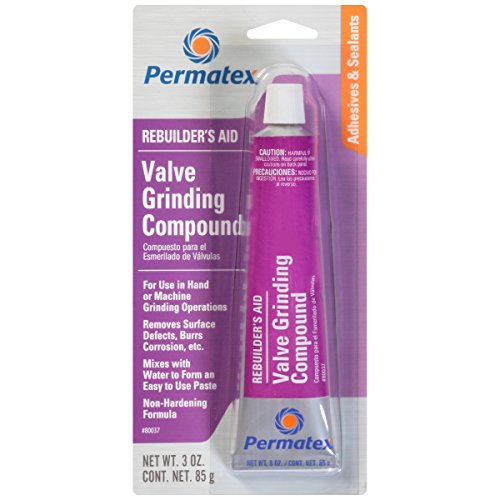
Permatex 80037 is a universal-fit valve grinding compound that mixes with water to form a paste suitable for lapping and seating tasks, including chromium surfaces. This compound aids precision valve seating by creating a consistent abrasion medium. Best for users needing a ready-to-use lapping paste for multiple valve materials. Limitation: It’s a paste-based compound, so application control and cleanup can be more involved than solid lapping tools.
Who it’s best for: DIYers and professionals seeking a straightforward, universal lapping aid compatible with various valve materials. Why selected: It complements many tools by providing a reliable medium for achieving smooth valve seating.
Caution: Use with proper ventilation and follow safety guidelines for paste handling and disposal.
Valve Grinder Lapping Tool by HERCHR

This air-operated valve grinding tool is built from stainless steel for durability in harsh workshop environments. It is designed for engine valve grinding and lapping, with maintenance steps noted for rust prevention and dirt removal. Best for technicians needing a robust, air-driven option. Limitation: Some users report flow or rotation issues if air supply or internal debris isn’t properly maintained.
Who it’s best for: Shops or home garages using air-powered tools for valve work. Why selected: Combines aggressive material removal with durable construction for repeated use.
Caution: Regularly inspect seals and cleanliness of air lines to avoid performance drops.
TSIEBRV Valve Lapping Kit with Five Cup Sizes

TSIEBRV offers a versatile kit with suction cups in 16mm, 20mm, 30mm, 35mm, and 45mm, designed for valve grinding across cars, motorcycles, ATVs, and small engines. It uses standard valve lapping compound and requires a drill for rotation within the 1000–1250 RPM range. Best for users needing a broad size range and simple operation. Limitation: Requires a compatible drill and careful speed control to avoid over-cutting or uneven seating.
Who it’s best for: Home mechanics and hobbyists performing valve work on multiple engine types. Why selected: The multiple suction-cup sizes enable adaptable seating for various valve stems and heads.
Holts Valve Lapping Tool & Polish Kit

Holts Valve Grinding Kit provides a complete package with polishing compounds for removing stubborn deposits and resealing valve seats. It includes both fine and coarse polishing options, making it suitable for reconditioning valves and restoring valve-seat contact. Best for comprehensive maintenance tasks that require both material removal and fine finishing. Limitation: It is a kit-based approach; ensure you have a compatible lapping surface and support components for best results.
Who it’s best for: Professionals and serious DIYers needing a full valve reconditioning workflow. Why selected: The combination of grinding and polishing media supports a complete valve restoration process.
Buying Guide
What type of valve grinding tool should I choose?
Consider whether you need a stone-based grinding set (Rahish Tools), a paste-based lapping compound (Permatex), an air-operated grinder (HERCHR/Holts), or a drill-powered suction-cup kit (TSIEBRV). Your engine type, access to compressed air, and preferred workflow will guide your choice.
Which grit or abrasive is best for my valves?
Medium grit (80) stones are common for initial shaping and seat grinding, while fine abrasives and polishing media are ideal for resealing and finish work. Ensure the kit includes appropriate grit options for both roughing and finishing stages.
Is a full kit better than individual tools?
Full kit options provide a complete workflow from grinding to polishing, reducing part substitutions. For occasional use, individual components may suffice, but ensure compatibility across the tasks you plan to perform.
What maintenance is needed to keep these tools effective?
Keep air-driven tools clean and lubricated, especially after extended use. Clean grinding stones after sessions and follow oiling guidelines for pneumatic tools to prevent rust and ensure smooth operation.
What safety considerations matter?
Use eye protection and gloves during grinding and lapping. Work in a well-ventilated area and follow all manufacturer safety instructions for paste and abrasive use. Maintain stable clamping and alignment to prevent accidents.
What engine types or applications should inform my pick?
Choose based on the engine family and valve sizes you commonly service. Multi-seat compatibility and a broad size range are advantageous for workshop versatility, while specialized tools suit targeted tasks on specific engines.
FAQ
- What is valve lapping? A process to reseat valves by smoothing the contact surface between the valve and seat using an abrasive compound.
- Do I need both grinding stones and lapping compound? Yes, for a complete approach: grinding shapes the seat and lapping fine-tunes the seal.
- Can I use household tools for valve grinding? Basic lapping with a compatible kit is possible, but dedicated automotive-grade tools improve precision and safety.
- How do I prevent rust on pneumatic tools? Regular oiling and proper storage help prevent corrosion when not in use.
- Is a silicone-based lapping compound better? Use what the manufacturer recommends; some compounds are designed specifically for certain valve materials.
- What RPM range is safe for drill-powered lapping? Follow the kit’s guidance; many options work best around 1000–1250 RPM.