Choosing the right battery for boat electronics matters for reliability, range, and performance on the water. This guide reviews five top choices across AGM, LiFePO4, and portable lithium solutions to keep fish finders, GPS, trolling motors, and lighting powered through long trips. Each option brings different benefits, costs, and maintenance needs, so readers can select a model that matches their boat size, typical trip length, and climate conditions.
Summary table of selected products
- Interstate Batteries Marine/RV AGM Dual-Purpose 12V 70Ah (24M-AGM) — Best all-around power for starting and trolling
- Litime 12V 100Ah LiFePO4 Group 31 — High cycle life with Bluetooth monitoring
- KGIOO 12V 100Ah LiFePO4 Battery — Flexible parallel/series expansion
- Litime 12V 100Ah Trolling Motor LiFePO4 Battery (Group 31) — Deep-cycle performance for long runs
- ECO-WORTHY Portable 12V 20Ah Lithium — Compact, portable option for smaller electronics
Interstate Dual-Purpose AGM Battery Review

The Interstate Batteries Marine/RV Battery combines cranking power with reliable deep-cycle capability in a single AGM design. It is designed to start the motor while also supporting trolling motors and onboard accessories when the engine is off or running. AGM technology provides spill-resistant operation and tolerance to vibration—key traits for saltwater and freshwater applications alike. The battery emphasizes longer life compared with traditional flooded options, with an emphasis on fast recharge and extended service life. Thick plates help support repeated discharge cycles while maintaining performance, making it suitable for weekend anglers and full-time boaters alike.
Key considerations: This option excels for boat owners who want a single battery that handles starting and running trolling gear without swapping between separate cranking and deep-cycle units. It can be a practical upgrade for older boats or models that already run aggressive accessory loads. Regular inspection of terminals and ensuring proper ventilation will help maximize lifespan in marine environments.
Litime 100Ah LiFePO4 Group 31 Battery With Bluetooth

This LiFePO4 battery features built-in Bluetooth for real-time monitoring, making it easy to track voltage, state of charge, and health from a mobile device. It provides up to 15,000 deep cycles, significantly extending lifetime compared with traditional lead-acid or AGM batteries. The BMS includes protections for overcharge, over-discharge, and short circuits, and it’s engineered for harsh marine environments with IP65 waterproofing and dust resistance. Low-temperature protection helps prevent damage in cold conditions, a common concern in northern waters or early-season trips.
Key considerations: LiFePO4 cells offer high energy density and lower weight, which can improve boat performance and fuel efficiency. The need for a compatible charging system is important; ensure your charger supports LiFePO4 profiles and follows recommended charging voltages to maximize longevity.
KGIOO 12V 100Ah LiFePO4 Battery With Built-In BMS

KGIOO offers a 12V 100Ah LiFePO4 battery with a built-in smart BMS that guards against overcharge, over-discharge, over-current, over-voltage, and shorts. It supports both series and parallel connections, enabling scalable configurations for larger boats or more demanding power needs. UL-certified safety adds confidence for long marine trips, and the design emphasizes energy density with substantial cycle life. The system is capable of expanding up to 4S4P, which helps when combining multiple packs for higher voltage or capacity requirements.
Key considerations: When planning a multi-battery setup, evaluate how the BMS handles balancing, charging, and safety features across all cells. Check the boat’s charging sources to ensure compatibility with LiFePO4 chemistry and the overall system voltage.
Litime 12V 100Ah Trolling Motor LiFePO4 Battery
This LiFePO4 trolling motor battery targets anglers and boaters who require deep-cycle endurance paired with a lightweight form factor. The built-in 100A BMS provides protections essential for marine use, and the Bluetooth app enables convenient remote monitoring of charging states and system performance. Like other LiFePO4 options, it supports deep cycling with minimal capacity fade, which translates to more runtime between charges for trolling motors and ancillary electronics.
Key considerations: Positioning and mounting should consider the battery’s weight distribution to optimize hull balance. Pair with a suitable charger and ensure your trolling motor controller tolerates LiFePO4 chemistry for smooth operation and longevity.
ECO-WORTHY Portable 12V 20Ah Lithium Battery

This compact portable battery is designed for quick setups and smaller electronics on boats, kayaks, or as an emergency backup. It includes a built-in BMS and supports multiple uses, from powering fish finders to charging USB devices. Its smaller footprint is ideal for space-constrained vessels or as a supplementary power source for extended trips where full-scale battery banks are impractical. IP-rated protection and rugged construction help it stand up to marine use.
Key considerations: The limited 20Ah capacity means this option is best for lightweight electronics or as a supplementary pack rather than the main power source. Check compatibility with your device voltage and charging method to avoid over-discharge or over-heating during use.
NOCO Genius GEN5X2: Dual-Channel 10A Onboard Charger
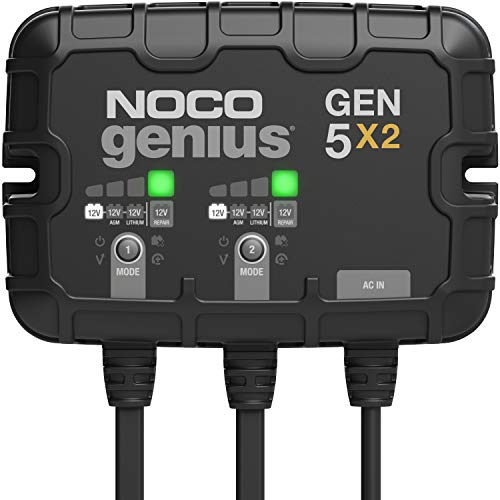
The NOCO Genius GEN5X2 is an onboard charger designed to work with multiple battery chemistries, including lead-acid and lithium. It supports two independent charging banks, delivering 5A per bank for balanced charging across two batteries. selectable modes include 12V, 12V AGM, 12V Lithium, and a dedicated Repair Mode. This unit is compact enough to fit in tight bilge spaces yet powerful enough to maintain marine battery banks with consistent, temperature-compensated charging. It’s a solid option for crews using more than one battery type or planning upgrades to lithium along with existing lead-acid systems.
Key considerations: Ensure the charger’s specifications align with the boat’s battery chemistry and overall charging system. Temperature compensation helps protect batteries in variable conditions, but wiring and venting must be properly configured to avoid electrical noise or venting issues on smaller vessels.
Buying Guide: Key Purchase Considerations And Comparisons
- Battery Chemistry and Weight:
- AGM (Absorbed Glass Mat) batteries are robust, maintenance-free, and resistant to vibration—great for starter-and-core marine applications. They are heavier than lithium but can be a cost-effective upgrade.
- LiFePO4 (lithium iron phosphate) batteries offer high cycle life, lighter weight, and improved efficiency but require compatible charging profiles and often higher upfront costs. They excel for long trolling runs and power-dense setups.
- Portable lithium packs provide flexible, lightweight backup power for smaller electronics, emergency kits, or auxiliary systems but typically have lower capacity.
- Capacity and Depth Of Discharge (DOD):
- Higher Ah ratings deliver more runtime; LiFePO4 often supports higher DOD without damaging the cell, translating to more usable energy per cycle.
- Consider your typical trip length, electronics load, and whether you prefer a single battery or a multi-pack setup for redundancy.
- Charging Compatibility and BMS:
- Verify that your charger supports LiFePO4 chemistry if choosing lithium. A smart BMS protects against overcharge, over-discharge, and shorts—important for durability and safety in saltwater environments.
- For AGM and lead-acid, ensure charging voltage limits align with the battery manufacturer’s recommendations.
- Monitors And Control:
- Bluetooth or app-based monitoring helps track state of charge, voltage, and temperature, enabling proactive maintenance and reducing the risk of unexpected outages on long trips.
- Mounting, Space, And Weight:
- Boat hulls and compartments vary; lighter lithium options can improve weight distribution and fuel efficiency. Ensure mounting hardware and ventilation are appropriate for the chosen chemistry.
- Environmental Suitability:
- Marine-grade IP ratings, corrosion resistance, and vibration tolerance are essential. Saltwater boats demand components designed to withstand humidity and salt spray.