Choosing the right battery for a golf cart can dramatically improve range, performance, and lifespan. This guide reviews five leading lithium options that pair well with 48V systems, emphasizing built‑in BMS, charging compatibility, cycle life, and overall reliability. Each product listed offers modern monitoring features and robust safety protections, helping cart owners optimize maintenance and operation.
Summary Table of Selected Products
| Product | Brand | Key Strengths | Typical Use |
|---|---|---|---|
| LOSSIGY 48V Lithium Golf Cart Battery | LOSSIGY | Built‑in Bluetooth, high peak current, 4000+ cycles | Golf carts, RVs, solar setups |
| TEMGO 48V 100Ah LiFePO4 Upgrade Kit | TEMGO | All‑in‑one kit with LCD, app, 200A BMS | Seamless upgrade, real‑time monitoring |
| Cloudenergy 48V 105Ah LiFePO4 Battery | Cloudenergy | 250A BMS, 3‑in‑1 package, mobile app | Golf carts, long cycles |
| SOURCEPOW 36V 105Ah Battery | sourcepow | Upgraded 200A BMS, strong discharge, compact | 36V platforms and upgrade projects |
| DC HOUSE 48V 100Ah Battery | DC HOUSE | One‑touch switch, real‑time monitoring, safety features | 48V carts with smart monitoring |
LOSSIGY 48V Lithium Golf Cart Battery
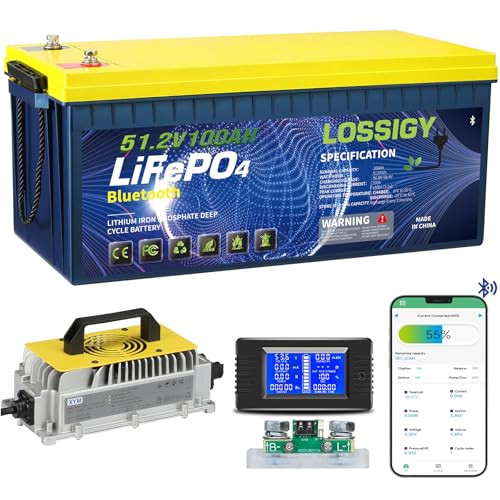
LOSSIGY’s 48V battery uses auto grade‑A cells delivering higher energy density and stable performance. It features a built‑in Battery Management System (BMS) to guard against heat, short circuits, and overload, extending core safety and lifespan. The unit is designed for easy installation in 48V golf carts and is suitable for RVs or solar‑powered systems. The built‑in 100A peak rating supports brief high‑demand moments, making it a solid option for typical cart usage.
TEMGO 48V 100Ah LiFePO4 Upgrade Kit

TEMGO offers an all‑in‑one upgrade package for 48V systems, including a high‑performance charger, a 2.8‑inch LCD display, and a 200A BMS with Bluetooth. Real‑time monitoring via a mobile app helps protect against overcharge, over‑discharge, short circuits, and temperature extremes. The battery is built for longevity, boasting 5000+ deep cycles with 80% DoD, promising long lifecycle and reduced maintenance compared to traditional lead‑acid setups.
Cloudenergy 48V 105Ah LiFePO4 Battery
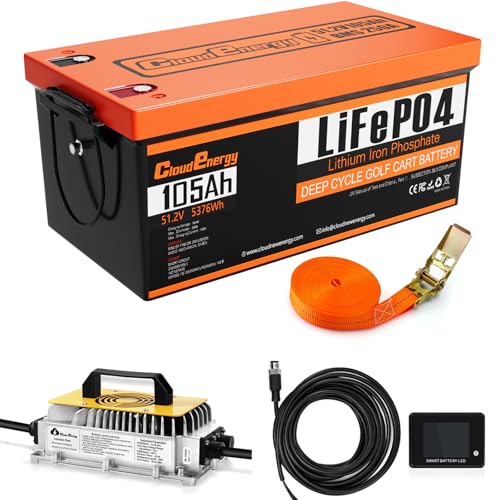
Cloudenergy combines a 105Ah LiFePO4 cell pack with a built‑in 250A BMS and Bluetooth monitoring. The kit includes a 58.4V charger and a 2.8‑inch LCD display, plus a retention strap for secure mounting. It emphasizes 6000+ cycles and a robust protection system against over‑charge, over‑discharge, over‑current, and temperature changes—ideal for frequent charging cycles and varied operating conditions.
SOURCEPOW 36V 105Ah Lithium Battery

SOURCEPOW’s 36V configuration is designed as a dedicated golf cart upgrade with Grade A LiFePO4 cells. It features 200A peak capability and a 600A 32S to 1000A 3S performance envelope, depending on configuration. The kit includes a 25A charger and a 2.8‑inch LCD monitor with BLE‑enabled BMS for protection and monitoring. It is pitched as a strong option for riders upgrading 36V platforms or integrating with existing 36V carts for extended range.
DC HOUSE 48V 100Ah Battery

DC HOUSE presents a 48V 100Ah LiFePO4 battery with a smart 200A BMS, LCD monitor, and mobile app compatibility. The system highlights a one‑touch off switch for safety and easier power management. It notes extended cycle life and robust protection features, including low‑temperature cut‑off to guard the battery in cold conditions. The unit emphasizes simplified installation compared with multi‑batteries in traditional lead‑acid configurations, making it a practical upgrade for 48V carts.
Buying Guide: Key Considerations For Golf Cart Battery Upgrades
- Voltage compatibility: Ensure the battery matches your cart’s voltage (36V vs 48V) and can be integrated with the existing charging system or upgradeable charger.
- Cell chemistry and cycle life: LiFePO4 cells offer long cycle life, stability, and safety. Look for 3000+ cycles as a baseline, with higher benchmarks preferred for frequent use.
- BMS capabilities: A strong Battery Management System protects against over‑charge, over‑discharge, short circuits, and temperature extremes. Bluetooth or app monitoring adds convenience for real‑time status checks.
- Charger and accessories: Consider whether the upgrade kit includes a charger, LCD display, and mounting strap. All‑in‑one kits reduce compatibility concerns and installation time.
- Weight and space: Lithium packs are lighter than lead‑acid counterparts, but size and mounting requirements should fit your cart’s chassis and storage area.
- Maintenance and safety: Look for maintenance‑free designs, built‑in protections like low temp cut‑off, and clear safety documentation to minimize risk during operation and charging.
- Cost of ownership: While upfront price matters, evaluate long‑term cost savings from longer lifespan, reduced maintenance, and potential range improvements.
- Warranty and support: A robust manufacturer warranty and accessible customer support can significantly affect total ownership experience.
Choosing among these options requires aligning battery chemistry, capacity needs, and monitoring preferences with your cart’s typical usage. For frequent, high‑demand riding or extensive travel, higher cycle life and stronger BMS protections can offer meaningful long‑term value. For simpler upgrades or tighter budget constraints, a compact kit with solid monitoring can still deliver notable improvements in performance and reliability.