Battery isolators and start-assist devices protect your vehicle’s starting power while managing auxiliary circuits. This guide highlights five reliable options, suitable for trucks, ATVs, UTVs, boats, and recreational vehicles. Each pick targets different needs—from dual-battery management to high-current isolations—so you can choose the best fit for your setup. The buyer’s notes below identify the ideal user and typical use-case for each product, plus a quick comparison to help you decide faster.
Summary of chosen products
| Product | Best For | Key Benefit |
|---|---|---|
| Redarc Dual Sensing Smart Start Battery Isolator 12V 200A | Professional setups needing smart sensing | Precise load control with dual sensing |
| Drieaco Battery Isolator 12V Dual Kit | UTV/ATV and off-road with multiple accessories | Advanced isolation technology for two batteries |
| Mata1 Dual Battery Isolator Kit 12V 140Amp | All-around automotive and marine use | IP-67 waterproof, universal compatibility |
| 12V, 200A, Bidirectional Battery Separator | Simple, robust separation | Auxiliary start-assist with easy installation |
| True UTV-SBI-19L Smart Lithium Isolator | UTVs using lithium batteries | Designed for lithium-only applications |
Redarc Dual Sensing Smart Start Battery Isolator 12V 200A
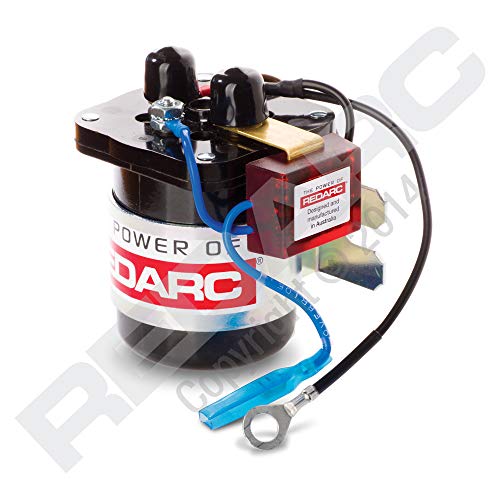
BRAND: Redarc. Features include a dual-sensing mechanism and 200A capacity. This unit manages two batteries by prioritizing the primary battery for starting while preventing cross-draining. Best for professional or high-demand installations where precise control and reliability are required. Caution: installation typically requires a mid-to-high level of electrical knowledge, and vehicle compatibility should be verified.
Drieaco Battery Isolator 12V Dual Kit

BEST FOR off-road and UTV users who need robust two-battery management. The kit claims 13.4V cut-in and 12.9V cut-out, isolating batteries while enabling simultaneous charging. It supports multiple vehicle types from ATVs to RVs. Caution: data emphasizes versatility; ensure your specific vehicle’s battery chemistry aligns with the product’s settings.
Mata1 Dual Battery Isolator Kit 12V 140Amp

BEST FOR universal automotive and marine power needs. It offers IP-67 waterproofing and claims broad vehicle compatibility, including boats and ATVs. This makes it a versatile option for users who operate in diverse environments. Caution: verify that the system’s charging parameters align with your vehicle’s battery types and charging profile.
12V, 200A, Bidirectional Battery Separator

BEST FOR straightforward, reliable separation with an auxiliary start feature. It highlights an auxiliary start-assist function and simple installation, making it suitable for DIY setups. Caution: product data is concise—confirm compatibility with your battery types and system voltages before purchase.
True® UTV-SBI-19L Smart Lithium Isolator

BEST FOR lithium-only UTV configurations. This isolator is designed specifically for lithium batteries and claims compatibility with a P.E.P. Lithium setup. Caution: aimed at lithium systems; confirm your pack’s chemistry before installation.
Buying Guide: Key Considerations
- Battery type compatibility: Some isolators are universal, others target lithium or lead-acid specifically. Match to your battery chemistry to avoid performance issues.
- Current capacity: Choose a unit with a continuous rating that exceeds your vehicle’s normal draw, including accessories like winches or lights.
- Isolator type: Voltage-sensitive relays (VSR) vs dual-sensing smart units. VSRs are simple; smart units offer features like automatic charge management and better cross-battery protection.
- Environmental resistance: IP ratings (e.g., IP-67) indicate water and dust resistance, important for off-road and marine use.
- Installation considerations: Some units require additional wiring, fuses, or relays. Ensure you have the right tools and knowledge or seek professional help for complex setups.
- Vehicle and battery type: Confirm compatibility with your vehicle’s electrical system and the battery sizes or chemistries in use.
FAQ
- What is the primary purpose of a battery isolator?
To prevent cross-draining between two or more batteries while ensuring the starting battery remains ready to start the vehicle.
- Do I need a smart isolator or a simple VSR?
Smart isolators offer automated charge management and protection; basic VSR units are simpler and often cheaper but less flexible.
- Can these isolators be used in marine applications?
Yes, several options are designed for car, RV, boat, or marine use, often with waterproof ratings.
- Is lithium-specific isolation different from lead-acid isolation?
Yes. Lithium-focused isolators account for different charging profiles and battery chemistry, improving performance and longevity for lithium packs.
- What maintenance is required after installation?
Check fuses and wiring connections periodically, and inspect for corrosion or wear in marine or off-road environments.
- How do I choose the right amperage?
Base it on the highest continuous load in your system plus margins for surge devices such as winches or heavy accessories.