Answer: These bitumen and foam sound deadening pads reduce road and engine noise, improve thermal insulation, and help maintain cabin comfort. They are best for DIY installers seeking cost-effective, adhesive-backed mats for hoods, doors, trunks, and engine bays. The top picks below cover different vehicle areas, thicknesses, and application sizes to fit a range of budgets and projects.
Who this is for:
– Do-it-yourself car hobbyists who want a straightforward install with self-adhesive mats.
– Drivers seeking quieter cabins in urban or highway environments.
– Builders focusing on heat reduction in hot climates or after engine upgrades.
Below is a quick comparison of five strong options to consider. The table highlights size, thickness, typical area coverage, and key strengths to help you decide at a glance.
- Noico Red 150 mil: 4 mm, 36 sq ft coverage, best all-around for quieting and cooling.
- Zhengmy 53.9 Sqft: 5 mm, large area, high-density foam for broad coverage.
Noico Red 150 Mil Car Sound Insulation
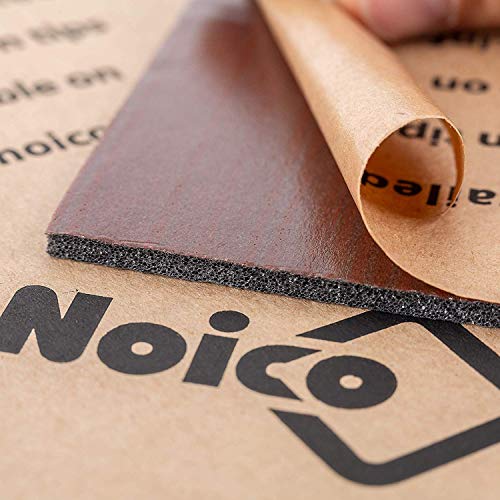
Noico Red 150 mil (4 mm) closed-cell polyethylene foam with adhesive backing offers an easy install and strong thermal and acoustic performance. It serves as a versatile, universal insulation material with excellent thermal properties, designed to keep the interior cool in hot climates and quiet in noisy environments. It is cut-to-fit and simple to install, making it a solid choice for first-time installers.
Best for: Drivers seeking a balanced, ready-to-cut solution that improves cabin quietness and temperature control.
Caution: This product relies on a self-adhesive backing; ensure clean surfaces for lasting adhesion and consider skinning edges that might peel if not properly pressed.
Zhengmy 53.9 Sqft Self-Adhesive Matte

Zhengmy provides a large roll of 196 mil (5 mm) foam insulation, measuring about 20 x 394 inches for a total of roughly 53.9 sq ft. It features a high-density sponge structure that enhances sound absorption, reduces engine vibration, and prolongs component life. The material is designed for heat resistance, waterproofing, oil resistance, and sun reflection to help regulate cabin temperature.
Best for: Those undertaking a big interior insulation project or covering multiple panels across a vehicle, thanks to substantial area coverage.
Limitation: The long roll may require careful cutting and handling to ensure clean seams and effective coverage in tight spaces.
30 Pcs 32.3 Sqft Hood Insulation Mats
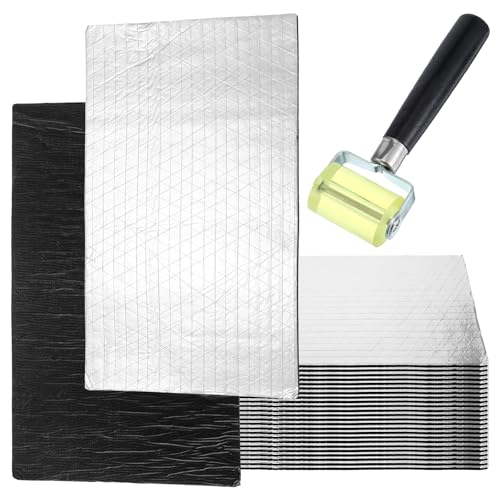
This kit includes 30 mats (about 9.8 x 15.7 inches each) plus a roller for smoother installation. Made of foam with an aluminum foil surface, these mats offer both sound dampening and heat insulation for hood, ceiling, and door areas. The closed-cell foam is water-resistant and odor-free, and the adhesive backing aids stable attachment.
Best for: DIY projects requiring multiple pieces for hood and interior sections, with a convenient roller for even application.
Limitation: Smaller sheets may create more seams, which can be a consideration for consistent performance across larger areas.
Nuogo 400 Mils Car Sound Deadening Material

Nuogo offers a thick 400 mil (10.2 mm) barrier with aluminum foil on one side and a self-adhesive layer to aid installation. It focuses on heat reflection and sound dampening, with a design suited for hood, engine bays, or trunk areas where heat and noise originate. The dual function helps reduce HVAC load and enhance cabin comfort.
Best for: Projects prioritizing maximal heat reflection and loudness reduction, especially in hotter climates.
Limitation: The significant thickness may require careful fitting in tight spaces or around engine components.
CZXNBI 197 Mil Insulation Mat (2 Pack)

This two-pack offers nominal 197 mils thickness with a combined coverage of 21.6 sq ft. It blocks 98% of radiant heat transfer, making it a strong choice for engine hoods, doors, trunks, and firewall areas. The self-adhesive, closed-cell foam works well across a range of temperatures and reduces both heat and sound transmission.
Best for: Users needing a compact, reliable heat-and-sound barrier for several panels with simple installation in one purchase.
Limitation: The per-pack coverage is modest, so it may require multiple packs for larger vehicles or full cabin treatment.
Abahub 394 Mil Heat Shield Roll
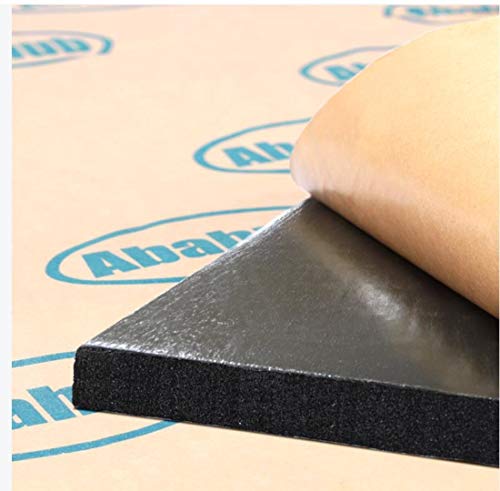
Abahub’s 394 mil (10.2 mm) insulation roll provides a dense foam layer with strong adhesive backing for rust protection and sound dampening. It bonds securely to metal surfaces, shielding hoods, floors, and firewalls from moisture and corrosion. The material is designed to be cut to fit irregular shapes and contours for a tailored installation.
Best for: Applications needing robust rust protection along with noise reduction, especially on metal surfaces that see exposure to moisture and road debris.
Limitation: The density and thickness can require extra trimming and careful layout in tight engine compartments.
FOURUB 590 Mil Thick Sound Deadener

FOURUB presents a 15 mm thick insulation mat with self-adhesive backing, designed to significantly reduce engine noise and heat transfer to the cab floor. It is waterproof, flame retardant, and engineered to improve ride comfort by lowering noise levels and stabilizing interior temperatures. The thermal barrier helps keep the cabin warmer in winter and cooler in summer.
Best for: Projects prioritizing high-thickness insulation for comprehensive noise dampening and thermal control across larger areas.
Limitation: Extra thickness may complicate installation in very tight spaces or around complex hardware on certain vehicles.
Buying Guide
Key factors to consider when choosing bitumen sound deadening pads:
- Thickness and density: Thicker mats (e.g., 9–15 mm) dampen more sound but may be harder to fit in tight spaces. For larger areas, a mix of thicker and thinner sheets can optimize coverage.
- Heat resistance: Look for high-temperature rated materials, particularly for engine bays, hoods, and firewall areas. Aluminum foil facings improve heat reflection.
- Adhesive backing: A strong self-adhesive layer helps ensure a lasting bond. Surfaces should be clean and dry before application for best results.
- Coverage area: Plan your layout by panel—hood, doors, trunk, firewall, and roof. Large rolls save time, while smaller sheets offer flexibility for irregular shapes.
- Water resistance and durability: Waterproof and oil-resistant options perform better under engine moisture and roadspray conditions.
- Ease of installation: Tools like a muffler roller can help, along with clean cuts and careful contouring around bolts and edges.
- Combination use: In many projects, a mix of heavy heat-shield mats for engine areas and lighter sound-deadening mats for interior panels yields the best balance of comfort and cost.
Frequently Asked Questions
- What is the main purpose of sound deadening pads in cars?
To reduce road and engine noise, dampen vibrations, and improve overall cabin comfort by sealing these noise pathways.
- Do thicker mats always provide more noise reduction?
Not always. While thicker mats can dampen more effectively, installation space and coverage matter. A combination of thickness levels often works best.
- Can these mats also help with heat reduction?
Yes. Many mats incorporate aluminum foil facing and closed-cell foam to reflect and block radiant heat, lowering interior temperatures.
- Is self-adhesive backing reliable over time?
When applied to clean, dry surfaces and pressed firmly, self-adhesive backing can hold well, but occasional reapplication may be needed on textured or oily surfaces.
- Which areas should be prioritized for insulation?
Start with the hood, firewall, doors, and trunk where heat and road noise are most prevalent, then consider cabin ceiling and floor panels for additional quieting.