For buyers seeking reliable brake and clutch fluid, the top choice depends on your system type and climate. This guide compares select DOT 3/4/5.1 fluids and a high-performance racing option to help you pick the right fluid for ABS-equipped cars, hydraulic clutches, and everyday drivers. The listed products suit different needs—from everyday reliability to high-heat performance—so you can choose based on boiling point, corrosion protection, and compatibility with your braking system. Below is a quick summary table of the five recommended products.
Product Comparison Table
| Product | Brand | Best For | Notes |
|---|---|---|---|
| Valvoline DOT 3 & 4 Synthetic Brake Fluid (32 oz) | Valvoline | Hydraulic and disc brake systems; ABS compatibility | High boiling point; good vapor lock protection |
| ACDelco 798696 GM DOT 4 Hydraulic Brake Fluid (16 oz) | ACDelco | GM vehicles or any DOT 4 hydraulic system | High boiling point; corrosion protection |
| Valvoline DOT 3 & 4 Synthetic Fluid (12 oz) | Valvoline | Hydraulic and disc brakes; small capacity needs | Low-moisture formula; good vapor lock protection |
| Motul RBF 600 Brake Fluid DOT 4 | Motul | Racing and high-performance applications | Extreme thermal resistance; non-silicone |
| Prestone AS401 DOT 3 Synthetic Brake Fluid (32 oz) | Prestone | ABS, disc and drum brakes; extreme braking conditions | Good vapor management; compatibility with ABS systems |
| BOSCH ESI6-32N DOT Fluids | Bosch | Modern braking systems needing low viscosity and high wet boiling point | Backward compatible with DOT 3/4/5.1 |
Valvoline DOT 3 & 4 Synthetic Brake Fluid – 32 oz

Best for hydraulic and disc brake systems with ABS. The fluid mixes well with conventional fluids and offers a low-moisture formula for vapor lock protection. This product is suitable for drivers seeking solid corrosion protection and a high boiling point in everyday driving and light performance scenarios. Caution: verify compatibility with your vehicle’s ABS and clutch system before use.
ACDelco 798696 DOT 4 Hydraulic Brake Fluid – 16 oz

Best for GM vehicles and other DOT 4 hydraulic systems that demand robust corrosion protection and a higher boiling point to prevent vapor lock. This fluid delivers strong protection under normal operating conditions and performs well in low-temperature scenarios. Choose this if your vehicle specifies a DOT 4 fluid or you want a reliable, OEM-grade option. Limitation: not appropriate for DOT 3-only systems where a lower specification is required.
Valvoline DOT 3 & 4 Synthetic Brake Fluid – 12 oz

Best for moderate-capacity needs in hydraulic and disc brake systems. The low-moisture formula enhances vapor lock resistance, making it suitable for daily driving and moderate performance requirements. Best for owners who want a compact, ready-to-use option. Caution: smaller bottle size may require more frequent purchases for high-use vehicles.
Motul RBF 600 Brake Fluid DOT 4

Best for racing and high-performance applications. This 100% synthetic, non-silicone fluid offers extreme thermal stability and resistance to brake fade at high temperatures. Choose this if you require superior endurance in track days or spirited driving. Limitation: racing fluids may have different boiling point performance under extreme conditions and can require more careful handling.
Prestone AS401 DOT 3 Synthetic Brake Fluid – 32 oz

Best for ABS, disc and drum brake systems that need reliable vapor management in everyday driving. The formula blends polyglycol ethers to maintain safe operation under hot braking. This product is a solid all-rounder for general use and quick replacements. Caution: ensure the fluid type matches vehicle specifications before replacing.
BOSCH ESI6-32N Low Viscosity Brake Fluid
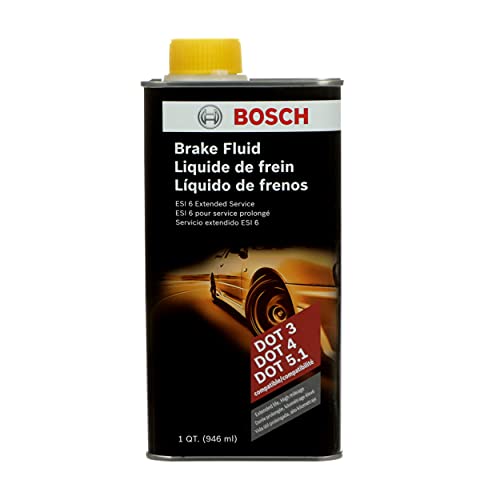
Best for modern braking systems that require a low-viscosity fluid with a high wet boiling point. This DOT-compatible fluid is designed to support extended service intervals with compatibility across DOT 3, 4, and 5.1 formulations. Choose this if you want a fluid designed for newer vehicles with demanding hydraulic assemblies. Limitation: may be over-specified for very old or simple systems that only require DOT 3.
Buying Guide
What to check before buying brake and clutch fluid
- Vehicle specification: Confirm the required DOT grade (3, 4, or 5.1) in your owner’s manual or on the reservoir cap. Use the exact grade to avoid performance issues.
- Boiling point: Higher boiling points reduce vapor lock risk, especially in hot climates or aggressive driving.
- Compatibility: Some fluids are pre-formulated for ABS or GM systems. Use OEM-recommended fluids when possible.
- Climate and usage: Racing or track use benefits from high-temperature stability; daily driving favors reliability and corrosion protection.
- Container size: Larger volumes are convenient for routine maintenance on multiple vehicles; smaller bottles suit periodic topping off.
- Maintenance strategy: Plan for periodic fluid replacement per manufacturer guidance to prevent moisture buildup.
Frequently Asked Questions
- What does DOT mean in brake fluid?
DOT standards specify minimum performance requirements for brake fluids. Different DOT grades (3, 4, 5.1) have different boiling points and corrosion protections.
- Can I mix DOT 3 and DOT 4 fluids?
In many cases, DOT 3 and DOT 4 are compatible because DOT 4 is often formulated as a superset of DOT 3. Always follow the vehicle manufacturer’s guidance.
- Is racing fluid suitable for daily driving?
Racing fluids like Motul RBF 600 excel at high temperatures but may have different handling characteristics. They are typically overkill for standard street use unless you require high heat tolerance.
- How often should brake fluid be replaced?
Replacement intervals vary by vehicle and driving conditions, but many manufacturers recommend every 2–3 years, or when moisture levels rise or the fluid appears dark.
- What’s the advantage of low-viscosity fluids?
Low-viscosity fluids improve fluid flow at lower temperatures and can support faster clutch and brake actuation in modern systems.
- Do OEM fluids offer better protection?
OEM fluids are designed to meet specific vehicle requirements and may provide optimized corrosion protection for those systems.