When towing, braking performance matters as much as horsepower. The right brake kit reduces fade, enhances control, and helps keep your vehicle stop-ready under heavy loads. This article reviews five top brake and rotor kits designed to improve stopping power for trucks, SUVs, and 4x4s that regularly haul trailers or gear. Each option combines ceramic pads with drilled and slotted rotors to maximize heat dissipation and reduce dust. Below you’ll find fitment, features, and practical considerations to help you choose the best braking upgrade for towing reliability and safety.
| Product | Veh. Fit (select examples) | Why It’s Good For Towing |
|---|---|---|
| Power Stop K8182-36 | RAM 1500 (2019-2025, incl. 2021-2025) | Front & rear pads with drilled/slotted rotors; carbon-fiber ceramic compound for reduced fade |
| Power Stop K6560-36 | Cadillac Escalade (2015-2020) and large GM trucks | Comprehensive truck/tow upgrade with dual rotors and ceramic pads |
| Max Advanced Brakes – PerformanceMAX | Chevrolet Silverado 1500, GMC Sierra 1500, Tahoe/Suburban (2021-2023 variants) | Heavy-duty towing design with upgraded rotors and ceramic pads for fade resistance |
Power Stop Front And Rear Brake Kit For Ram 1500

The K8182-36 kit is designed for RAM 1500 models from 2019 to 2025, including 2021-2025 variants. It includes two front drilled and slotted rotors, two rear drilled and slotted rotors, and front and rear carbon-fiber ceramic brake pad sets with hardware. This configuration aims to deliver strong stopping power under towing conditions, with reduced brake fade and improved heat management for heavier trailer loads.
Power Stop Front And Rear Brake Kit For Cadillac Escalade (2015-2020)
Fits: Cadillac Escalade (2015-2020) and related GM full-size SUVs/trucks. The Z36 Front & Rear Brake Pad & Rotor Kit includes front and rear drilled/slotted rotors plus front and rear carbon-fiber ceramic pads with hardware. Built to handle towing demands, this kit emphasizes consistent stopping power with reduced fade and robust heat management for heavier loads.
MAX Advanced Brakes – PerformanceMAX Kit
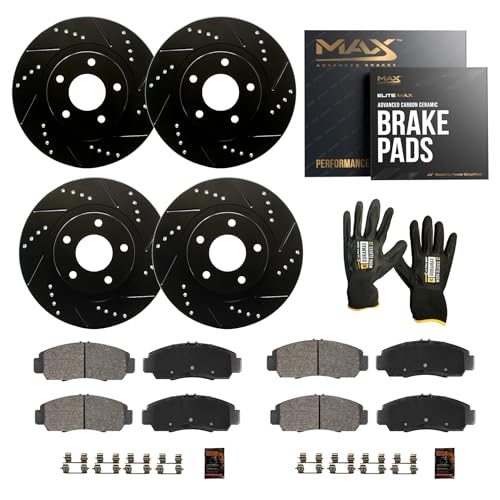
Designed for heavy-duty usage, this kit fits 2019-2023 Silverado 1500, GMC Sierra 1500, Tahoe, and Suburban models. It features drilled/slotted rotors with ceramic pads built for high-temperature performance and fade resistance, making it suitable for towing, mountain driving, and demanding stops when loaded.
Power Stop Front Brake Kit For Toyota 4Runner

Fits: Toyota 4Runner (2010s-early 2020s) and Toyota Tacoma/2013-2023 models with 12.56″ rotors. This kit includes front drilled/slotted rotors and front Z36 carbon-fiber ceramic pads with hardware. It’s built to deliver strong, dependable braking for mixed use including towing or hauling where extra bite and lower dust are desirable.
Power Stop Front Brake Kit For Cadillac Escalade, Silverado, Tahoe, GMC Sierra
For 2008-2020 era Escalades, Silverado/Sierra pickups, Tahoe, and Yukon variants, this kit emphasizes carbon-fiber ceramic braking with drilled/slotted rotors and adds dust-reducing, heat-dissipating features for towing-related stopping power and reliability across a variety of heavy-vehicle configurations.
Buying Guide: Key Purchase Considerations For Towing
- Vehicle compatibility: Confirm the exact year, model, and trim of your vehicle, as brake kit fitment varies by caliper size, rotor diameter, and rotor count. Some kits specify heavy-duty or tow-specific applications that align with higher towing weights.
- Pad material and rotor design: Ceramic or carbon-fiber ceramic pads paired with drilled/slotted rotors improve heat management, reduce dust, and minimize fade during repeated stops while towing.
- Brake fade and heat dissipation: Look for rotor designs that optimize ventilation and thermal stability. For long downhill grades, dynamic cooling and high-temp capability are crucial.
- Warranty and durability: Check included hardware, sensors, and shims, as well as warranty terms. A robust kit with hardware reduces install-time issues and maintenance needs.
- Dust and cleanliness: Low-dust formulations help keep wheels cleaner—beneficial when you frequently tow and park in garages or driveways.
- Noise and comfort: Stainless steel shims and precise manufacturing minimize noise and vibration for a smoother ride under load.
- Budget and availability: Compare kit contents (pads, rotors, hardware, sensors) and delivery timelines to ensure the upgrade fits your towing schedule and budget.
Performance Perspectives And Use-Cases
For frequent heavy towing on grades, a full front-and-rear upgrade often yields the most consistent results, reducing fade during extended braking. Some buyers favor a dual-rotor, twin-pads approach when hauling trailers or heavier loads, while others prioritize reduced dust for cleaner wheels. It’s important to align the kit’s compatibility with your vehicle’s braking system and to consider installed sensors or hardware that may affect future maintenance. All seven reviewed options emphasize heat management and fade resistance, but the ideal choice depends on your vehicle, load, and driving terrain.
Maintenance And Installation Considerations
- Professional installation vs. DIY: Some kits require precise caliper alignment and rotor seating; consider professional installation if you’re unsure.
- Rotor seating and bedding-in: Proper bedding-in of new rotors and pads is essential for optimal performance.
- Wheel clearance: Verify there is adequate clearance for rotors and calipers, especially if upgrading to larger-diameter rotors.
- Quality components: Prioritize kits that include hardware and sensors where applicable to ensure a complete and reliable upgrade.
FAQ
- Do these kits work for all towing weights? Most tow-focused kits are designed for heavier payloads but always verify fitment and load ratings for your exact vehicle configuration.
- Can I reuse my existing braking hardware? Some kits include hardware, while others require new hardware for optimal performance. Check product details.
- Are drilled rotors safe for highway towing? Drilled rotors help with cooling and heat dissipation; ensure your rotor design is compatible with your vehicle and driving style.