If you need to remove scratches, swirls, and oxidation from your vehicle’s paint, a car body rubbing compound is a practical DIY solution. These products are best suited for owners who want to restore clarity, gloss, and a showroom-like finish without professional detailing. The following picks are selected for different needs—from heavy defect removal to finishing polish—so you can choose the right compound for your car’s condition and your workflow. The summary table below helps compare purpose and suitability at a glance.
| Product | Best For | Notes |
|---|---|---|
| Meguiar’s Ultimate Compound | Showroom shine with defect removal | Safe on clear coats; versatile for hand or DA polisher |
| ABRO Rubbing Compound | Oxidized, dull paint needing strong correction | Fast-cut; good as first correction step |
| Turtle Wax T-230A Rubbing Compound | Heavy blemishes and weathered finishes | Heavy-duty paste; budget-friendly |
| Meguiar’s Mirror Glaze M105 Ultra-Cut Compound | Heavy scratches and swirls with high gloss potential | Pro-grade performance with fast cutting |
| 3D One Car Scratch & Swirl Remover | All-in-one solution with minimal steps | Hybrid cutting and finishing polish; zero-dust |
Below are five top products aligned with typical buyer goals. Each section explains who should choose the product, why it’s a good pick, and a practical caveat to consider before purchase.
Meguiar’s Ultimate Compound Pro-Grade Scratches

Best for: DIY enthusiasts seeking a showroom-like finish after defect removal. This compound buffers out scratches, swirls, and oxidation while reviving color and clarity. It works well by hand or with a polisher on all gloss paints and clear coats. The product is noted for safe use on clear coats, making it a versatile choice for everyday detailers.
Why chosen: It combines effective defect removal with a high-gloss result, reducing the need for multiple products. It’s suitable for a wide range of paint finishes and is easy to apply in a straightforward process.
Caution: It may require follow-up polishing or waxing on severely faded finishes to maximize depth and protection.
ABRO Rubbing Compound 10 oz

Best for: Cars with dull, oxidized paint needing a strong correction step. ABRO’s fast-cut formula targets oxidation and surface wear to restore a cleaner appearance. It’s an effective initial correction before polishing or waxing.
Why chosen: It’s designed specifically to handle oxidized finishes and minor surface blemishes, delivering noticeable defect reduction with minimal steps.
Caution: This is a powerful compound; use with care on delicate finishes and follow with a polish or wax to protect the corrected surface.
Turtle Wax T-230A Rubbing Compound
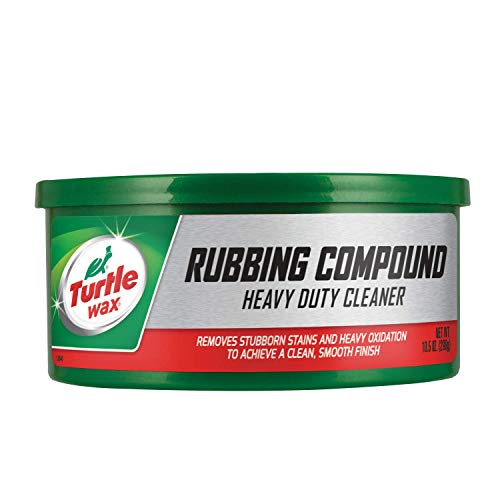
Best for: Heavily weathered finishes with deep scratches or dullness that require a robust paste compound. The heavy-duty nature helps restore clarity on severely oxidized or worn surfaces.
Why chosen: This product is clearly aimed at more challenging correction tasks and is compatible with hand or machine polishing. It offers a straightforward path to leveling out rough patches.
Caution: It may remove more paint layers than milder formulas; use with test spots on delicate panels and consider a subsequent polish for gloss refinement.
Meguiar’s Mirror Glaze M105 Ultra-Cut Compound

Best for: Severe paint defects and heavy swirl removal with a high-gloss finish potential. M105 is favored for more demanding correction tasks where fast cutting is paired with improved final appearance.
Why chosen: It’s a professional-grade option that aggressively removes defects while aiming to deliver a top-tier shine once finished with polishing. The product is built to work well with other Meguiar’s high-gloss systems.
Caution: The cutting action is strong; improper use can leave hazing or micro-marring if over-applied or used on too-soft finishes without proper technique.
3D One Car Scratch & Swirl Remover

Best for: Enthusiasts and professionals seeking an all-in-one solution. 3D One acts as both a cutting compound and finishing polish, simplifying the correction process for daily drivers and classic cars alike.
Why chosen: Its zero-dust formula helps keep workspaces cleaner while delivering noticeable clarity and depth. It suits varied workflows, whether apply-by-hand or with a DA polisher.
Caution: Depending on vehicle condition, some users may still prefer a separate finishing polish after using 3D One to maximize depth and gloss under certain light conditions.
Turtle Wax T-415 Premium Grade Clean Cut

Best for: Professional-level detail work with a silicone-free formula suitable for shop use. It removes scratches and heavy swirl marks while being compatible with various polishing workflows.
Why chosen: It’s a premium option designed for more rigorous detailing environments, offering a reliable tool for deeper correction tasks in a shop setting.
Caution: It’s a stronger product; use with proper technique and ventilation in professional settings to manage dust and residue.
Buying Guide
What to consider when choosing a car body rubbing compound:
- Defect level: For light swirls, milder compounds suffice. For heavy scratches or oxidation, choose a stronger cut like Ultra-Cut or heavy-duty pastes.
- Finish goal: If you want a high-gloss finish, pair a cutting compound with a dedicated finishing polish after correction.
- Application method: Some formulas are easier by hand, others are optimized for DA polishers. Consider your toolkit and skill level.
- Paint type: Check compatibility with clear coats and gloss paints. Some products are safer for clear coats than others.
- Dust and residue: Zero-dust formulas reduce cleanup time and improve workspace cleanliness on indoor detailing projects.
- Follow-up steps: After correction, apply wax or sealant to protect the corrected surface and maintain gloss.
Frequently Asked Questions
- What is a rubbing compound used for?
A rubbing compound removes surface defects like scratches, swirls, and oxidation to restore color and clarity in paint.
- Can I use rubbing compounds on any vehicle?
Most are safe for clear coats and gloss paints, but always test on an inconspicuous area and follow label directions.
- Is a finishing polish required after rubbing compound?
Often yes, especially for a deeper gloss; a finishing polish refines micro-marring and enhances depth.
- Should I use a machine polisher with rubbing compounds?
Machine sanding or polishing can provide more even results, but hand application works well for small areas.
- How do I prevent hazing or burning the paint?
Work in small sections, use light to moderate pressure, and keep the surface moist to reduce friction heat.
- When should I re-wax after using a rubbing compound?
Wax or sealant is recommended after defect correction to protect the restored surface and maintain gloss.