Choosing the right deep cycle battery can extend your boating sessions, improve reliability, and protect sensitive electronics. This guide highlights five top options, balancing deep cycling performance, mounting flexibility, and maintenance needs for American boaters. Each pick is evaluated for trolling motors, living-quarters power, and overall durability in marine environments.
| Brand | Model | ||
|---|---|---|---|
| WEIZE | BCI Group 31M Dual Purpose AGM | Dual Purpose AGM | 110 Ah |
| Newport Vessels | 12V50Ah Deep Cycle | Sealed AGM | 50 Ah |
| OPTIMA | D34M BlueTop | Dual Purpose AGM | 55 Ah (C20) |
| Interstate Batteries | Marine Deep Cycle 31-AGM5 | Pure Lead AGM | 100 Ah |
| Renogy | Deep Cycle AGM 12V 100Ah | AGM | 100 Ah |
WEIZE BCI Group 31M Dual Purpose AGM Battery

The WEIZE BCI Group 31M combines deep cycling with strong starting power in a sealed AGM package. Its dual-purpose design supports marine and RV applications, delivering reliable power for trolling motors and on-board electronics. Low internal resistance supports a longer life and higher output, with an emphasis on rapid charging efficiency for weekend boaters. Charging guidance recommends 14.4±0.1V and up to 21A, avoiding excessive heat or long charge times.
Newport 12V50Ah Deep Cycle AGM Battery

Newport Vessels emphasizes lightweight, sealed AGM construction for marine use. At 50Ah, it is designed to be easily transportable while delivering dependable performance in trolling and auxiliary circuits. The sealed design prevents leaks and minimizes maintenance, making it a practical choice for anglers and small to mid-sized boats seeking straightforward power without extra weight.
OPTIMA Batteries BlueTop D34M

OPTIMA’s Spiralcell technology in the D34M delivers high power output with rapid recharge, maintaining performance in challenging weather. This dual-purpose AGM provides substantial reserve capacity and versatile mounting options, along with maintenance-free operation. Its 750 CCA and 120-minute reserve capacity help ensure reliable engine starts and steady electrical supply to accessories on board.
Interstate Batteries Marine Deep Cycle 31-AGM5
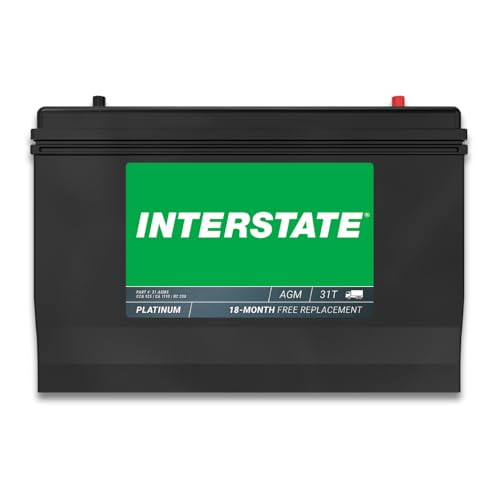
Interstate’s 31-AGM5 focuses on extreme deep-cycle power with thick plates designed to endure repeated discharges and recharges. Marketed as a dual-purpose solution for marine use, it supports trolling motors, appliances, and navigation equipment with extended lifespan compared to conventional flooded batteries. It emphasizes robust build quality and reliable customer service as part of its marine lineup.
Renogy Deep Cycle AGM 12V 100Ah

Renogy’s 100Ah AGM battery is widely adopted for RVs and boats seeking safe, maintenance-free operation. It supports multiple connection configurations and offers a relatively low self-discharge rate. Its sealed design reduces risk of leakage and simplifies installation in tight spaces where weight distribution matters, making it suitable for larger marine systems and backup power.
Buying Guide: Key Considerations For Marine Deep Cycle Batteries
- Chemistry and type: AGM batteries are common for boats due to their maintenance-free design and resistance to vibrations. Consider Gel or LiFePO4 for specific weight or depth-of-discharge requirements, but note compatibility with existing systems.
- Capacity and discharge needs: Match Ah rating to your trolling motor run time, living quarters usage, and accessory load. Higher Ah increases run time but adds weight.
- Cruise and cold-weather performance: Ensure cold-cranking amps (CCA) or reserve capacity (RC) align with engine start needs in your climate. Cold-weather lithium options can excel but may require different charging strategies.
- Charging compatibility: Check alternator and charger compatibility with AGM or LiFePO4 chemistry. Follow manufacturer recommendations for charging voltage and current to maximize life.
- Physical fit and installation: Measure space, terminals, and mounting orientation. Some models offer dual terminals and multiple battery configurations for space efficiency.
- Maintenance and durability: Sealed designs prevent leaks and reduce maintenance. Look for vibration resistance and IP ratings for exposed installations.
- Cost of ownership: Consider lifecycle cost rather than upfront price alone. Higher upfront costs can pay off with longer life and better performance in harsh conditions.
- Warranty and support: A solid manufacturer warranty and accessible customer service help protect your investment on the water.