If you’re looking for durable, spill‑free diesel cans, you want options that prioritize safe pouring, vapor control, and portability. This guide highlights five top picks that balance safety features, capacity, and ease of use for homeowners, lawn‑care pros, and DIY enthusiasts. Whether you need compact 5‑gallon cans for small tools or larger units for multiple vehicles, these selections help you choose the right can for your needs. The buyer’s notes below point out who each product is best for and why it stands out.
Quick comparison of the chosen products:
| Product | Capacity | Best For | Key Benefit |
|---|---|---|---|
| Scepter FSCD552 5 Gallon | 5 gallons | Homeowners, DIYers | Spill‑proof SmartControl spout |
| Eagle 5 Gallon Type I | 5 gallons | Safe storage of diesel | Flame arrestor and self‑closing lid |
| Midwest Can Company 5610 5 Gallon | 5 gallons | Outdoor power equipment | FlameShield vapor protection |
| Surecan 5 Gallon Type II | 5 gallons | Precise dispensing | Rotating spout and thumb trigger |
| VEVOR 16 Gallon Fuel Caddy | 16 gallons | Large vehicles & multi‑machine refueling | Mobile with hand pump and wheels |
Scepter FSCD552 5 Gallon Fuel Container

The Scepter 5‑gallon can is designed for quick refilling of lawn mowers, chainsaws, and other equipment. It includes a rear handle for easy lifting and pouring, and an integrated vent in the spout to support flows of up to 3 gallons per minute. The flame mitigation device adds an extra safety layer by reducing internal vapor ignition during use.
Best for: Homeowners and DIYers who want fast pours without sacrificing safety. Choose this if you frequently refill small engines and value a spill‑free experience. Caution: The tank’s larger vent flow can tempt quick handling; ensure caps are securely closed before transport.
Eagle 5 Gallon Type I Safety Gas Can for Diesel
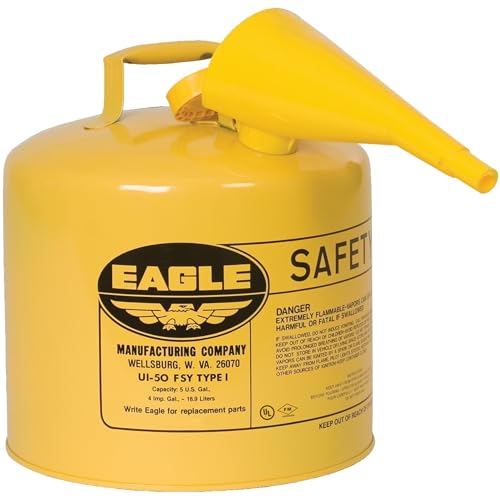
This steel can focuses on safety and reliability for storing and dispensing diesel. It features a single filling opening, a self‑closing gasketed spout cap, and an automatic vent to release internal vapors. The fixed handle and flame arrestor help prevent ignition and reduce fire risk when transferring fuels.
Best for: Users who prioritize safety features like flame arrestors and leak prevention. Choose this if you need a simple, robust can for diesel storage and easy venting. Limitation: May be heavier to handle than plastic models, and uses a single opening for fill/pour.
GAOMON Fuel Caddy With Siphon Pump (10 Gallon Plus)

This on‑wheels caddy offers a 15‑gallon capacity with a portable design. It includes a 10‑foot hose and a siphon pump capable of a 2 gallons per minute flow. The two brass shut‑off valves help prevent spills during disconnection, and the unit is designed for diesel and other fuels while remaining UV‑ and corrosion‑resistant.
Best for: Users who need to service multiple machines across a property and want a mobile, larger capacity option. Choose this if you often refuel from a single central tank. Caution: Larger size may be less maneuverable in tight spaces or garages.
PAMBEE 15 Gallon Diesel Gas Storage Caddy

The PAMBEE unit offers 15 gallons of capacity with a manual siphon pump and a 10‑foot hose. It emphasizes rust resistance with high‑density polyethylene and includes portability features such as a top handle and wheels. It supports gravity refueling or siphon operation for flexible use with cars, ATVs, boats, and more.
Best for: Those who need a larger reservoir for frequent refueling tasks and varied terrains. Choose this if you want a “fill and go” system for larger quantities. Limitation: Heavier when full, so plan for transport and storage accordingly.
Midwest Can Company 5610 5 Gallon Gas Can

This 5‑gallon HDPE can features a vapor barrier and a FlameShield system with two layers of protection against sparking fires. It is designed for safe storage and easy pouring for lawn equipment and small machinery, combining durability with practical safety measures.
Best for: Outdoor equipment users who want reinforced fire safety features in a compact can. Choose this if you value dual‑layer flame protection and a simple 5‑gal capacity. Caution: Ensure proper venting and keep away from extreme heat sources.
Buying Guide: Key Considerations For Diesel Cans
- Capacity vs. portability: Small projects benefit from 5‑gal cans; larger refueling needs suit 10–16 gallon models. Consider how far you need to carry the can and how many machines you service.
- Spill prevention features: Look for spill‑proof spouts, rotating or self‑venting mechanisms, and flame arrestors. These features reduce fire risk and fuel loss during transfer.
- Ventilation and safety: A vented cap or flame mitigation device helps manage vapor buildup. For enclosed spaces, choose cans with secure caps and self‑closing lids.
- Durability: Materials vary between HDPE plastic and galvanized steel. Metal cans often provide sturdier construction but can be heavier; plastic resists rust but may wear over time with exposure to elements.
- Mobility: Wheels, handles, and integrated siphon pumps add convenience for remote or large‑volume refueling. Consider where you store the can and how you will transport it.
- Compatibility: Ensure the spout and vent design match your equipment’s fill ports. Some spouts direct flow for easier pouring into narrow openings.
Frequently Asked Questions
- What capacity is best for a residential user? For most homeowners, a 5‑gallon can balances portability and fuel needs for lawn tools and small equipment.
- Are diesel safety cans worth the extra cost? Yes, safety cans with flame arrestors, self‑closing lids, and spill‑prevention features reduce fire hazards and fuel loss during transfers.
- Can I use these cans for other fuels? Many are designed for gasoline, diesel, or multiple fuels, but always check the product specifications and labeling to avoid cross‑contamination.
- What makes a vented spout important? A vented spout allows air to escape as fuel flows, preventing glugs and reducing spill risk during pouring.
- Is a larger can always better? Not necessarily. Consider the vehicles or tools you service and the space you have for storing and maneuvering the can.
- Do these cans meet safety guidelines for garages? Most models include safety features like flame arrestors and self‑closing caps, but ensure proper ventilation and away‑from‑ignition sources in enclosed spaces.