When diesel fuel becomes contaminated with microbes or algae, fuel efficiency drops and risk of injector and tank corrosion rises. The best diesel fuel additives for algae are microbiocides that kill bacteria and fungi, plus dual-phase formulas that protect both water and fuel. This guide highlights five effective products, explains who they’re best for, and helps you choose based on tank size, usage, and maintenance goals.
Buyer types: fleet operators needing ongoing protection, weekend-warrior diesel drivers facing occasional contamination, and people with older fleets seeking extended fuel-filter life. A quick reference table below compares five recommended products by volumes, target use, and key benefits.
| Product | Best For | Volume | Key Benefit |
|---|---|---|---|
| BIOBOR JF Diesel Fuel Additive (BB16EZ01US) | Frequent microbial control | 16 oz | Dual phase chemistry; fuel tank corrosion prevention |
| Hammonds Biobor JF MicroBiocide (16 oz) | Bacterial and sludge control | 16 oz | Treats up to 1280 gallons; prevents sludge |
| Hammonds Biobor JF MicroBiocide (1 gal) | Large tanks and high usage | 1 gallon | Treats up to 10,240 gallons; broad fuel compatibility |
| BIOBOR JF Diesel Additive (BB08EZ01US) | Corrosion prevention for tanks | 8 oz | Dual phase; extends fuel-filter life |
| Opti-Lube XPD All-Season (Gallon) | Lubrication and injector cleanliness | 1 gallon | Improves lubricity; cleans injectors; rust prevention |
BIOBOR JF Diesel Fuel Additive BB16EZ01US

Key features include a dual-phase chemistry that partitions water and fuel to improve microbe protection and corrosion resistance. The biocide kills and prevents bacteria and fungi in aviation fuels, while also lubricating injectors and fuel pumps. It’s designed to extend fuel filter life by reducing biomass buildup in tanks. Best for fleet owners and aviation-adjacent aircraft users who need robust microbial control and tank protection.
Who it’s best for: buyers needing strong microbial control in fuels and metals protection in one bottle. Why selected: dual-phase chemistry provides more comprehensive protection than single-phase additives. Caution: data suggests use in aviation fuels; verify compatibility with your specific diesel system before broad deployment.
16 oz Hammonds Biobor JF MicroBiocide (Duda Diesel)

Offers a 1:80 treatment level and treats up to 1280 gallons. It’s a biocide that targets bacteria and fungi while preventing sludge formation and clogged filters. Best for users who want a straightforward, high-volume treatment option that reduces sludge risk and maintains fuel cleanliness in diesel tanks.
Who it’s best for: operators needing ready-to-use biocide for mid-size diesel systems. Why selected: proven corrosion and sludge prevention with a high-treatment ratio. Caution: ensure proper dosing and ventilation when handling chemical biocides.
1 Gallon Hammonds Biobor JF Biocide (Large Volume)

This 1-gallon option matches large-tank or high-usage scenarios, treating up to 10,240 gallons. It protects fuels, prevents bacterial and fungal growth, and stops sludge buildup that can clog filters. Best for fleet managers needing a long-term, economical solution for extensive diesel systems.
Who it’s best for: owners of large fuel storage or distribution systems seeking significant protection and extended filter life. Why selected: high-volume treatment capability with consistent biocide action. Caution: handling large quantities requires adherence to safety guidelines and spill prevention practices.
BIOBOR JF Diesel Additive BB32EZ01US (32 Ounce)
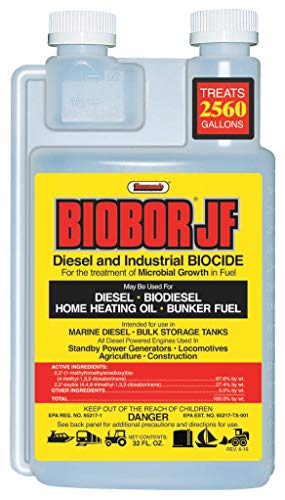
This 32-ounce bottle offers the same dual-phase protection and corrosion prevention as smaller sizes, with a slightly larger volume suitable for mid-size fleets or repeated dosing schedules. It continues to deliver bacteria and fungi control while preserving fuel tank integrity and helping the fuel system stay clean.
Who it’s best for: mid-size operators needing dependable microbial control with flexible dosing. Why selected: balanced volume and proven dual-phase chemistry. Caution: always verify compatibility with your diesel formulation before mixing with other additives.
Opti-Lube XPD All-Season Diesel Fuel Additive (Gallon)

Opti-Lube focuses on lubrication and injector cleanliness while providing rust and corrosion prevention for ULSD. It helps improve lubricity, supports better fuel economy, and aids injector performance. Best for operators who want a multi-benefit additive that also protects metal components and reduces deposits.
Who it’s best for: drivers seeking improved lubricity and cleaner injectors with corrosion protection. Why selected: broad protective profile that complements microbial-focused products by addressing lubrication and deposit control. Caution: may be less specialized for microbial biocides alone; use in combination with dedicated biocides if algae risk is high.
Buying Guide: How To Choose The Right Diesel Additive For Algae Control
What to look for in a diesel biocide
Core goal is to kill and prevent microbial growth that leads to corrosion and sludge. Look for dual-phase chemistry that protects both water and fuel, and check the product’s coverage—gallons treated per bottle—and compatibility with your diesel type and storage conditions.
Volume and dosing considerations
Large tanks benefit from gallon-sized bottles for fewer refills, while smaller tanks may be best served by 8–16 ounce options. Always follow the labeled treatment ratio to avoid under- or over-dosing, which can reduce effectiveness or impact fuel performance.
Co-benefits to consider
Some additives also improve lubricity or inject injector cleanliness, while others emphasize sludge prevention and fuel filter life. Depending on your priorities (corrosion protection, filter longevity, or fuel economy), select a product that aligns with those outcomes.
Usage scenarios
For fleets with recurring algae risk or poor fuel storage conditions, a regular biocide program is advisable. In seasons with lower usage, consider maintaining protection with smaller volumes to preserve fuel quality in storage tanks.
Safety and compatibility
Handle biocides with care and ensure compatibility with your equipment and fuel formulations. When combining products, confirm there are no conflicting chemistries. Use proper PPE and ventilation during handling and dosing.
FAQ
- What causes algae in diesel fuel? Microbial growth occurs when water is present in the fuel system, providing a breeding ground for bacteria and fungi that form sludges and deposits.
- Do diesel biocides kill algae and bacteria? Yes. Most products labeled as biocides target bacteria and fungi and prevent microbial growth in diesel fuels and tanks.
- How often should I dose diesel fuel additives? Follow the product’s labeling for dosing frequency. Large tanks may require periodic maintenance dosing, while smaller systems might use a regular interval schedule.
- Can I use these additives with all diesel formulations? Most additives are designed for common fuels like ULSD, biodiesel blends, and home heating oils. Verify compatibility with your specific fuel type before use.
- Will these additives improve fuel economy? Some products claim cetane improvement and lubricity benefits, which can contribute to smoother operation and potential efficiency gains when used as directed.
- Are there safety concerns with handling biocides? Yes. Use appropriate protective equipment, follow handling guidelines, and keep products away from children and pets.
In summary, choosing the right diesel fuel additive for algae hinges on your tank size, usage rate, and whether you need primary biocidal action, lubrication, or sludge control. The featured products offer a range of protections—from dual-phase microbiocides that guard tanks and injectors to all-season lubricants that support cleaner, longer-lasting diesel systems. Use the Buying Guide to tailor your choice to your operation and storage conditions.