When fiberglass surfaces crack, chip, or wear down, choosing the right epoxy system is essential for a strong, lasting repair. This guide highlights top epoxy and filler kits designed to bond, fill, coat, and laminate with fiberglass in marine and DIY projects. We compare performance, application, and versatility to help American readers select the best option for boats, decks, and other fiberglass structures.
Summary of chosen products:
| Product | Brand | Best For | Key Benefit |
|---|---|---|---|
| TotalBoat 5:1 Marine Epoxy Resin Kit (Quart, Slow Hardener) | TotalBoat | Bonding, coating, laminating | Strong bonds with fiberglass and composites; color-coded pumps |
| Mallbaola Marine Fiberglass Repair Kit | Mallbaola | Deep repairs and gel coat restoration | Excellent adhesion and UV resistance |
| 3M Bondo Fiberglass Resin Repair Kit | 3M | Holes, scratches on boats and more | Waterproof, versatile on multiple surfaces |
| TotalBoat Polyester Structural Repair Putty | TotalBoat | Structural fills and bonding | Long strand fibers for strength |
| YumCraft Marine Fiberglass Boat Repair Kit | YumCraft | Gel coat and surface repairs | Epoxy filler with UV resistance |
TotalBoat 5:1 Marine Epoxy Resin Kit (Quart, Slow Hardener)

High-strength marine epoxy designed for bonding, coating, and laminating. Ideal for boats, kayaks, SUPs, and trailers, the system forms durable bonds on fiberglass, wood, carbon fiber, steel, lead, and etched aluminum. The kit includes resin, hardener, and mixing supplies with color-coded pumps for easy use. At 75°F, pot life is 20 minutes with the slow hardener, and 12 minutes with the fast option. Self-leveling properties aid wet-out on fiberglass cloth, reducing voids and sags in patch work.
This epoxy system supports various project phases—from bonding a new fiberglass skin to sealing a repaired hull. Users can assemble patches and laminates with confidence, knowing the resin offers robust adhesion and resistance to marine conditions. The kit’s flexibility makes it suitable for DIY boat builders and professionals focusing on long-lasting repairs.
TotalBoat 5:1 Marine Epoxy Resin Kit (Gallon, Slow Hardener)

This larger gallon option expands the same high-strength bonding, coating, and laminating capabilities for bigger repairs or multiple projects. With a slow hardener, users gain extended working time for complex laminates or full hull patches. The kit’s compatibility with fiberglass, wood, carbon fiber, and metal makes it a versatile choice for boat builders and restorer projects alike. The system’s self-leveling properties help ensure uniform saturation of fiberglass cloth and fillers.
Mallbaola Marine Fiberglass Repair Kit

This all-in-one epoxy filler kit is designed to repair deep scratches, cracks, chips, and holes in fiberglass boats and watercraft. It emphasizes strong adhesion, UV resistance, and waterproof protection to deliver durable results that withstand harsh marine conditions. The formula supports repairs on vertical and horizontal surfaces and is suitable for working on carbon fiber, aluminum, PVC, acrylic, and wood. It’s ideal for restoring gel coat and extending the life of marine finishes above the waterline.
3M Bondo Fiberglass Resin Repair Kit

3M’s repair kit offers a user-friendly, waterproof solution for holes and scratches on automobiles, boats, and other surfaces. The resin-filler system provides strong, durable repairs across fiberglass, wood, concrete, and metal. Its versatility makes it a practical choice for mixed-use projects, from boat repairs to home applications, while delivering a solid surface finish once cured.
TotalBoat Polyester Structural Repair Putty

This pre-thickened, fiber-reinforced polyester putty is designed for high-strength structural filling, bonding, and radius forming on fiberglass, wood, and metal. It’s suitable for above or below-waterline applications and provides strong adhesion with long-string glass fibers for added elasticity. The paste-like consistency spreads easily and won’t sag, enabling precise fillets, bond lines, and bulkhead anchoring during hull repairs.
YumCraft Marine Fiberglass Boat Repair Kit
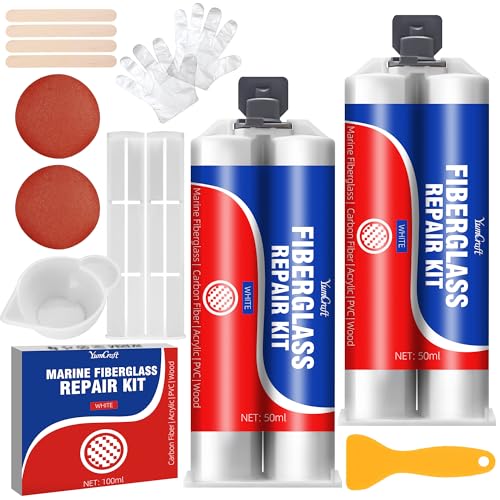
This kit focuses on gel coat and surface repairs for fiberglass boats and ships. It combines epoxy fillings with UV resistance to protect repaired areas from sun exposure and abrasion. Its versatile formula adheres well to glass fiber, PVC, aluminum, acrylics, and ceramics, enabling efficient restoration of both marine gear and household items with a fiberglass component.
Buying Guide: Key Considerations for Epoxy Repairs
- Project type: Bonding, coating, laminating, or filling? Choose epoxy systems designed for the primary task (e.g., laminating for patches, putty for fills).
- Substrate compatibility: Ensure your epoxy bonds well with fiberglass, wood, metal, or composites present in the repair area.
- Hardener choice and pot life: Slower hardeners offer longer work times for large patches; faster hardeners speed up cure for quick fixes. Temperature affects working time—plan accordingly.
- Viscosity and wet-out: Lower viscosity epoxies wet fiberglass cloth better; self-leveling formulas reduce air voids in laminates.
- Fillers and reinforcement: Long-fiber putties or glass-reinforced fillers strengthen structural repairs and fill gaps effectively.
- UV resistance and water exposure: Marine environments demand UV-stable and waterproof options to prevent yellowing or degradation.
- Safety and coatings: Some products include color-matched pumps or color indicators; consider safety data sheets and environmental impact when selecting.
- Application tools: Pumps, mixing cups, spreaders, and applicators influence ease of use and consistency across repairs.
For best results, follow each product’s mixing ratio and curing conditions precisely. Prepare surfaces by cleaning, sanding, and drying thoroughly. Use appropriate personal protective equipment and work in a well-ventilated area. When in doubt, test a small repair patch before tackling larger sections to verify adhesion and finish compatibility with the existing surface.