Repairing a gas tank requires durable, fuel-resistant epoxy that can withstand harsh conditions without leaking or corroding. This guide presents the top epoxy products for gas tank repair, including options that bond to metals and resist gasoline, rust, and temperature changes. Below is a summary table that covers key features of selected products to help you choose the right epoxy for your repair needs.
| Product | Brand | Key Features |
|---|---|---|
| J-B Weld 8217 TankWeld Gas Tank Repair | J-B Weld | Hand-mixable, steel-reinforced, sets in 5 minutes, cures in 1 hour, 900 PSI tensile strength |
| Permatex 84334 Fuel Tank Repair Epoxy Stick | Permatex | Hand kneadable, bonds to gasoline wet metal, no tank removal needed |
| J-B Weld 2110 Metal Fuel Tank Repair Kit | J-B Weld | Complete kit, easy application, repairs holes & cracks, includes fiberglass cloth |
| POR-15 Fuel Tank Sealer | POR-15 | Stops rust & corrosion, non-porous sealant, resistant to fuels & additives |
| Hzutloer Instant Fuel & Water Tank Repair Adhesive | Hzutloer | Waterproof, high-temp resistant (-50℃ to 180℃), wear & corrosion resistant |
J-B Weld 8217 TankWeld Gas Tank Repair Epoxy

This steel-reinforced, hand-mixable epoxy putty is designed specifically for metal repairs including gas tanks and radiators. It sets quickly in 5 minutes and cures fully in just 1 hour to a dark grey finish. With a tensile strength of 900 PSI, it offers a robust, non-rusting bond capable of sealing leaks effectively. This epoxy is ideal for small repairs on metal surfaces exposed to fuel, water, or other elements. The putty format allows for easy molding and sculpting over holes or cracks without complicated mixing tools.
Permatex 84334 Fuel Tank Repair Epoxy Stick

This two-part epoxy comes as a hand-kneadable putty stick that repairs metal gas tanks without removal. A notable feature is the contrasting colors in its two parts, which must be mixed uniformly to ensure effectiveness. It adheres even to gasoline-wet metal surfaces so common prep steps can be skipped, speeding up repairs. The epoxy hardens into a durable black compound, offering a permanent fix for leaks and cracks in metal tanks and containers.
J-B Weld 2110 Metal Fuel Tank Repair Kit

This comprehensive repair kit includes everything needed for professional-quality, permanent gas tank repairs. It requires no removal of the fuel tank and is suitable for holes up to 3/8″ diameter and cracks up to 4″ long. The kit contains epoxy putty, fiberglass cloth for reinforcement, sandpaper, and an applicator for precise work. The epoxy cures to a gray finish, providing a strong, chemical-resistant seal suitable for long-term use on metal fuel tanks.
POR-15 Fuel Tank Sealer for Rust and Leak Prevention
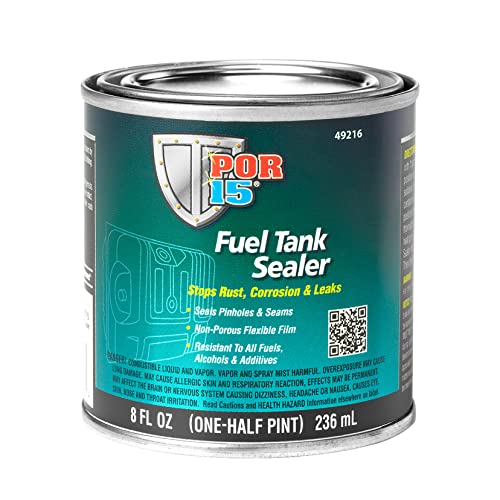
POR-15 is a specialized sealer that stops rust, corrosion, and leaks inside metal fuel tanks. It creates a non-porous coating resistant to all fuels, alcohols, and additives, prolonging the life of your gas tank. Ideal for engines and vehicles where rust is common, this sealer forms a durable internal barrier. It can be poured or brushed inside the tank and fully adheres to metal surfaces, preventing future fuel damage.
Hzutloer Instant Fuel & Water Tank Repair Adhesive

This high-performance adhesive is waterproof and resistant to extreme temperatures, remaining stable from -50℃ to 180℃. It excels at repairing ruptures, cavities, sand holes, and rust corrosion in fuel tanks. After curing, it provides a wear-resistant, waterproof, and oil-proof seal that resists pressure and impact. Its high hardness makes it suitable for sanding, which is useful for finishing repairs smoothly.
Buying Guide for Epoxy Gas Tank Repairs
Choosing the right epoxy for gas tank repair involves several important factors:
- Material Compatibility: Ensure the epoxy adheres well to metal surfaces common in gas tanks, like steel or aluminum.
- Curing Time: Faster curing epoxies allow quicker repairs but make sure you work efficiently during the pot life.
- Tensile Strength and Durability: A higher PSI rating means the epoxy can withstand pressure and vibration inside the tank.
- Fuel and Chemical Resistance: Select an epoxy that tolerates gasoline, alcohol, additives, and corrosive elements to avoid failure.
- Ease of Application: Products that do not require tank removal or drying are preferable for convenient repairs.
- Temperature Resistance: Consider the operating temperature of your engine or fuel system; high-temp resistance ensures longevity.
- Package Contents: Repair kits with reinforcement materials (fiberglass, sandpaper) provide a more robust solution for larger leaks or cracks.
- Form Factor: Putty sticks provide moldability, while liquid sealers might offer better surface coverage.
By considering these factors, you can select the best epoxy to create strong, lasting repairs on your gas tank that resist leaks, rust, and damage under harsh operating conditions.