For DIYers and professional mechanics, removing evaporative system hoses and fuel lines quickly and safely is essential. This guide highlights top tools designed to detach hoses, clamps, and fittings without damaging delicate lines. The selections below cover a range of vehicles and hose sizes, are easy to use in tight spaces, and come from trusted brands. The best picks suit common scenarios: home mechanics tackling EVAP and fuel-line connections, automotive technicians in shops, and hobbyists performing routine maintenance.
Summary table of featured products. This quick-reference helps you compare core strengths and intended users at a glance.
| Product | Best For | |
|---|---|---|
| PLATATO 2PCS Disconnect Pliers Set | Varied EVAP and fuel-line fittings | Two angles (40°, 85°) for tight spaces; durable carbon steel construction; great leverage |
| Schley Tools – 14550 PCV/EVAP Hose Release Tool Kit | Vehicles with many breather hose connections | Multiple sizes; broad compatibility with common makes |
| Toolwiz Automobile Hose Removal Pliers | General hose removal across multiple systems | Versatile diameter range; designed for tight access |
| DURATECH Hose Removal Pliers | Professional or beginner use in fuel and vacuum lines | Wide jaw opening; robust carbon steel with surface treatments |
| Lisle 37160 Disconnect Pliers | Fuel and EVAP fittings with tabbed connectors | Low-profile 85° bend; reliable for Delphi and some imports |
PLATATO 2PCS Disconnect Pliers Set

The PLATATO pliers are designed to release connector tabs on EVAP, fuel line, and DEF fittings. Two jaw angles—40 degrees and 85 degrees—improve accessibility in tight engine bays. At 7.28 inches, the length provides leverage while protecting fingers from pinches. Best for professional mechanics and DIYers dealing with stubborn connections that require tab depression to disengage. A caution: ensure you align the tool correctly with the connector to avoid slippage that could mar hoses.
Best for: Technicians and enthusiasts who work across varied vehicles and space-limited areas. Why selected: combination of offset jaws and durable carbon steel construction supports frequent use in tough spots.
Schley Tools – 14550 PCV/EVAP Hose Release Tool Kit

This kit offers multiple sizes to accommodate a broad range of breather hose connections, reducing the need to remove extra components. It is suitable for brands like Porsche, Audi, BMW, VW, Mini, and Mercedes-Benz. Best for: shops or home garages handling diverse European makes. Better for: scenarios requiring precise selective removal without dismantling surrounding parts.
Limitations: kit-wide compatibility varies by model year; verify hose fitting type before use.
Toolwiz Automobile Hose Removal Pliers

Toolwiz Pliers are built for removing hoses from tanks, radiators, and similar fittings. They handle a range from 0.16” to 0.59” (4 mm to 15 mm) diameter hoses and are designed for quick access in tight spaces. Best for: DIYers needing a generalist tool that covers a wide hose spectrum. Choose this if you value a single tool that can handle multiple hose sizes with ease.
Caution: avoid forcing beyond the tool’s intended range to prevent hose damage or tool wear.
WORKPRO Hose Removal Pliers

WORKPRO’s hose removal pliers emphasize safe and efficient operation with a non-slip PVC handle and a sturdy build. They target automotive hose lines in fuel and vacuum systems, plus marine and oil applications. Best for: beginners and professionals seeking ergonomic design and reliable performance. Limitation: precise fit depends on hose diameter, and excessive force on delicate hoses should be avoided.
DURATECH Hose Removal Pliers

DURATECH offers a two-piece plier set with a wide jaw opening and carbon steel construction. The tools feature different surface treatments for corrosion resistance and durability. Best for: professional use in fuel, radiator, and other lines. Choose this if you need a robust, longer-lasting tool that performs well in regular use. Limitation: longer jaw design may be less ideal in extremely confined spaces.
Lisle 37160 Disconnect Pliers
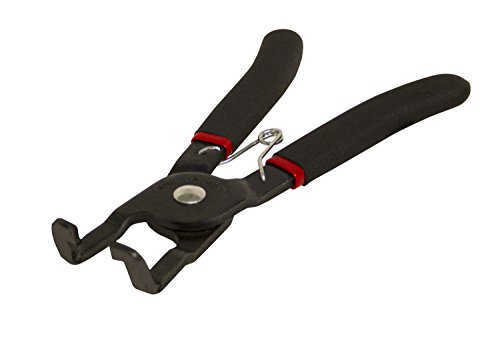
Lisle 37160 features a low-profile 85° bend to fit between the top of the fuel tank and the vehicle. It targets Delphi two-tab connectors and certain imports. Best for: users working on vehicles with restricted access near the tank. Limitation: compatibility may vary by connector type; verify tab engagement before use.
Buying Guide
What to consider when choosing an evap hose removal tool:
- Compatibility: Check connector types and hose diameters you encounter most often. A multi-size or multi-angle set can reduce tool swapping.
- Access in tight spaces: Tools with offset jaws or compact profiles help in cramped engine bays.
- Material and durability: Carbon steel with corrosion protection extends tool life under oily or humid conditions.
- Ergonomics: Non-slip handles and balanced weight reduce hand fatigue during prolonged work.
- Ease of use: Look for tools that depress tabs cleanly without damaging hoses or fittings.
- Maintenance: Consider tools with easy cleaning and rust resistance for longevity.
Frequently Asked Questions
- What is an evap hose removal tool used for?
It helps disconnect hoses and fittings in evaporative emission systems and fuel lines without damaging components.
- Can these tools work on all cars?
Most tools cover a broad range of vehicle makes, but some connectors are model-specific. Check compatibility with your vehicle’s hose size and tab mechanism.
- Should I use lubricants with these tools?
Generally no lubricants are required; depress the tab and pull gently. If a hose is very stiff, a small amount of penetrating oil away from the fitting area may help, but avoid contact with the hose interior.
- What if the hose doesn’t release after pressing the tab?
Reassess alignment, ensure the tab is fully depressed, and avoid twisting the hose. If stubborn, try a tool with a different angle or size within the kit.
- Are metal hoses at risk of damage using these tools?
Properly designed tools reduce the risk of nicks or tears; apply steady pressure and avoid prying along the hose edge.