Looking for a reliable FM transmitter that adds Bluetooth streaming, hands-free calling, and fast charging to a non-Bluetooth car? The top options below are selected for different driver needs: best overall for stable connections, best for high-speed charging, best for old cars without Bluetooth, best for ambient lighting lovers, and best for LED-backlit ease of use. The brief comparison table helps you choose quickly.
| Product | Best For | |
|---|---|---|
| LENCENT FM Transmitter | Best for dual charging + clear calls | Dual USB ports, CVC noise suppression |
| SYNCWIRE 48W (PD 36W) | Best for fast charging + stability | Bluetooth 5.4, PD 36W |
| LIHAN 48W PD/QC | Best for upgrading non-Bluetooth cars | Upgraded FM signal, 48W charging |
| SYNCWIRE 38W (PD & QC3.0) | Best Hi-Fi with bass | Hi-Fi bass, 38W total |
| JOYROOM 96W | Best for multi-device charging | PD 60W, QC 18W x2 |
LENCENT FM Transmitter With Dual USB Charging
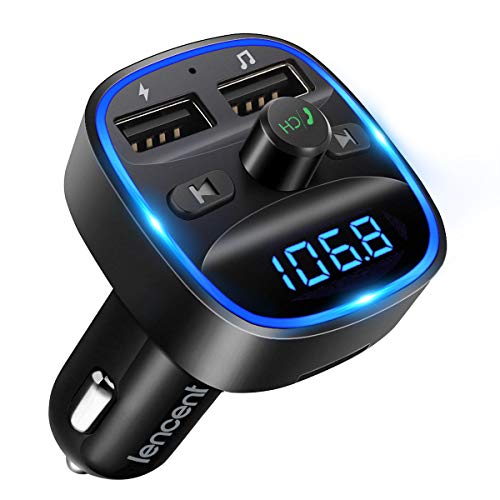
Brand: LENCENT. Features include crystal clear music streaming with CVC noise suppression for full duplex sound. It supports Bluetooth, USB flash drives up to 32GB, and microSD cards up to 32GB. The device offers two USB ports for safe charging and built-in protections for over-current, over-voltage, and short circuits. Hands-free calling and voice navigation boost driving safety. Best for drivers who want a simple, reliable dual-charging setup with clear calls.
Who it’s best for: daily commuters and road-trippers who need dependable hands-free calling and two-device charging. Why selected: strong noise suppression and broad media format support ensure consistent audio across devices. Limitations: microSD/USB storage limits may require frequent file management.
SYNCWIRE 48W FM Transmitter With PD 36W

Brand: SYNCWIRE. Key features include ambient light with a user-friendly switch, upgraded Bluetooth 5.4 for faster pairing and stable connections, and intelligent dual USB ports delivering 36W PD and 12W USB-A. It’s designed to reduce connection delays and support navigation audio streaming. Best for drivers who want fast charging plus a stylish lighting experience. Caution: ambient lights may distract some drivers in low-visibility conditions.
LIHAN FM Transmitter With 48W PD+QC Fast Charging
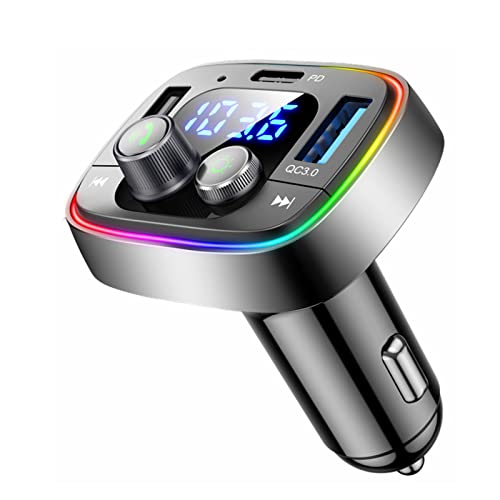
Brand: LIHAN. This module upgrades non-Bluetooth cars quickly, offering improved FM signal stability in busy urban environments and seamless app audio streaming from services like Spotify, navigation apps, and podcasts. Best for older vehicles or those without Bluetooth who still want wireless audio. Choose this if you want broad app integration and a straightforward install. Limitation: signal quality can vary with radio interference in dense city areas.
SYNCWIRE Bluetooth 5.4 FM Transmitter With 38W

Brand: SYNCWIRE. Features include PD 3.0 and QC 3.0 fast charging, dual USB ports, and Bluetooth 5.4 for a stable streaming and calling experience. It also offers bass enhancement and ambient backlighting. Best for users who want quick charging and improved audio quality. Caution: backlighting may affect night driving focus for some users.
JOYROOM 96W FM Transmitter With Air-Vent Mount

Brand: JOYROOM. Delivers up to 96W total with a PD 60W USB-C port and two QC 3.0 ports (18W each). It provides FM transmission, AUX mode, and an LED-lit design for night use. Best for drivers who need maximum charging flexibility and an air-vent mounting approach. Limitation: higher power may not be necessary for all vehicles and could stress older dashboards.
Buying Guide
What to consider when choosing an FM transmitter for your car:
- Charging needs: Do you need two fast-charging ports or more USB options? If you require high-speed charging for multiple devices, prioritize PD and QC ports with higher wattage.
- Connection stability: Bluetooth version (5.4 is current) and anti-noise features help maintain clear calls and streams, especially in urban environments.
- Audio quality: Look for devices with noise suppression, echo cancellation, and bass enhancement to improve music clarity and navigation prompts.
- Compatibility: Ensure support for your media and navigation apps, plus USB drive formats and card types you plan to use.
- Ease of use: Consider mounting style (in-dash, air-vent), LED indicators, and button layouts that minimize driver distraction.
- Safety: Over-current, over-voltage, and temperature protection is important for protecting both the device and vehicle electronics.
How to Choose Quick-Start Scenarios
- Best overall for most users: A dual USB, Bluetooth 5.4 transmitter with stable connections and clear calling.
- Best for upgrading older cars: A model that supports plugging into non-Bluetooth cars and streams via app.
- Best for frequent travelers: A unit with ambient lighting and robust charging to power devices on long trips.
- Best for budget-conscious buyers: A reliable model with essential features and good call quality without extra bells and whistles.
Frequently Asked Questions
- Do FM transmitters work with every car radio? Most work with any car radio that can tune FM frequencies, but performance varies with interference and antenna design.
- Can I use these while navigation apps are active? Yes, most transmitters support audio from GPS/navigation apps via Bluetooth or line-in.
- Will using Bluetooth drains my phone battery quickly? On average, streaming uses more battery than standby; charging ports help offset this drain.
- Is there a risk of static or interference? Interference can occur in crowded areas; choosing a transmitter with improved noise reduction helps reduce this.
- Are these legal to use while driving? FM transmitters are generally legal, but always follow local regulations and avoid distracted driving.
- What storage formats do USB drives need? Many units support MP3, WAV, WMA formats; FAT32 formatting is commonly recommended.