For car owners, DIY fuel transfers require reliable, easy-to-use siphon pumps. This guide highlights five practical options, each best for different needs like emergency topping, remote-location pumping, or routine fluids changes. The top picks aim for simple operation, durable construction, and clear safety features, helping buyers choose the right model for their vehicle maintenance tasks.
| Product | Best For | Key Benefit |
|---|---|---|
| H-veenjor Gasoline Siphon Hose Pump | Emergency transfers, small jobs | High-flow hoses and built-in one-way valve |
| BestCosy Portable Fuel Transfer Pump | On-the-go, battery-powered use | Battery-powered for remote locations |
| GasTapper Gas Siphon Pro Pump | Versatile, heavy-duty tasks | 9 ft hose and brass nozzle weight |
| MILADO Gasoline Transfer Pump | All-round fueling needs | Complete accessory set for quick setup |
| Wadoy Gas Siphon Hose Pump | Emergency backup, long hose needed | 1/2″ ID hose with 6 ft safety hose |
H-veenjor Gasoline Siphon Hose Pump

Best for quick, small-volume transfers in garages or home driveways. The pump uses upgraded 15 mm hoses for faster pumping and includes a built-in one-way valve to prevent backflow. Weighing only 290 g, it’s easy to carry and operate with a simple squeeze to start flow. Not suited for potable water or edible oils due to the listed cautions in its usage notes.
- Pros: Large-diameter hoses for faster transfer; clear flow direction on the bulb; simple setup.
- Cons: Not intended for drinking water or edible oils.
Best for: Car owners who need a compact, reliable siphon for gasoline, oil, diesel, or water in non-potable contexts. Choose this if you want a straightforward manual pump with minimal components.
BestCosy Portable Fuel Transfer Pump
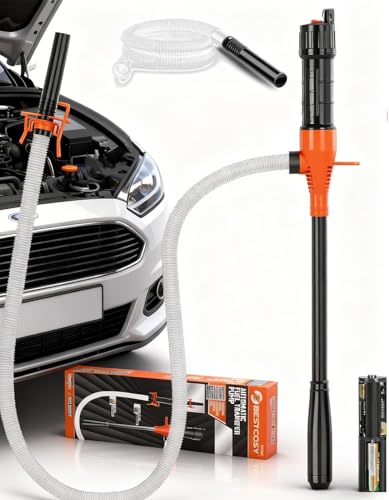
Best for mobile users who need a battery-powered option. This unit runs on D-cell or AA batteries and can transfer fuels without a cord, making it ideal for outdoor work or locations without power. It promises a flow rate high enough to manage typical DIY transfers and is compatible with gasoline and similar liquids. Power availability and battery life are practical considerations for longer jobs.
- Pros: Battery-powered for portability; suitable for remote locations.
- Cons: Requires batteries (not included) and may limit duration based on battery life.
Best for: Do-it-yourself mechanics or outdoor enthusiasts who want a cordless transfer pump for gasoline, diesel, or water when power isn’t readily available. Choose this if you value portability and rapid setup in the field.
GasTapper Gas Siphon Pro Pump
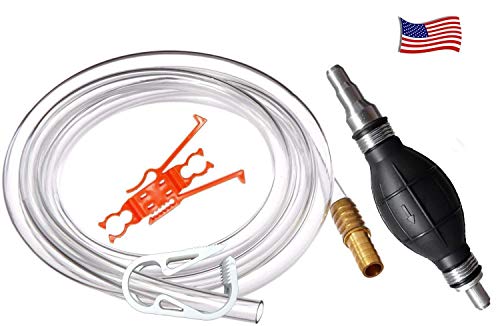
Best for versatile, heavy-duty fueling tasks, including motorcycles, snowblowers, boats, or lawn equipment. It features a 9 ft hose and a brass tip weight to sink the line. The pump is designed for fast action and broad compatibility with various fuels. Best used when a longer reach and robustness matter more than ultra-compact size.
- Pros: Fast transfer up to 3.5 gallons per minute; long hose length.
- Cons: Requires manual operation; not ideal for very small amounts.
Best for: Users who need a durable, flexible siphon with extended reach for a range of vehicles and equipment. Choose this if you frequently transfer fuels from larger containers or in remote setups.
MILADO Gasoline Transfer Pump

Best for all-around fueling needs with a complete accessory set. The unit includes a 3 m/10 ft hose, a robust hand pump, clamps, a shut-off valve, and a copper siphon head for quick transfers. It supports multiple fluids and is designed to minimize leaks via its robust construction. Practical for cars, boats, and lawn equipment. Not designed for potable water or edible oils.
- Pros: All-in-one kit reduces extra purchases; versatile with multiple fluids.
- Cons: Slightly heavier due to included accessories.
Best for: Car owners who want a ready-to-use kit for various fluid transfers without needing extra parts. Choose this if you prefer a comprehensive package that covers most common transfers.
Wadoy Gas Siphon Hose Pump

Best for emergency backup and longer siphon needs. It features a 1/2″ ID high-flow hose up to 3.5 gallons per minute, with a built-in check valve to prevent backflow. The 6-foot safety hose adds reach for tight spots. It’s designed to be durable and easy to use but may require careful handling to avoid kinks in the hose.
- Pros: High-flow rate; built-in check valve reduces backflow risk.
- Cons: Slightly longer setup time to assemble the hose correctly.
Best for: Buyers wanting a reliable, long-reach siphon with strong backflow prevention. Choose this if you value safety features and emergency readiness in a single hose kit.
Buying Guide
Key considerations when selecting a fuel siphon pump for cars:
- Flow rate: How many gallons per minute do you need for typical tasks? Higher flow saves time on larger transfers but may be heavier to operate.
- Hose size and length: A larger internal diameter (1/2″ or 15 mm) and longer hoses improve throughput and reach, especially with distant containers.
- Power source: Manual pumps are simple and reliable; battery-powered options offer portability but rely on battery life and replacements.
- Valve design: A built-in one-way valve prevents backflow, which is critical for keeping fluids from returning to your source.
- Material compatibility: Verify fluids listed (gasoline, diesel, oil, water). Do not use for potable water or edible oils unless explicitly stated.
- Ease of use: Look for clear flow direction indicators, simple assembly, and minimal required tools.
- Durability: Stainless or brass components and thick hoses reduce wear and leaks over time.
FAQ
- Q: Can I use these for potable water? A: Most models are not designed for potable water or edible oils; check the product notes before use.
- Q: Do these pumps require electricity? A: Some models are manual; others are battery-powered. Choose based on whether you need cordless operation.
- Q: Will these pumps work with diesel? A: Yes, many models support gasoline, diesel, and oil, but confirm fluid compatibility in the product description.
- Q: How long can I run a battery-powered pump before replacing batteries? A: Battery life varies by model; refer to the product’s operational guidelines for estimated runtime.
- Q: Is backflow a concern with siphon pumps? A: A built-in one-way valve helps prevent backflow, improving safety during transfers.
- Q: Can I pump from a large fuel can to a car tank? A: Yes, provided the hose length and flow rate meet the task requirements and the pump is rated for the fuels involved.