Choosing the right fuel stabilizer helps prevent water contamination, gum and varnish buildup, and corrosion in marine engines. The products below are designed to extend fuel life, improve in-season performance, and support easy starts after long storage. This guide compares popular approaches, from enzyme-based treatments to traditional stabilizers, so boat owners can pick a solution that fits their fuel type, storage habits, and maintenance schedule.
| Product | Brand | Notes |
|---|---|---|
| STA-BIL 360 Marine Ethanol Treatment & Fuel Stabilizer (32 oz) | STA-BIL | Prevents rust and corrosion; cleans fuel system; treats up to 320 gallons |
| STA-BIL 360 Marine Ethanol Treatment & Fuel Stabilizer (8 oz) | STA-BIL | Compact bottle; treats up to 80 gallons; in-season cleaning |
| Quicksilver Quickstor Fuel Treatment and Stabilizer (12 oz) | Quicksilver | Long-term storage stabilization; treats up to 60 gallons |
| Star Tron Enzyme Fuel Treatment (16 oz) | STAR BRITE | Enzyme-based; treats up to 96 gallons; reduces ethanol issues |
| Star Tron Stabilizer+ Fuel Storage & Corrosion Protection (8 oz) | STAR BRITE | Stabilizes fuel and protects against corrosion; treats 40 gallons |
STA-BIL 360 Marine Ethanol Treatment & Fuel Stabilizer — 32 oz
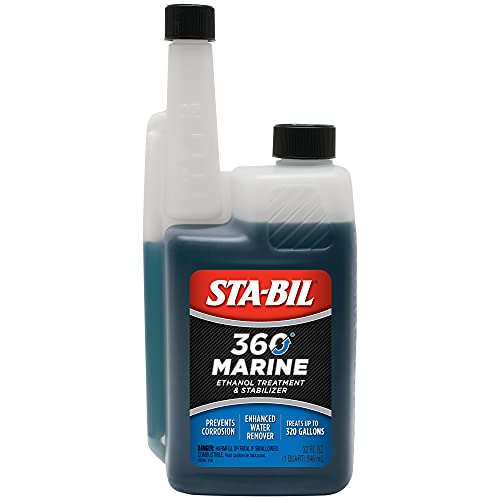
The STA-BIL 360 Marine Ethanol Treatment & Fuel Stabilizer is designed to clean and protect the entire fuel system while stabilizing ethanol-blended fuels commonly found in marine environments. The formula uses PEA additives to remove water, gum, and varnish, reducing phase separation and engine hesitation. It also provides corrosion protection for fuel-system metal parts, helping engines deliver consistent performance during in-season use. The product is formulated to improve fuel efficiency and engine reliability, supporting longer intervals between maintenance checks on boats stored in varying conditions.
Key benefits include corrosion protection, fuel-system cleaning, and performance optimization. With a focus on both cleaning and protection, this stabilizer is suitable for boats that see seasonal use and storage in damp environments. It’s compatible with standard gasoline blends and can contribute to smoother starts and reduced engine wear, especially when fuels sit for extended periods between trips.
STA-BIL 360 Marine Ethanol Treatment & Stabilizer — 8 oz
Another STA-BIL option, the 8 oz bottle treats up to 80 gallons and is ideal for spot maintenance, boats with smaller fuel tanks, or frequent trips where ethanol exposure is a concern. The lightweight bottle fits into tackle boxes or tool chests for on-demand fuel stabilization. Like the larger version, it aims to prevent corrosion, reduce water formation, and keep fuel fresh for better cold starts and reliable performance after storage.
Its compact size makes it a practical choice for sailors and anglers who want to keep a backup bottle on board or in shore storage. Although it covers a smaller volume, it retains the same goals: preserve fuel quality, suppress gum and varnish formation, and protect mechanical components from ethanol-related damage. This can be especially helpful for boats stored in humid or coastal environments where fuel degradation occurs more quickly.
Quicksilver Quickstor Fuel Treatment and Stabilizer (12 oz)

Quicksilver Quickstor is tailored for long-term storage of boats, generators, and other powersports equipment. It prevents the breakdown and oxidation of both regular and ethanol-blended fuels, helping to maintain fuel integrity for up to two years with proper dosing. The bottle provides guidance on treating up to a specific volume of fuel, which can help boat owners plan proactive maintenance before off-season storage. The long-term stabilizer is designed to minimize issues caused by ethanol blends, such as phase separation and fuel varnish formation.
In addition to stabilization, Quickstor acts as a corrosion inhibitor and helps preserve engine performance when fuels sit unused for extended durations. The product is well-suited for boats stored in dry docks or saltwater marinas where environmental exposure can accelerate fuel degradation. Users should follow dosing instructions to ensure optimal protection across entire fuel tanks and lines.
Star Tron Enzyme Fuel Treatment — 16 oz

Star Tron Enzyme Fuel Treatment uses enzyme technology to ensure engines start easily and run smoothly after periods of inactivity. It is designed to prevent and cure ethanol-related problems, such as rough idling and decreased fuel economy, by cleansing the fuel system of gum, varnish, and moisture. The formula aims to improve overall engine performance and efficiency by maintaining clean fuel delivery, which can translate into smoother operation on the water and potentially better gas mileage over time.
The product is positioned as a versatile solution for small engines and marine use, offering a way to rejuvenate existing fuel and prevent future buildup. It is compatible with ethanol-blended fuels and is commonly used as a preventative measure during off-season storage and in-season maintenance. The enzyme approach is often chosen by boat owners seeking a non-chemical cleansing method that still yields performance benefits.
Star Tron Stabilizer+ Fuel Storage & Corrosion Protection — 8 oz

Star Tron Stabilizer+ combines fuel stabilization with corrosion protection, making it a practical option for extended storage, especially in boats that sit idle for months. The 8 oz bottle treats up to 40 gallons, and the formula uses enzymes to stabilize fuel while inhibiting the formation of varnish and gum. The corrosion inhibitors add a layer of protection for metal components in the fuel system, which is particularly valuable in humid or coastal environments where moisture can accelerate internal rusting.
Stabilizer+ is designed for quick, easy use—simply pour into the tank before storage. It’s marketed toward multi-purpose maintenance for boats, motorcycles, lawn equipment, and other vehicles that rely on gasoline. This makes it a versatile choice for households with various outdoor power equipment, while still addressing marine-specific concerns like ethanol-related complications and long-term fuel integrity.
Buying Guide: Key Considerations For Boat Owners
- Storage duration: For boats stored for several months, prioritize stabilizers designed for long-term protection (e.g., multi-month or multi-year stability). Enzyme-based formulas can help maintain cleanliness over time, while traditional stabilizers focus on moisture control and corrosion inhibition.
- Fuel type and ethanol content: Ethanol-blended fuels (E10, E15, etc.) are prone to phase separation and water absorption. Look for products explicitly marketed for ethanol fuels, with corrosion inhibitors and water-absorbing capabilities.
- Fuel system cleaning vs. protection: If you’re dealing with older engines or prior varnish buildup, a fuel system cleaner that removes deposits may provide immediate benefits. For new fuel storage, stabilization and corrosion protection may be more appropriate.
- Volume coverage: Choose a product whose recommended treating volume aligns with your boat’s tank capacity. Some bottles treat 80 gallons, others cover 320 gallons; ensure you purchase enough for the season.
- Onboard convenience: Smaller bottles are easy to carry for mid-season top-offs, while larger bottles are cost-effective for regular use. Consider a mix of products for different storage scenarios (on-board shelf vs. home storage).
- Compatibility with engines and equipment: While most marine stabilizers are versatile, verify compatibility with 2-stroke vs. 4-stroke engines, and any specific equipment like outboard motors and generators.
- Storage environment: Coastal, humid, or salty locations increase corrosion risk. Formulations with robust corrosion inhibitors are advantageous in these environments.
- Application timing: Some products are best added before long storage, others are suitable for in-season maintenance. Plan dosing during pre-season prep and end-of-season storage routines.
- Environmental and safety notes: Follow label directions for storage and disposal. Keep products out of reach of children and pets, and store in a cool, dry place.