Choosing the right gas can for storage and transport involves balancing safety, durability, and practicality. The selection below focuses on Type I safety cans, spill prevention features, and rugged construction suitable for garages, lawns, and job sites. Each option listed meets common safety standards while offering convenient pouring, venting, and leak-prevention mechanisms. Use this guide to compare volumes, materials, and flame-arrestor protections so you can store and dispense gasoline and other flammable liquids with confidence.
| Product | Brand | Capacity | Key Safety Feature |
|---|---|---|---|
| Eagle 5 Gallon Type I Red Safety Gas Can | Eagle | 5 gal | Flame arrester, self-closing lid |
| Midwest Can Company 5610 5 Gallon Gas Can | Midwest Can | 5 gal | Two-layer FlameShield system |
| NO-SPILL 2-1/2 Gallon Gas Can | No-Spill | 2.5 gal | Thumb button control for precise pouring |
| 5.3 Gallon Metal Container | CWKISS | 5.3 gal | Locking seal, anti-corrosion steel |
| Justrite 5 Gallon Type I Red Safety Can | Justrite | 5 gal | Flame arrester, self-closing lid |
The following sections highlight each product’s design, safety features, and practical considerations to help you pick the best option for your needs. Each entry stays objective and focused on performance, maintenance, and safety compliance.
Eagle 5 Gallon Type I Red Safety Gas Can

This 5-gallon Eagle safety can emphasizes a single opening for filling and pouring, designed for safe storage and transport of flammable liquids. The included F-15 funnel assists with accurate filling, while the gasketed spout cap self-closes to prevent leaks. A venting mechanism opens automatically to release internal vapors, and the fixed handle with a non-sparking flame arrester reduces ignition risk. Built in the USA with a double interlock bottom seam, this can prioritizes leak resistance and flame containment during use and transport.
Capacity and use-case range make this option suitable for home garages, small fleet maintenance, and lawn equipment fueling. The zinc-coated steel construction enhances durability against corrosion and rough handling. Consider this model if you want a proven, straightforward design with clear safety features for regular use.
Pros: robust flame arrestor, self-closing cap, venting, reliable for daily fueling. Cons: heavier than plastic alternatives, may require careful storage to avoid tip-overs in tight spaces.
Midwest Can Company 5610 5 Gallon Gas Can

The 5-gallon Midwest Can unit emphasizes a dual-layer safety approach with the FlameShield system, designed to reduce the chance of sparking or ignition during handling. Its HDPE construction contributes to durability and impact resistance in outdoor environments. The design favors efficient dispensing for lawn equipment and generators, making it a practical choice for homeowners who need reliable, spill-conscious fueling capability.
Key considerations include the vapor barrier for odor control and the overall lightweight profile for maneuverability. This can is well-suited for homeowners or small property crews who value safety-first design without sacrificing portability. Potential drawbacks might include less rigidity than metal cans in very rough use scenarios, and users should verify compatibility with their tools’ fueling routines.
Pros: durable HDPE with vapor barrier, FlameShield two-layer protection. Cons: may not have metal durability advantages; less rigid in rugged environments.
NO-SPILL 2-1/2 Gallon Gas Can
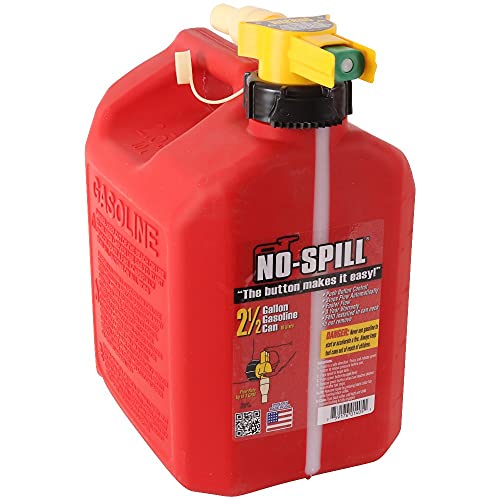
This 2.5-gallon No-Spill can emphasizes precise pouring with a thumb button control, making it ideal for small engines, mowers, and equipment with limited fill tolerance. The 7/8-inch funnel spout ensures easy filling of tight reservoirs, while the attached dust cover helps keep the spout clean between uses. The compact size can be a strategic choice for yard work or shop settings with limited storage space.
Considerations include the ease of control and spill-prevention features against the smaller capacity. This model shines where frequent refueling of small equipment is needed, but it may require more frequent trips to replenish fuel for larger loads. Overall, it’s a strong choice for precision pouring and portability.
CWKISS 5.3 Gallon Metal Container

The CWKISS 5.3-gallon metal can uses a heavy-duty steel build with a 0.8 mm thickness and inner anti-corrosion coating to extend service life in garages, job sites, and off-road environments. It includes a securing locking pin and a sealed cap to reduce leaks during transport and storage. The extended capacity makes it suitable for vehicle refueling, power equipment, and emergency backup storage, particularly for users who require a larger safe container without frequent refills.
Pros: strong metal construction, secure seal, generous capacity. Cons: heavier than plastic options and may require more space for storage and handling. The locking mechanism adds security but can complicate quick access in some scenarios.
Eagle 5 Gallon Type I Yellow Safety Gas Can for Diesel

This Yellow variant is designed for diesel compatibility while maintaining Type I safety features. It offers a single-entry design for filling and pouring, a self-closing spout cap to prevent leaks, and a flame arrestor to mitigate ignition risk. The built-in vent mechanism assists with vapor management and safe release during pressure buildup. A fixed handle and robust construction make it a solid option for diesel storage and transport in garages or work sites.
Consider this option if you routinely handle diesel in addition to gasoline and need a clearly color-differentiated can for quick identification. The yellow color aids in preventing cross-contamination between fuels. It is compatible with standard pouring accessories and funnels, offering familiar ergonomics for frequent users.
Justrite 5 Gallon Type I Red Safety Gas Can

Justrite’s 5-gallon safety can features a single spout for filling and pouring, with a self-closing lid that includes an automatic positive-pressure relief vent to guard against ruptures and explosions. An ergonomic counterbalance design and rounded, swinging handle enhance pouring control and carrying comfort. Each Justrite can includes a stainless steel flame arrester to dissipate heat and prevent flashback ignition, meeting high safety standards for gasoline and other flammable liquids.
Strengths include ergonomic pouring and advanced venting protection, making this suitable for frequent use in garages, shops, and on-site fueling. While often priced at a premium, the combination of flame arrestor and positive-pressure relief adds a high level of safety for users prioritizing top-tier protection.
Buying Guide: Key Purchase Considerations
- Capacity: Choose a volume that matches your fueling frequency. Larger cans reduce trips but weigh more and require more storage space.
- Material: Metal cans offer durability and flame resistance; high-density polyethylene (HDPE) cans are lighter and resist corrosion but may dent more easily.
- Safety features: Look for flame arrestors, self-closing lids, venting systems, and secure seals to minimize leaks and ignition risk.
- Spout design: A pouring spout that prevents spills and allows precise control is important for small engines and tight openings.
- Color-coding: Color differentiation (e.g., yellow for diesel) helps prevent misfueling and cross-contamination.
- Compliance: Ensure cans meet relevant safety standards and local regulations for flammable liquids storage.
- Maintenance: Consider spout cleanliness, gasket integrity, and the ease of replacing parts like caps or seals.
- Storage environment: Plan for ventilation, away from heat sources and direct sunlight to minimize vapor buildup and pressure changes.
In choosing the best gas can for storage, balance safety features with your typical fueling tasks. For homeowners with multiple outdoor tools, a 5-gallon metal can with a flame arrester and secure cap offers strong protection. If you favor lighter weight and ease of use for frequent refueling, a high-quality HDPE design with a robust spill-prevention system can be more practical. For diesel users, color-differentiated cans reduce the risk of misfueling. Consider the integration with your existing funnels, venting kits, and storage space to find the optimal configuration for your needs.