Answering the common buyer question, these gas tank sealers and epoxy repairs are designed to stop leaks, prevent rust, and extend tank life. They’re best for DIYers, hobbyists, and small repair shops seeking durable sealants for metal tanks, fuel lines, and related components. This guide highlights five well-rounded options and explains who each is best for, plus a quick comparison table below.
Buying Guide Overview: What to consider
– Material compatibility: Most options work with steel and aluminum; some are better with older tanks or specific fuel blends.
– Cure and handling: Some kits require prep steps (cleaning, etching) and multiple components; others are ready-to-use epoxy or single-coat sealers.
– Fuel resistance: Look for ethanol compatibility (E10, E15, E85) and tolerance to gasoline and diesel.
– Coverage and kit contents: Complete kits include cleaners, rust removers, and sealers; others are standalone coatings.
– Application scope: Pinholes, seams, and larger cracks require different formulations or metal-reinforcing putties.
– Flexibility and durability: Non-porous, flexible seals resist vibrations and temperature changes over years.
J-B Weld 8217 TankWeld Gas Tank Repair Kit

What it is: A hand-mixable, steel-reinforced epoxy putty designed to repair or rebuild metal parts, including gas tanks, radiators, and water tanks. It sets in 5 minutes and cures in 1 hour with a tensile strength of 900 PSI. Best for: Quick, durable patch jobs on small to medium leaks in metal tanks or components where a mechanical repair is impractical.
Why chosen: Provides a strong, steel-reinforced bond that tolerates fuel exposure, making it suitable for temporary to semi-permanent repairs without tank removal. Better for users needing a fast fix on accessible leaks.
Caution: Not a substitute for full tank sealers on large wear areas; ensure surface is clean and dry for best adhesion.
RED KOTE Fuel Tank Liner & Sealer

What it is: A polymer fuel tank coating designed to seal leaks, resist gasoline and diesel fuels, and cap corrosion. One quart can seal a metal tank up to about 14 gallons when used as directed. Best for: DIY tank de-rusting projects where rust removal plus sealing is needed and ease of use matters. Better for smaller tanks or patchwork repairs.
Why chosen: Strong emphasis on fuel compatibility and rust prevention, making it a practical choice for older tanks prone to pinholes and corroded seals. Caution: Proper prep is critical; incomplete cleaning may reduce seal integrity.
KBS Coatings 5200 Gold Standard Tank Sealer Kit

What it is: A complete three-step system that includes rust remover, metal etch, and the Gold Standard Tank Sealer. It forms a permanent, non-porous barrier that bonds to rust and bare metal, sealing pinholes and weld seams. Best for: Rebuilding durability of rusted tanks and ensuring long-term fuel compatibility. Better for: Those who want an all-in-one kit with prep components included.
Why chosen: The full kit approach reduces guesswork and ensures proper surface prep and sealant application, which improves long-term performance. Caution: Requires thorough cleaning and careful application to avoid voids in the coating.
KBS Coatings 5300 Gold Standard Tank Sealer

What it is: A 1-pint sealer that is impervious to fuels, alcohol additives, and most solvents. It permanently seals pinholes and weld seams while remaining flexible to accommodate expansion and contraction. Best for: Larger tanks or environments with frequent temperature fluctuations. Better for: Extended-term sealing where storage and fuel variability are concerns.
Why chosen: Its flexibility helps maintain integrity under stress, making it suitable for boats, vehicles, and other enclosed fuel tanks. Limitation: Exact coverage will depend on tank surface condition and preparation.
Eastwood Steel/Aluminum/Gas Tank Sealer Kit

What it is: A sealer kit capable of treating steel, aluminum, and some fiberglass gas and diesel tanks. One pint treats tanks up to 12 gallons. Best for: Mixed-material tanks where a versatile sealer is needed. Better for: Hobbyists working on motorcycles and small-to-medium tanks with varied material letdowns. Not recommended for fuels with more than 10% ethanol.
Why chosen: Provides a practical option for multi-material tanks and moderate capacity projects. Caution: Ethanol-rich fuels may reduce performance; verify fuel type before use.
POR-15 Fuel Tank Sealer
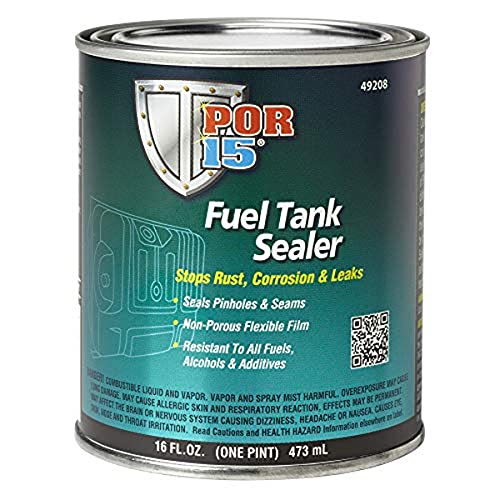
What it is: A non-porous, flexible film sealer designed to stop rust, corrosion, and leaks. It seals pinholes and seams and is compatible with a broad range of fuels. Best for: Tanks with rust buildup and wanting a durable, long-lasting barrier. Better for: Long-term prevention in vehicles and equipment exposed to ethanol blends.
Why chosen: POR-15 is widely used for rust prevention and fuel tank sealing, offering strong protection against future corrosion. Caution: Proper prep is essential; failure to clean and prep can cause coating failure.
Buying Guide
- What type of tank are you sealing? Steel, aluminum, or mixed materials may influence the best choice between epoxy putty, single-coat sealers, or a complete kit.
- Are you addressing pinholes, seams, or larger cracks? Small leaks are often handled by putty or pinhole sealers, while large defects may need a full tank sealer kit.
- Do you prefer a quick fix or a long-term solution? Epoxy putties cure quickly but may require reapplication later; complete sealers designed for fuel compatibility are typically longer-lasting.
- Fuel type compatibility: Check ethanol tolerance for modern fuels (E10 to E85). Some products state explicit compatibility with ethanol blends.
- Prep requirements: Many sealers require tank cleaning, rust removal, and etching. Skipping prep can reduce adhesion and durability.
FAQ
- Q: Can I seal a tank without removing it from the vehicle? A: Some products are designed for in-tank repair and do not require removal, but follow the product’s prep and application instructions.
- Q: Will these sealers fix large holes? A: They’re best for pinholes, small cracks, and seams. Large holes may need mechanical patches or a more robust kit.
- Q: Are these products compatible with ethanol fuels? A: Many modern sealers advertise ethanol compatibility, but always confirm the specific blend (E10, E15, E85) and follow cure times.
- Q: Is prep critical for sealant success? A: Yes. Cleaning, rust removal, and etching improve adhesion and long-term performance.
- Q: How long does curing take? A: Cure times vary by product, ranging from minutes to hours for initial set, with full cure over 24 hours in many cases.
- Q: Can I paint over the sealer? A: Some sealers permit painting after curing; verify the product’s post-cure finish recommendations.
Summary of selected products
| Product | Best For | Notes |
|---|---|---|
| J-B Weld 8217 TankWeld | Quick repairs on accessible metal tanks | Fast cure; strong metal-reinforced epoxy |
| RED KOTE FUEL TANK LINER | Rusty tanks with minor leaks | Good fuel compatibility; prep matters |
| KBS 5200 Cycle Tank Sealer Kit | Complete prep and seal solution | All-in-one kit; durable seal |
| POR-15 Fuel Tank Sealer | Rust prevention and long-term sealing | Non-porous, flexible film |
| Eastwood Tank Sealer Kit | Multi-material tanks | Versatile; not ideal for high-ethanol fuels |