If you’re shopping for golf cart batteries, the key factor is amp hours (Ah) and how that translates to runtime. This guide selects five reliable options by amp-hour rating, chemistry, and compatibility to help you choose the right type for your cart. The top picks cover flooded lead-acid, maintenance-free AGM, and lithium options, with clear notes on who benefits most from each. Ideal buyers include weekend golfers seeking steady range, club carts needing maintenance-free operation, and performance-minded riders chasing longer life per charge.
| Product | Type | Voltage | Amp Hours | Best For |
|---|---|---|---|---|
| Trojan T-1275 (Pack of 4) | Flooded Lead Acid | 12V | 150 Ah (20h) | Traditional carts, budget-conscious replacements |
| OGRPHY 48V LiFePO4 105Ah | Lithium | 48V | 105 Ah | High performance, long life, no maintenance |
| TEMGO 48V LiFePO4 100Ah Kit | Lithium | 48V | 100 Ah | All-in-one upgrade with monitor and charger |
| Weize GC8 8V 182Ah | AGM Deep Cycle | 8V | 182 Ah | Maintenance-free, multiple 8-volt sets |
| Cloudenergy 48V 105Ah LiFePO4 | Lithium | 48V | 105 Ah | Bluetooth monitoring, long cycle life |
Trojan T-1275 12V Flooded Lead Acid Battery (Pack of 4)

The Trojan T-1275 is a 12-volt flooded lead-acid option designed for GC12-sized configurations. It delivers 150 Ah at a 20-hour rate, making it a solid choice for traditional golf carts that require reliable, proven performance. Best for buyers prioritizing compatibility with standard group sizes and predictable maintenance cycles.
Who this is best for: players and fleets that prefer conventional chemistry and cost-efficiency with established service networks. Why selected: it’s a well-known brand with established replacement parts and a familiar maintenance routine. Caution: flooded lead-acid batteries require regular watering and ventilation; improper maintenance can shorten life.
Pacer P-875 8V 165Ah Deep Cycle Battery

The Pacer P-875 is an 8-volt deep cycle battery rated at 165 Ah (20-hour). It’s compatible with T-875 and T875 configurations and is suitable for rugged or solar-equipped carts requiring robust long-run capabilities. Best for: carts needing easy replacement with a standard 8V group size for extended use.
Why selected: high Ah for extended runtimes; good for fleets or carts with higher demand. Caution: an 8V set may require pairing with the appropriate controller and extra wiring in some builds.
OGRPHY 48V 105Ah LiFePO4 Golf Cart Battery

This 48V LiFePO4 pack provides 105 Ah and emphasizes durability with a built-in 200A BMS and safety features. It offers greater energy density and a longer cycle life than lead-acid alternatives, with peak support up to 1000A for brief bursts. Best for: golfers seeking a maintenance-free system with strong hill-climbing capability.
Why selected: high performance and strong protection features. Caution: high upfront cost relative to lead-acid options, though lifetime cost can be lower with longer life.
TEMGO 48V 100Ah LiFePO4 Upgrade Kit

TEMGO’s upgrade kit bundles a 48V LiFePO4 100Ah battery with a charger, LCD display, and a built-in 200A BMS. It’s designed for a seamless, all-in-one upgrade with real-time monitoring. Best for: cart owners who want plug-and-play lithium power with app-based monitoring. Caution: ensure compatibility with your current controller and mounting space.
Weize GC8 8V 182Ah Deep Cycle AGM Battery (Set of 6)

The Weize GC8 is a maintenance-free 8-volt AGM deep cycle battery rated at 182 Ah. Delivered as a set of six, it’s ideal for multi-battery configurations common in older or heavier-duty carts. Best for: buyers who want a maintenance-free option with straightforward replacement in GC8-sized systems. Caution: heavier weight per cell means handling considerations during installation.
Cloudenergy 48V 105Ah LiFePO4 Battery Kit
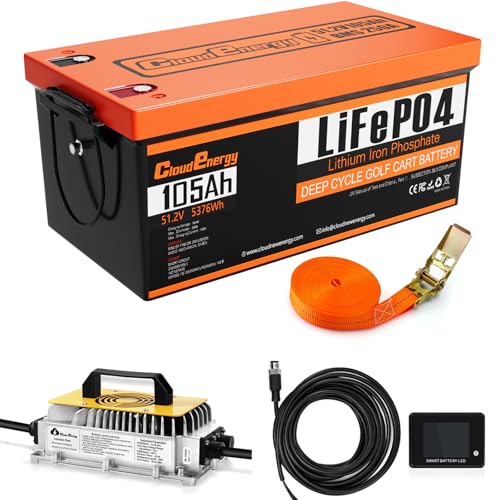
Cloudenergy’s 48V 105Ah LiFePO4 kit includes a built-in 250A BMS, a mobile app, and a touch monitor. It emphasizes long cycle life (6,000+ cycles) and Bluetooth monitoring. Best for: cart owners who value on-the-go battery status checks and robust protection. Caution: ensure the included charger matches your system’s specifications and may require app setup for full features.
Buying Guide: Key Purchase Considerations
- Battery chemistry: Choose lead-acid if you want proven cost-per-volt and simpler disposal; choose LiFePO4 for long life, lighter weight, and maintenance-free operation; consider AGM for maintenance-free performance with fewer hazards than flooded lead-acid.
- Voltage and capacity: Align with your cart’s voltage (commonly 36–48V) and desired runtime (Ah) per 20-hour or 10-hour discharge rates. Higher Ah means longer practice rounds between charges.
- Compatibility: Check BCI group size and physical dimensions to ensure a proper fit in the cart’s battery compartment. Some products require compatible controllers or mounting hardware.
- Protection and monitoring: BMS features (overcharge, over-discharge, temperature protection) extend battery life. Bluetooth or LCD monitors help track health and state of charge in real time.
- Maintenance and lifecycle: Flooded lead-acid needs regular watering and venting. AGM and LiFePO4 generally require less maintenance, with LiFePO4 offering the longest cycle life in most cases.
- Installation considerations: Weight, mounting rails, and wiring complexity vary by type. Some kits include chargers and displays; others do not.
Frequently Asked Questions
- What is the difference between 6V and 8V golf cart batteries? The 6V and 8V designations refer to the nominal voltage per battery; many carts use a bank of these to reach 36V, 48V, or higher. Maintain compatibility with your controller and existing battery tray.
- Which battery lasts the longest in typical golf carts? Lithium Iron Phosphate (LiFePO4) batteries generally offer the longest cycle life and highest usable capacity, followed by high-quality AGM, while flooded lead-acid is traditional but usually shorter-lived with more maintenance.
- Do I need a new charger for LiFePO4 batteries? Yes. Lithium systems often require chargers designed for LiFePO4 chemistry to manage proper voltage and charging profile. Some upgrade kits include a charger; verify compatibility.
- Is maintenance-free always better? Maintenance-free options (AGM and LiFePO4) reduce routine upkeep and risk of spills or venting, but LiFePO4 has higher upfront costs but longer life in many cases.
- How do I choose the right amp hours? Higher Ah extends run time per charge. Compare your typical round length and terrain to estimate the needed Ah; heavy or hilly courses may benefit from higher Ah ratings.
- Are lithium batteries safe for golf carts? Modern LiFePO4 cells include robust BMS protection and thermal safeguards. Ensure compatibility with your controller and proper ventilation where needed for other chemistries.