Diesel engines often face head gasket leaks due to high compression and heat. This guide highlights trusted head gasket sealers that work with diesel and gasoline engines, offering quick, durable fixes without complete engine teardown. Below you’ll find five reliable products, each with key features, usage tips, and deployment considerations for different engine sizes and cooling systems. Use our buying guide to compare sealing power, ease of use, compatibility, and potential risks before making a choice.
| Product | Brand | Engine Compatibility | Key Benefit |
|---|---|---|---|
| Bar’s Leaks HG-1 Head Seal | Bar’s Leaks | Diesel & Gasoline | Fast, safe seal for blown head gasket leaks |
| K-Seal ST3501 Pour and Go | K-Seal | Diesel & Gasoline | Permanent seal with ceramic micro-fibres |
| Bar’s Leaks Block Seal Head Gasket Fix | Bar’s Leaks | Diesel & Gasoline | One-step, antifreeze-compatible sealant |
| BlueDevil 38386 Head Gasket Sealer | BlueDevil Products | Gasoline & Diesel | Permanent seal for blown GHG and related leaks |
| BlueDevil 00209 Pour-N-Go Head Gasket Sealer | BlueDevil Products | Gasoline & Diesel | Easy, do-it-yourself permanent seal |
Bar’s Leaks HG-1 Head Seal

Bar’s Leaks HG-1 Head Seal targets visible coolant-related head gasket leaks and can seal warped or cracked heads and blocks under certain idle conditions. The formula is antifreeze-compatible and designed to work with all types of 50-50 coolant mixes, including silicate-based and non-silicate based antifreeze. No flushing or draining is required, which makes it a convenient option for mid-range repairs. The product is recommended for engines that can idle for about 15 minutes without overheating and without needing additional coolant between uses. It is suited for drivers seeking a quick, one-step repair with minimal disruption.
K-Seal ST3501 Pour and Go Head Gasket Sealer
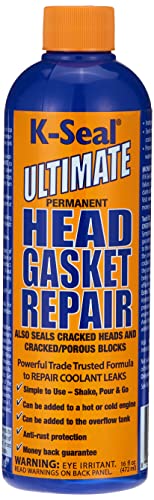
K-Seal ST3501 offers a permanent repair with 33% more sealing power, designed to seal leaks up to 0.64mm in size using ceramic micro-fibres for a robust, lasting fix. The formula requires no draining or flushing; you simply shake and pour, then run the engine as normal. For larger engines, multiple bottles may be needed. It’s positioned as a versatile option for blown head gaskets, cracked heads, and porous blocks across both gasoline and diesel applications, making it a strong contender for mixed fleets or older vehicles in regular use.
BlueDevil 38386 Head Gasket Sealer

The BlueDevil 38386 Head Gasket Sealer provides a permanent seal for leaks in blown head gaskets, warped or cracked heads, heater cores, and freeze plugs. It is designed for use with both gasoline and diesel engines, offering broad compatibility. The product emphasizes ease of use with no special tools required, and it’s targeted at users seeking a one-time solution with durable results. As a widely recommended option, it’s suitable for varied engine configurations and can be especially appealing for fleets or households with mixed vehicles.
BlueDevil Pour-N-Go Head Gasket Sealer

BlueDevil’s Pour-N-Go Head Gasket Sealer emphasizes simplicity: pour, go, and seal. It delivers a permanent seal for blown head gaskets, warped heads, cracked heads, heater cores, and freeze plugs. It is compatible with both gasoline and diesel engines, which makes it a versatile option for owners of diverse vehicles. This product is designed for users who want straightforward application without extensive coolant system work or engine teardown, while aiming for a durable fix that resists future leaks.
BlueDevil Head Gasket Sealer Pack (1 Quart, 6-Pack)
BlueDevil’s quart-size head gasket sealer pack is designed for ease of use and broad compatibility with both gasoline and diesel engines. The product promises a permanent seal for leaks associated with blown head gaskets, warped or cracked heads, heater cores, and freeze plugs. Sold in a pack, it can be suitable for service fleets or households that prefer stocking multiple sealant units for future maintenance or multi-vehicle use, providing practical value where ongoing maintenance is common.
Buying Guide
Key considerations when selecting a head gasket sealer for diesel engines include sealing power, permanent vs. temporary effects, compatibility with coolant types, ease of use, and potential engine impacts. Here are the main perspectives:
- Sealing strength and maximum leak size: Some products advertise sealing up to 0.64mm gaps or rapid containment of leaks under engine heat. For severe leaks or cracked blocks, higher sealing power is crucial.
- Permanent seal vs. temporary fix: Permanent formulations provide longer-lasting results but may require precise engine conditions to cure properly. Temporary solutions can buy time but may require follow-up repairs.
- Coolant compatibility: Ensure the product works with your coolant type (silicate-based, non-silicate based, OAT/HOAT) and does not require draining or thermostat removal.
- Ease of use: One-step pours, no flushing, and minimal tools are ideal for DIY users. For larger engines, consider whether multiple bottles are needed.
- Diesel engine considerations: Diesel engines run hotter and have higher compression, so choose products with proven performance in diesel contexts and consider engine size and cooling system design.
- Vehicle condition and follow-up: Sealers can affect coolant viscosity and temperature behavior. After application, monitor for overheating and coolant levels; a professional inspection is advised if symptoms persist.
All products listed here are marketed as compatible with both gasoline and diesel engines, offering a range of application styles from quick, single-bottle solutions to packs designed for fleets. When in doubt, consult your vehicle’s service manual and consider professional assessment if the leak is severe or if the engine exhibits overheating or loss of coolant after application.