Staying warm on chilly mornings can boost comfort and performance on the golf course. This guide highlights top heaters designed for golf carts, including propane models and electric options. Each pick pairs safety with performance, helping you choose the right heat source for your cart and climate.
| Product | Heat Type | Approx Heating Area | Notes |
|---|---|---|---|
| Mr. Heater Golf Cart Heater | Propane | Up to 100 sq ft | 4,000 BTU/hr; uses 1 lb propane |
| PUTTLAZR 2-in-1 7200 BTU | Propane | Up to 200 sq ft | Cup holder adapter; requires 1 lb propane |
| PUTTLAZR 48V Electric Heater | Electric (48V) | Cabin-wide (instant warmth) | Carbon fiber, 0.4 kWh/h |
| PUTTLAZR 2-in-1 6800 BTU | Propane | Up to 200 sq ft | Cup holder adapter; 1 lb propane required |
| JNOD 48V Electric Heater | Electric (48V) | Cabin-wide (instant warmth) | Carbon fiber; hardwired; 400W |
Choosing a heater for your golf cart involves weighing heating needs, power availability, and compatibility with your cart model. The following sections present detailed product profiles to help you compare performance, safety features, and installation considerations.
Mr. Heater Golf Cart Heater — 4,000 BTU

Brand: Mr. Heater
Features include emitting 4,000 BTU/hr for up to 5.5 hours and using a standard 1 lb propane cylinder. The unit is designed to heat areas up to 100 square feet and includes a rough terrain resistant tip-switch for stability on uneven surfaces. It is a compact propane option suitable for golf carts without requiring electrical installation.
PUTTLAZR 2-in-1 7200 BTU Propane Heater
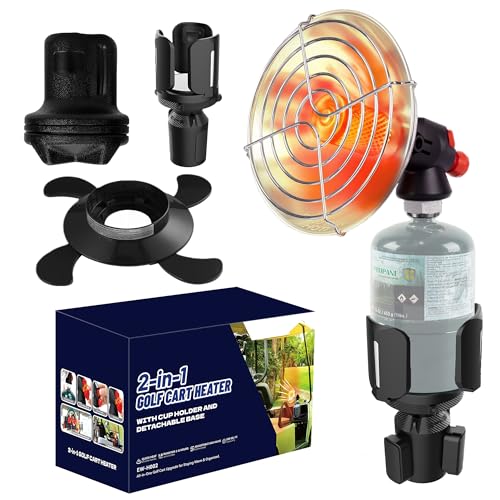
Brand: PUTTLAZR
Features include 7200 BTU radiant heat, heating up to 200 sq ft, and a built-in adjustable cup holder adapter for secure fitments in most golf carts, UTVs, and camping setups. Important safety note: requires a 1 lb propane tank (not included) and should be positioned away from flammable materials. This model emphasizes rapid warmth and versatility for outdoor use.
PUTTLAZR 48V Electric Golf Cart Heater
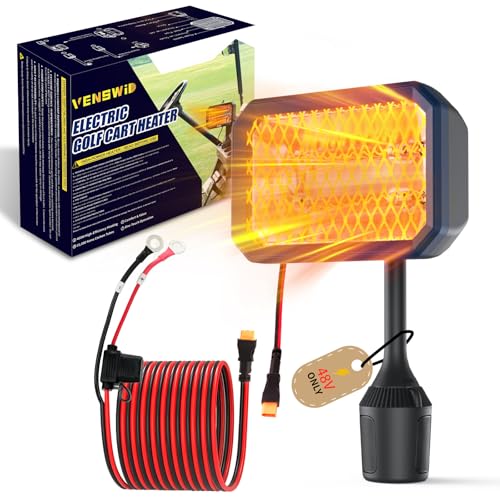
Brand: PUTTLAZR
Note: Compatible with 48V golf carts only; requires direct hardwire connection to the battery. It uses carbon fiber heating technology to provide instant warmth with zero emissions, eliminating propane and carbon monoxide risks. It heats the cabin within seconds and has a modest energy draw of about 0.4 kWh per hour, making it suitable for multiple rounds without draining power quickly.
PUTTLAZR 2-in-1 6800 BTU Propane Heater
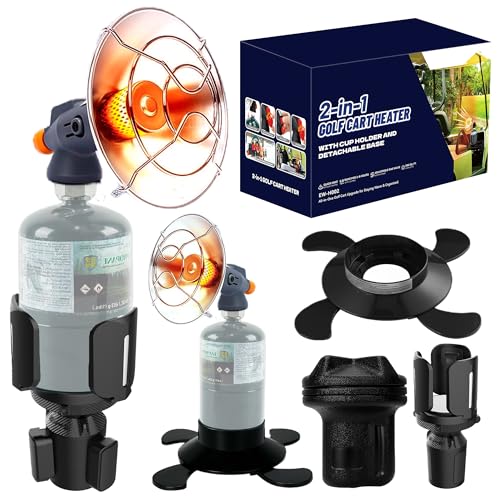
Brand: PUTTLAZR
Features include 6800 BTU radiant heat for up to 200 sq ft, a cup holder adapter, and compatibility with all golf cart models. Requires a 1 lb propane tank (not included) and emphasizes quick warmth for cold mornings and outdoor activities. The design mirrors a compact winter heating solution for golf carts and similar platforms.
JNOD Golf Cart Heater — 48V Electric

Brand: JNOD
Features include a 48V electric heater with 400W carbon fiber heating, designed for 48V golf carts with hardwired battery connections. It emphasizes fast heating, energy efficiency, and safety, with CE/FCC/ROHS certification and a focus on eliminating propane use and open flames while maintaining cabin warmth.
Buying Guide
- Power source: Choose propane if you want portability and quick heat without wiring; opt for 48V electric if your cart supports it and you want zero emissions and easy maintenance.
- Heat area and BTU: For larger cabins or windy days, higher BTU models (6800–7200 BTU) offer broader coverage. For compact carts, 4,000 BTU units can be sufficient.
- Cart compatibility: Ensure the heater fits your cart model and available mounting options. Some units include cup holder adapters or require hardwiring.
- Safety features: Look for stability aids, flashback protection, and proper ventilation recommendations for propane units. Electric options should have certified safety marks and fuse protection.
- Fuel logistics: Propane tanks (1 lb) are easy to swap but require storage space and handling. Electric options rely on your cart’s battery capacity and charging plan.
- Installation ease: Propane models are generally plug-and-play but may need clearance from drivers and flammable materials. Electric models demand wiring and potentially professional installation.
- Maintenance: Propane heaters require periodic valve checks and tank replacements; electric heaters typically need battery checks and clean airflow paths.
Across the options, both propane and electric heaters offer viable solutions depending on your priorities: portability and immediate heat versus emissions-free operation and integrated cart power compatibility. Evaluate your cart’s electrical system, climate, and typical playing conditions to determine the best fit.